
World · Real Media · · 51m
Going vegan for the planet
English (original) · Read in Deutsch ⇄
Outlining the many benefits of a plant-based diet during climate and ecological breakdown
Earlier this year we attended a screening of the film People’s Emergency Briefing which took place at St Pancras Church, Euston. In the film, members of the public and some celebs are asked to comment (Gogglebox-style) on excerpts they are shown from an Emergency Climate Briefing – a live event which took place last November in Westminster. At that event, leading experts and scientists spoke about aspects of the climate and ecological crisis, addressing hundreds of invited politicians, business leaders, faith leaders, and sports and culture notables.
The film deals with a series of several different aspects of the polycrisis that we face, and one of these is food security.
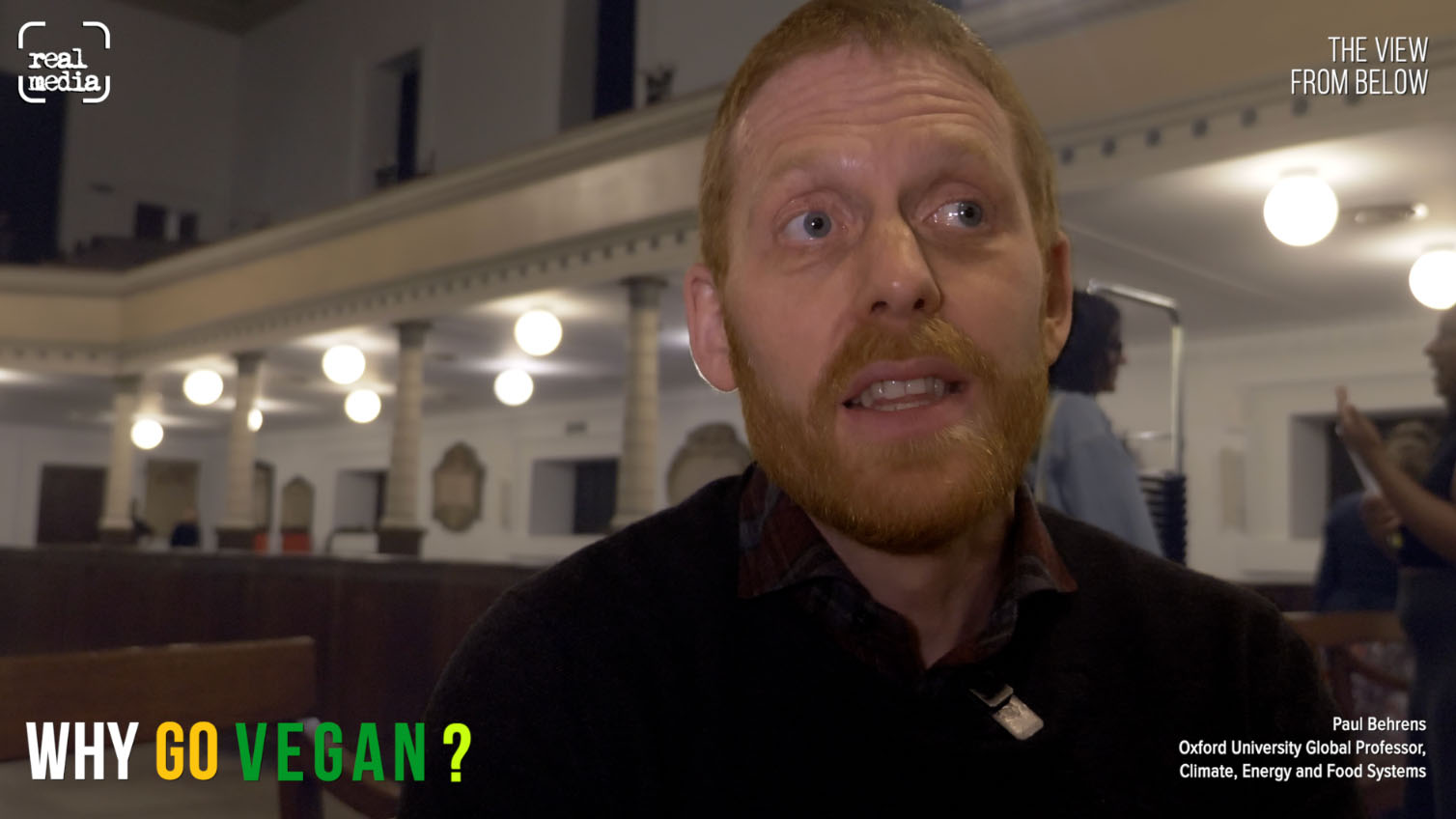
Several hundred people packed the church at Euston, and following the screening, conservationist Chris Packham introduced a panel which included Dr Paul Behrens, who is a Global Professor at Oxford University researching the intersection of climate, energy and food systems. His contribution outlined the several ways in which moving our diets towards veganism would mitigate several related climate and ecological issues as well as creating a powerful influence on behaviour and policy.
The science indisputably warns that the UK faces a serious threat for which we are completely unprepared. Until recently, we have depended on regular reliable harvests in a stable climate. Of course there were failures, but for instance a major corn harvest collapse might be expected once in a decade or two, but experts predict that at 1.5º of global heating (which we are now reaching), that changes to more like one in every three years, and at 2º it will be every other year.
These predictions are borne out by observation – Britain has suffered three of the five worst cereal harvests on record in just the past decade. The UK already imports a lot of its food, but of course the climate crisis is global, and farmers in France and Spain are reporting a huge fall in yields this year after record breaking heatwaves and extended drought. The top soil is so water-depleted at the start of the current sowing season, that European farmers are predicting major problems next year, even if the weather is favourable.
Food prices rose dramatically in 2023, partly due to extreme weather events, and there is a lot more to come this Autumn and Winter. The added strain on the cost of living leads to increased societal tension and breakdown, and there is now a real likelihood we’ll see empty food shelves, food queues, and resulting civil unrest.
While research is absolutely clear that moving towards a plant-based diet is urgently necessary, fortunately it’s healthier for us too! Along with reducing food waste, improving production and increasing climate resilience, the benefits of a massive reduction in meat and dairy consumption is clear.
Currently around 85% of UK agricultural land is used to create animal products, and this is land we can no longer spare. Research shows that moving to plant-based would free up an area around the size of Scotland, feeding far more people per hectare, cutting our massive over-reliance on food imports, with the added benefit of reducing strain on the NHS as we move to much healthier diets.
Professor Behrens explained how a worldwide reduction in meat consumption would cause a direct and powerful reduction in global temperatures (estimated at 0.4-0.6C), by reducing the massive methane emissions of industrial animal farming.
The change in land use would also help solve the current collapse in biodiversity. If in high-income nations we introduced a ‘planetary health diet’, which would still include a small amount of meat, we’d actually save an area around the size of Europe.
The sooner we take the opportunity to make this transition, the better we’ll be able to cope with some of the effects of climate and ecological breakdown. Continuing business as usual will have us watch our food systems collapse and our food prices soar, with the likelihood of civil unrest and authoritarian crackdown to follow.
Chris Packham has set up a petition to parliament calling for a UK-wide public briefing on the climate and nature crisis. At time of writing the petition has attracted more than 125,000 signatures, ensuring a parliamentary debate on its demand.
Read the full story at the source
Source: Real Media