
Germany Perspektive Online
Undemocratic, irrelevant, opinionless: Ilse Aigner as the new Federal President
The highest state office is not elected by the people, but rather negotiated by political elites. Ilse Aigner's candidacy for Federal President shows this again. Aigner represents a type of “middle”
Deutsch (original) ·Auto-translated to English
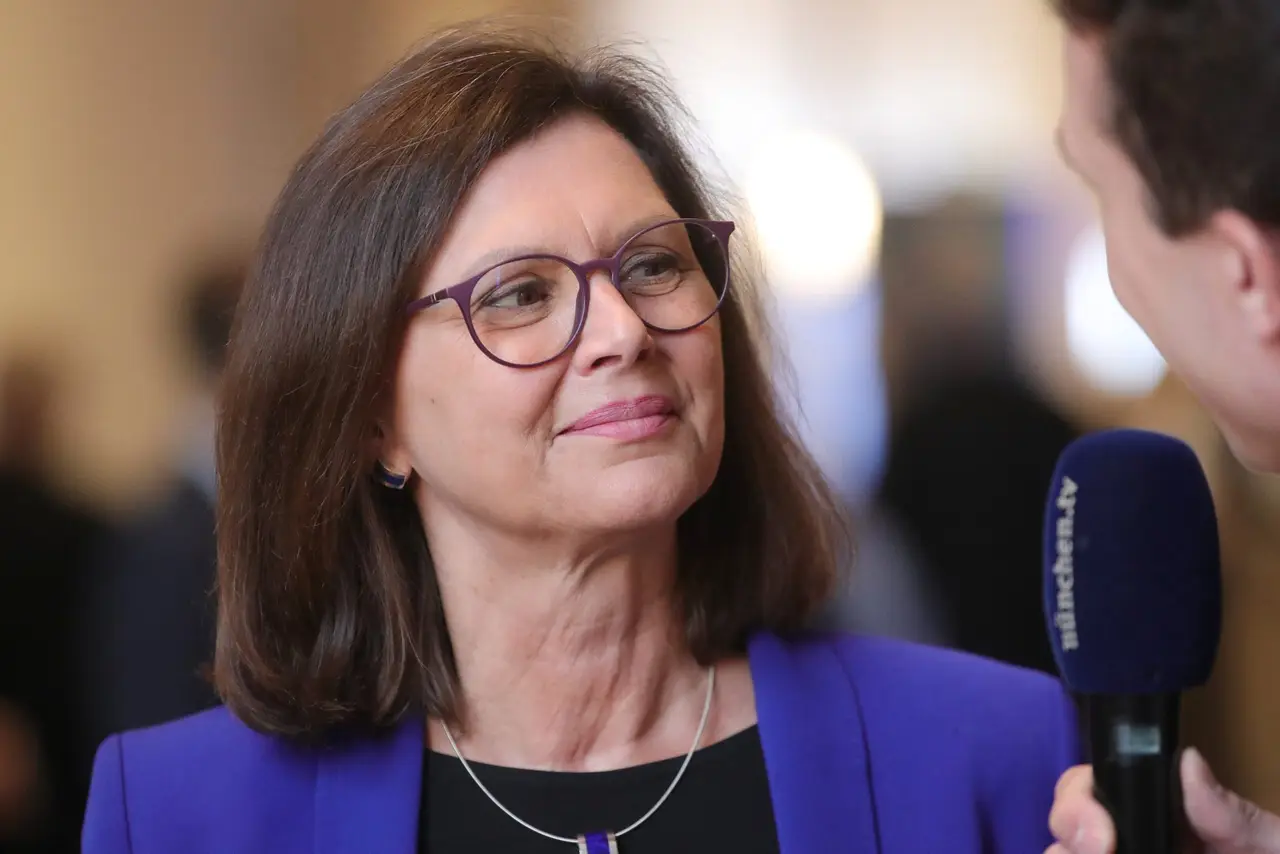
The highest state office is not elected by the people, but rather negotiated by political elites. Ilse Aigner's candidacy for Federal President shows this again. Aigner represents a type of “middle” who conceals contradictions and does not take a position himself. – A comment from Reiner Matzinke.
Ilse Aigner, 61, President of the Bavarian State Parliament, former Federal Minister of Agriculture and State Economics Minister, is due to speak at the Federal Assembly on January 30thelected the first female federal presidentbecome.
Her nomination by CDU leader Friedrich Merz was not an act of political charisma, but the result of a tough negotiation process. Merz had hesitated for weeks, while CSU leader Markus Söder had already rushed ahead in April and suggested Aigner without consulting him. The fact that the Chancellor has now followed suit is probably due less to conviction than to the calculation of not letting the personnel fail because of the little sister party.
Her supporters, across party lines, describe her as “prudent” and “willing to compromise”. SPD Vice Chancellor Lars Klingbeilwrote to her“an incredibly integrative force” and that she is “a very people-oriented politician who speaks to people on an equal footing.” The CDU Women's Union honorary chairwoman Annette Widmann-Mauz called her “competent, clever and politically experienced at all levels”.
Also the tazshe was already celebratingas “one of us”, as a new type of politician who does not come from the ivory tower, but from a three-generation house in Feldkirchen-Westerham - trained radio and television technician, who once worked on helicopters. These are attributes that don't hurt anyone.
Everyone describes Aigner as a politician who has no enemies and accepts whatever role she has to play on the stage of power politics - and that is exactly where the problem lies.
CSU party conference: Söder agitates against the left, Merz pushes for reforms
From rejection to symbolic politics – an interplay of orientation
Aigners is symbolic of their politicsRelationship to LGBTI+ issues. In November 2016, she voted in the Bavarian state parliament against a proposal from the Greens to open marriage to everyone. The CSU parliamentary group rejected the application on the grounds that same-sex marriage was not compatible with Article 6 of the Basic Law. Aigner was the Bavarian Minister of Economic Affairs at the time. A decision that she still stands by.
As President of the State Parliament, however, she set completely different accents. When the Green MP Tessa Ganserer became the first parliamentarian in Germany to openly appear as a trans woman at the beginning of 2019, Aigner promised her after a personal conversation that he would address her as a woman in the state parliament and called on the state parliament members to do the same. In 2022, under her leadership, the state parliament placed the homosexual victims of National Socialism at the center of Holocaust remembrance: Aigner inaugurated a stele for the victims of Paragraph 175 in the Flossenbürg concentration camp memorial.
In 2025, she even had the rainbow flag hoisted in front of the Maximilianeum for the CSD Munich - and in doing so expressly opposed Bundestag President Julia Klöckner, who had banned this at the Reichstag. The flag stands “for diversity, tolerance and openness, i.e. for very democratic values,” Aigner told the Süddeutsche Zeitung. It is “a symbol of equality, acceptance and solidarity with queer people.”
She has never publicly stated whether Aigner has since revised her stance on marriage for everyone. This is significant: she did not change her position, but rather supplemented it. She has learned to make gestures without revealing the underlying political convictions. She learned to present herself as the political moment required and showed adaptability in symbolic politics without even touching on the subject matter of the current problems. That may be enough for the representative office of the Federal President, but not for a positive assessment of her political ideals or goals.
Ignored, instrumentalized, deported: LGBTI+ as a political football
The ABZ minister
As Federal Minister of Agriculture (2008-2013), Aigner “left no trace in Berlin” like thatdaily newsstates soberly. Those tooSPDBundestag freactionIn 2013, she was mercilessly reckoned with her: Her politics could be described as “A for announcing, B for braking and Z for hesitation”. She “kept on her knees before the food lobby” and was more concerned with “self-protection instead of consumer protection”. The 2013 horsemeat scandal revealed a minister who only reacted after the child had already fallen into the well. Now she is being praised to heaven by the same faction.
The left-wing faction accused her of hesitancy, while the Greens criticized her policy for “increasing the risk of food scandals”. The headlines from 2013 say that Aigner is acting “pretty clearly in the interests of large industry” – tangible successes for consumers can “hardly be identified” during her time in office. A Forsa survey from 2011 showed that half of German citizens, for example, were dissatisfied with their crisis management in the dioxin scandal.
This is no small thing. Aigner led a ministry for five years without providing any significant impetus and managed crises instead of shaping them. If that is supposed to be a qualification for the highest state office, it actually says a lot more about the position of Federal President.
Why it is popular with all parties
The SPD immediately signaled support, the Greens expressed their “sympathies”. The Union and the SPD have a majority of around 50 votes in the Federal Assembly. The election on January 30th is considered safe.
Only the Left Party and the AfD have so far rejected Aigner. Aigner retaliated by giving oneThe AfD faction declined the invitation: “This makes a visit unnecessary.” The left didn't even invite them.
Aigner's attractiveness for the CDU, CSU, SPD and Greens lies precisely in her lack of profile. She is not a camp woman, it is said sympathetically, she does not polarize, she has no enemies. In other words, she is a candidate that no one has anything against because no one knows exactly what she stands for.
The fact that the former Hesse Prime Minister Volker Bouffier - the man who came under criticism in the NSU complex due to the blanket ban on the secret agents of the Federal Office for the Protection of the Constitution Andreas Temme - was one of the first to suggest Aigner completes the picture: it is a network that favors its own people.
NSU: The entanglements of the security authorities and the prevention of clarification
The undemocratic process
And then there is the way in which this position is filled. The Federal Assembly is a constitutional body that only meets for one purpose: to elect the Federal President. It consists of the members of the Bundestag and an equal number of representatives from the state parliaments - this includesoften celebrities too. The people do not elect this head of state.
The criticism of this is as old as the Federal Republic. The constitutional lawyer Christoph Möllersdefended the procedureIn 2017 on Deutschlandfunk with the argument that the “non-transparent clarification” was “a form of democratic decision-making process among representatives”. Direct elections, according to Möllers, often result in “mobilized minorities getting a majority for this moment.”
This may serve as a defense of liberal representative democracy for some. But there remains a democratic deficit that the only state body that is not elected by the people is the one that represents the state externally and is supposed to provide orientation internally.
Aigner's nomination by Merz and Söder, her approval by the party committees, her election by an assembly that no one directly elected - all of this is no longer a scandal. But it is also not a democratic legitimation that deserves the name. It's an elite cartel that agrees on a candidate who won't hurt anyone.
The postUndemocratic, irrelevant, opinionless: Ilse Aigner as the new Federal Presidentappeared firstperspective.