
Politics Perspektive Online
Israel votes – Palestinians are left out
A new parliament is being elected in Israel. The election comes amid ongoing genocide in Gaza and escalating displacement policies in the occupied West Bank. The Zionisti
Deutsch (original) ·Auto-translated to English
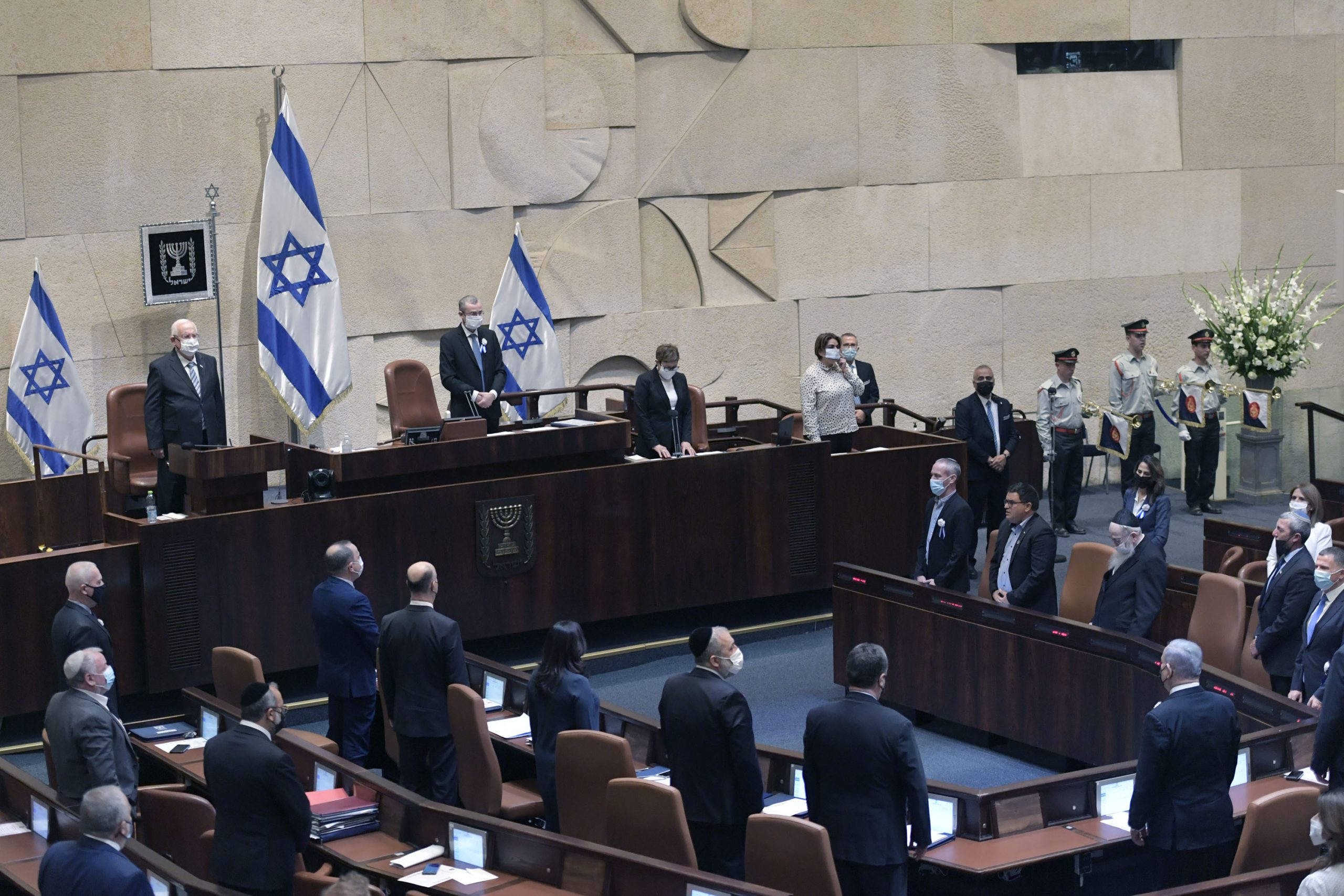
A new parliament is being elected in Israel. The election comes amid ongoing genocide in Gaza and escalating displacement policies in the occupied West Bank. The Zionist apartheid ideology remains a condition for political participation. – A comment by Ali Najjar.
Around 7.3 million eligible voters decide on 120 seats. The current Knesset elections in Israel are politically significant. But less as the beginning of a change than as a reflection of a politics that argues about the administration of oppression - not about ending it.
The foreign policy situation plays a crucial role here - the choice falls on a “multi-front war”: Gaza, West Bank, Lebanon, Syria, Yemen and Iran. Netanyahu is using this situation to portray himself as a guarantor of national security, while his coalition is simultaneously pushing forward settlement construction, judicial restructuring and the religious-nationalist transformation of the state.
Where Netanyahu and Eisenkot agree
The polls point to a stalemate: Neither Netanyahu's bloc nor the largest Zionist opposition bloc with candidate Gadi Eisenkot is likely to achieve the 61 seats required for a government without additional partners. All other parties hope to tip the scales in the formation of a government coalition.
The central question is not whether Benjamin Netanyahu will be replaced as prime minister after a total of almost 20 years in office. What is crucial is that even a possible change of government does not affect the colonial structure of the state: the occupation, apartheid, expulsion and the refusal to recognize Palestinians as equal people are indispensable ideological components of all realistic governing parties.
The genocide in the Gaza Strip is hardly present as a political problem in the election campaign. At most, it appears as a security issue, a military necessity or as a background for debates about October 7, 2023. A serious discussion about ending Israeli violence, about responsibility, reparations or the rights of the surviving Palestinians does not take place in the official election campaign.
The so-called opposition is therefore not a peace camp. Gadi Eisenkot, originator of the IDF's “Dahiya Doctrine,” which enshrines large-scale destruction of civilian infrastructure as a military tactic, like Netanyahu rejects a Palestinian state and supports Israeli settlement in the West Bank.
Escalation before the election: Netanyahu completely seals off the West Bank
West Bank: Expulsion as everyday life
While there was largely silence about Gaza during the election campaign, things escalated in...West Bankthe expulsion policy. The Israeli army imposed access bans on election day. Ramallah was put under complete lockdown, officially as a security measure for the election.
At the same time, settler violence is growing. Billions are flowing into settlements while Palestinian communities suffer from house demolitions, roadblocks, military operations and virtual impunity for violent settlers.
A major offensive in Hebron is said to have displaced almost 4,000 Palestinians, according to reports. This shows that the expulsion is not a side effect of the war, but rather part of a systematic policy: Palestinian existence in the West Bank should be made more difficult so that Israeli dominance is permanently secured.
Again attacks by Israeli settlers on the Palestinian olive harvest
The Arab party landscape and the question of boycotting elections
About 20 percent of the country's citizens belong to the Arabic-speaking indigenous population. They are Palestinians with an Israeli passport and are formally entitled to vote. In a society increasingly characterized by apartheid laws and colonial violence, they take on a special political role.
Even though there are several approved Arab parties in Israel, voter turnout among the “Palestinians of 48” – as many Arab citizens describe themselves – is traditionally low. Many prefer to boycott the election to express their opposition to a system that makes them second-class citizens.
Two Arab forces are running in this election: the more secular, partly left-leaning Joint List and the Islamic-leaning Ra'am. The Joint List rejects government participation; Ra'am, on the other hand, wants to enter a coalition again, as he did in 2021.
The question of boycotting the elections is controversial within Palestinian society in Israel. Many argue that participating in a Zionist parliament legitimizes a state based on the 1948 expulsion, occupation and institutionalized colonial domination.
In contrast, Ra'am argues that not voting means leaving the right-wing government undisturbed and one's own communities without political protection. Mansour Abbas, the leader of the party, expressly calls for a high voter turnout, precisely because another fascist government would be dangerous for Arab citizens and Bedouins.
The portrayal of not voting as a pure rejection of political action ignores an important aspect. Choice can alleviate individual suffering, but it cannot eliminate the colonial character of the state. An election boycott is not political passivity, but can be an act of resistance against the normalization of a system that only recognizes Palestinian citizens as a tolerated minority.
Zionism as a top priority
The crucial limit shows itself in the possible coalition poker. Mathematically, the anti-Netanyahu bloc would need the Arab parties - especially Ra'am. But the key politicians are largely ruling out cooperation.
This means: Palestinian votes are desirable if they can mathematically save a Zionist coalition - until 2021 this also applied to the right-wing fringe of Israeli politics. However, this acceptance only applies as long as they do not name colonial violence, which has become impossible for Ra'am and all other Arab parties in recent years at the latest.
A “democratic” Israel should therefore remain a Zionist state in which Palestinian citizens are politically tolerated but not given equal rights. Rumors on election day show that this is a priority, according to which even oneGoverning coalitionbetween the Likud party under Benjamin Netanyahu and Gadi Eisenkot's Yashar party.
Disunity – but not in the Zionist idea
Israel is also not a unified nation, but a deeply fragmented society. Secular liberal milieus in the cities once protested against Netanyahu's controversial judicial reform, but focus their criticism primarily on the threat to democratic institutions and rights that are already fully accessible exclusively to Jewish Israelis - hardly on the occupation.
Religious-nationalist settlers, on the other hand, see the settlement of the “Holy Land” as their mission. They support settlement expansion, harsh military policies and often the violent enforcement of Israeli dominance. Ultra-Orthodox parties such as “Shas” and “United Torah Judaism” primarily defend their autonomy, state subsidies and exemption from military service, which has brought them into violent conflict with the state.
Palestinian citizens are torn between assimilation, civil rights struggles, election boycotts and anti-colonial self-assertion.
This fragmentation explains why “opposition” does not mean emancipation. The conflict between secular liberals, religious Zionists and ultra-Orthodox often revolves around power, military service, justice and way of life – not over ending Palestinian oppression.
Genocide in word and deed: Ben-Gvir shows the true face of Israel
What the election can change – and what it can’t
A victory for the anti-Netanyahu camp could curb the worst excesses of the current government. Less money for settlements, less open support for settler violence, possibly an independent investigation into October 7th and a slightly less aggressive domestic policy towards Palestinian citizens.
But a change of government would not be a break with Zionism as a political project. A new leadership would manage the occupation differently, not end it, not dismantle the settlements but only expand them less aggressively and not recognize Gaza as Palestinian land but treat it as a “security zone” of Israeli control.
That is why the boycott, divestment and sanctions movement remain central. If no relevant political force within Israel questions the logic of genocide and Zionism, the pressure must come from outside. Through economic pressure, legal prosecution of war crimes, arms embargoes and especially solidarity with Palestinian resistance and self-determination.
The election will show which version of Zionism prevails: the openly fascist version of Netanyahu, Ben-Gvir and Smotrich or the more “democratic”, militarily but equally tough version of Eisenkot. This is not a new democratic beginning for the Palestinians in Gaza, the West Bank and within Israel. The question is under which administration they will have to continue to fight for their survival.
The postIsrael votes – Palestinians are left outappeared firstperspective.