
Germany · Perspektive Online · · 2h
Oil blockade in the Red Sea: Does tank discount number three only bring extra profits for corporations?
Deutsch (original) · Auto-translated to English
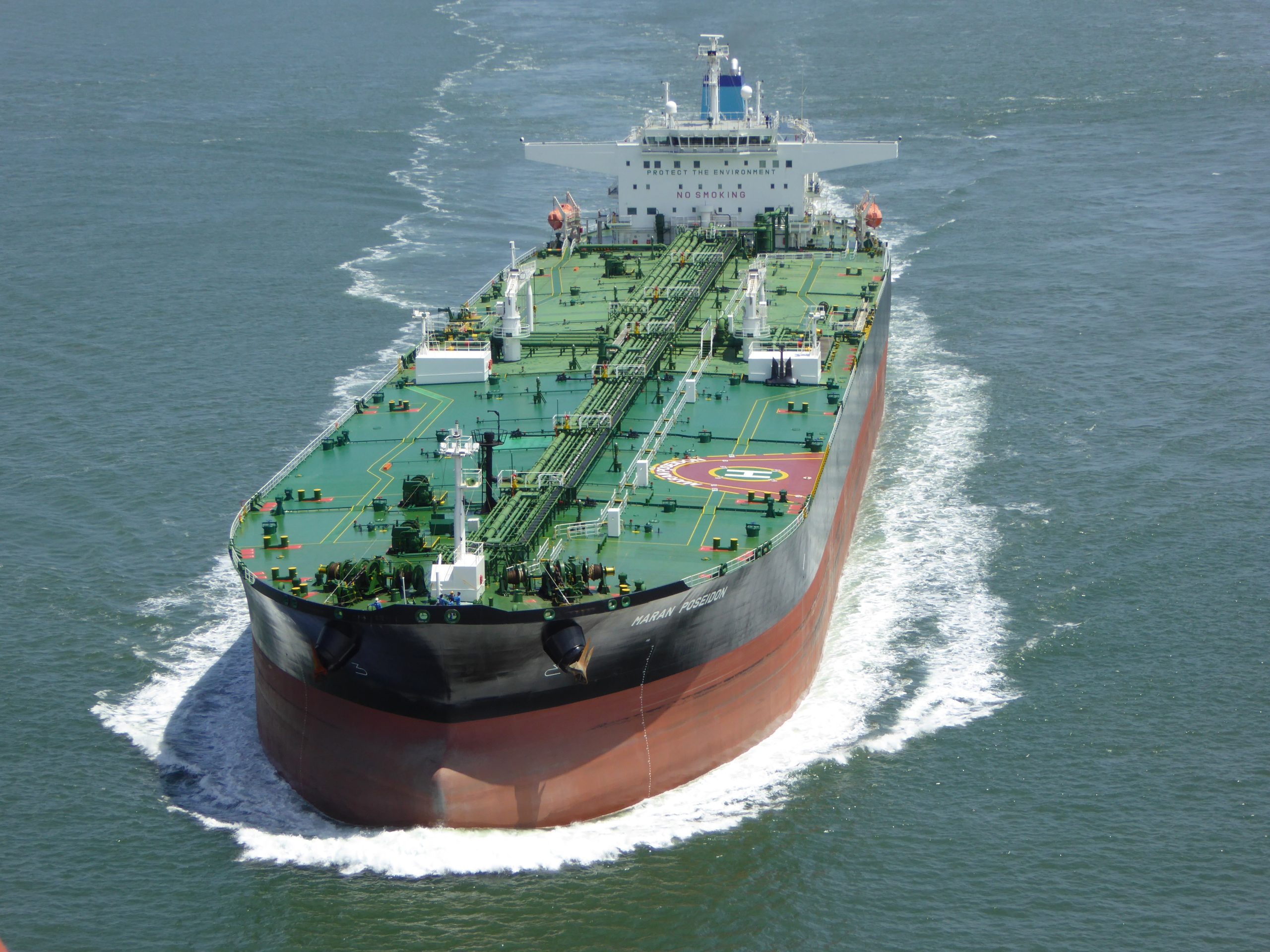
Pro-Iranian militias in Yemen and Iraq have significantly damaged Saudi Arabia's oil exports. As a result, prices on the world market continue to rise. The federal government is planning another refueling discount - although the last rounds were primarily used by the oil companies.
It has now been six months since the USA and Israel began their joint attack on Iran. Since then, the price of oil on the world market has risen significantly due to the Iranian blockade of the Strait of Hormuz. In Germany, drivers in particular felt this financially when refueling.
The events of the past few days could now escalate this development even further. The Iran-allied Houthi militia began in western Yemena new offensivein the civil war raging there – with spectacular success. The Houthis were able to conquer not only cities on the Red Sea coast, but also strategically extremely important islands in the Red Sea.
The conquest of the cities of Mocha and Dhubab as well as the Hanish Islands is already significant. But above all, the occupation of the island of Perim by the Houthis could have serious consequences. Perim is centrally located in the Bab al-Mandab Strait, which runs between Yemen and Djibouti. A significant portion of global trade passes through this strait on its way to or from the Suez Canal.
Burning tires and desperate people during mass protests in Syria
Now the Houthis and, figuratively speaking, their ally Iran could significantly disrupt this shipping traffic. In addition to the USA, this advantage will primarily be exploited against Saudi Arabia. A militia press spokesman announced that non-Saudi shipping could continue to operate undisturbed.
The Houthis are already enemies with the kingdom because Saudi Arabia supports the Yemeni government in the civil war and also carries out attacks there itself. Iran, in turn, can potentially disrupt important Saudi oil exports to the USA as well as enemy supply lines. These territorial gains by the Houthis therefore give Tehran both a tactical and strategic advantage.
Pipeline attacked in Saudi Arabia
Saudi oil exports are also under heavy attack in other ways. The East-West pipeline was damaged by drones. As a result, operations must be temporarily stopped. TheRepair timeis estimated to take four to six weeks. This pipeline serves as an alternative to the closed Strait of Hormuz in the Persian Gulf. According to estimates, the East-West pipeline has transported four to five percent of the world's oil production since the beginning of the war.
Billion dollar agreement with Abu Dhabi despite serious human rights violations
Saudi Arabia blames pro-Iranian militias in Iraq for the attack. In response to the events described, the state, which is closely allied with the USA, carried out air strikes against Houthi positions in Yemen. According to the Houthis, 50 Saudi air strikes were carried out within 24 hours.
The Iraqi government, which is also loyal to the US, has so far been able to avert Saudi attacks through diplomatic channels. ARequest for helpThe Saudi Crown Prince's appeal to US President Trump was unsuccessful, according to media reports.
The regional power Saudi Arabia does not seem to be able to cope with the two-front war on its own. The pipelines represent an easy target for drone and missile attacks. If the blockade of the Bab al-Mandab Strait succeeds, the kingdom's oil business will finally be caught in the Iranian grip. The question is whether the protecting power, the USA, would react by breaking off or escalating the war.
Petrol and diesel prices at record highs
The stalled attack on Iran has undoubtedly made for a strong oneIncrease in fuel pricesled. Before the war began in March, the prices per liter for the various fuels were on average in the range of 1.60 to 1.80 euros. After the start of the war, they rose well above 2 euros per liter.
The so-called “tank discount” imposed by the federal government was actually able to mitigate the increase, even if the price increase could not be completely negated. With this onemeasureit was a temporary reduction in energy tax. This reduced the average price by an estimated 17 cents. As a result, the state budget lost 1.6 billion euros in tax revenue.
In addition, as in 2022, this time a significant portion of the relief was retained by the oil companies instead of being passed on to consumers. According to calculations by Greenpeace, the companies made around 1.18 billion euros in extra profit between March 2nd and April 12th alone; for the entire period of the Iran war up to the beginning of July, this excess profit amounted to 3.15 billion euros. The Federal Cartel Office also confirmed that the tax cut was only largely, but not completely, received by consumers.
Only 80 percent of the fuel discount reached consumers - corporations make billions in profit
New fuel discount?
After the start of the current Houthi offensive, numerous possible measures were again discussed last week on how to mitigate the expected additional price rise. Here, two camps formed within the grand coalition based on the governing parties.
The SPD favored capping the price and covering costs through an excess profit tax. The CDU once again advocated a fuel discount through a tax cut, which should possibly be supplemented by one-off direct payments. However, both parties primarily intend to maintain the purchasing power of the masses. The general oneausterity policyThe Merz government reveals that it is willing to reduce the living standards of the working class to a large extent.
Chancellor Friedrich Merz rejected direct attacks on the profits of oil companies through special taxes or price caps - as did lobby groups for the oil industry. The damage caused to the investment climate in “Germany as a location” is too great.
On Friday evening the government announced its negotiated agreementcompromise. A fuel discount is to be introduced again from October 1st, which will initially be granted until the end of the year. By reducing energy and VAT, the price per liter should be reduced by 17 cents. The cost to the budget is 2.5 billion euros. In addition, a price cap based on the Belgian and Luxembourg models is to be introduced at the beginning of 2027. However, the exact functionality is not yet clear. The agreement also includes an examination of whether an excess profits tax can be introduced.
Budget draft for 2027: record spending for the Bundeswehr, cuts in the social sector
It is questionable how much of the discount will reach consumers as a result of these measures. On the one hand, the government parties are relatively generous in view of the upcoming state elections in Berlin and Mecklenburg-Western Pomerania. After the elections, a revision of these measures under the guise of pragmatism is likely.
If these plans are implemented as previously announced, then the impact will probably come too late. Even ideally, you still have to wait until January for the price cap. The price increase that will still occur will probably mean a significant additional burden for many workers in addition to the costs of heating in winter.
However, it cannot be ruled out that the petroleum lobby will allow bourgeois politicians to weaken the package of measures even further. In both cases, the SPD and CDU are unlikely to be able to provide any significant remedy to the presumably impending crisis.
The postOil blockade in the Red Sea: Does tank discount number three only bring extra profits for corporations?appeared firstperspective.
Read the full story at the source
Source: Perspektive Online