
Politics Perspektive Online
Fear of the left: Union mobilizes against possible red-red-green coalition in Berlin
The prospect of a red-red-green government in Berlin alarms the Union: Markus Söder is threatening financial consequences, the Junge Union is calling for a law against socialization. During di
Deutsch (original) ·Auto-translated to English
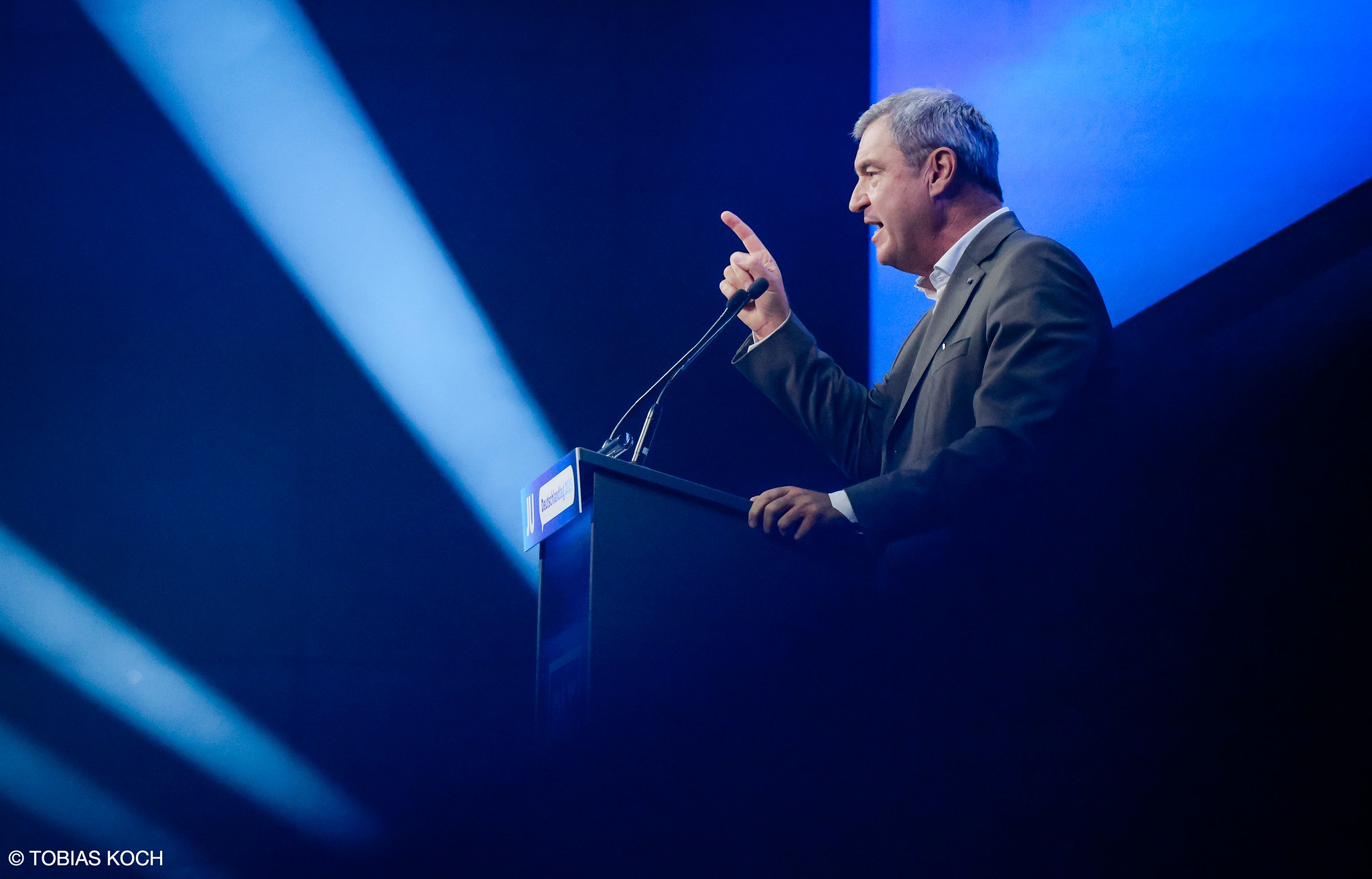
The prospect of a red-red-green government in Berlin alarms the Union: Markus Söder is threatening financial consequences, the Junge Union is calling for a law against socialization. While the Left wants to enforce the socialization of large housing companies, concessions on social policy are also on the table. Which demands were the Left actually able to secure - and where are they in danger of failing due to the compromises with the SPD and the Greens? – A comment from Alexandra Baer.
“If you talk about a firewall, then you need it more to the left” – this is how Bavaria’s Prime Minister Markus Söder (CSU) commented on the news from Berlin that the party leaders of the Left, the Greens and the SPD are nowCoalition negotiationswant to lead. The possibility of a red-red-green government in Berlin even led to the fact that the youth organization of the CDU and CSU - the Junge Union (JU) - made a spontaneous decision at the so-called "Germany Day" of the JU with the demand for four immediate measures against cooperation between the Left, the Greens and the SPD in Berlin. Among other things, a law against socialization should be introduced quickly.
The JU’s “Germany Day” – the annual meeting of the youth organization of the CDU and CSU – took place at the weekend. The focus was not only on the fear of a “left-wing” coalition in Berlin, but also on the policies of the federal government, led by Chancellor Friedrich Merz. The JU delegates made it unmistakably clear: they want reforms, and they want them quickly, especially when it comes to pensions.
Chancellor Merz assured the approximately 300 delegates that the pension compromise would be implemented unchanged, as it has been on the table for almost four months. The cabinet should decide on it before Christmas, and the first reading in the Bundestag is also planned before the turn of the year.
A real socialization? The plans for Berlin and its borders
The possible coalition of the SPD, the Greens and the Left in Berlin met with noticeable rejection. Prime MinisterSöderwent so far as to say: “The red front in Berlin is standing.” He threatened to cut off the money to the Berlin government if a red-red-green coalition actually came about. He suggested cutting the additional money that the capital received through the capital city contract.
The focus is on the socialization plans of the Left in Berlin, which the Left campaigned during the election campaign. Because these were actually included in the exploratory paper - a great success for the left.
The partiesplanto combine large private housing groups with a portfolio of more than 10,000 apartments in Berlin. Socialization means a forced purchase of around 160,000 apartments from five corporations. These are to be transferred to a public institution in exchange for compensation capped at 16 billion euros. Vonovia would have the largest share with around four fifths of the apartments. Mathematically, the cap amounts to an average of around 100,000 euros per apartment. The parties do not mention a rent reduction as their goal; rents should be frozen at their current level.
In addition, a rent cap will apply to the 440,000 municipal apartments, limiting rent increases to a maximum of two percent per year. The project also envisages a new construction program for 100,000 affordable apartments, for which the same number of building permits are to be issued by 2031. The parties want to set up “rent supervision” to combat excessive rents and exorbitant rents and set up a special department at the public prosecutor’s office. The Tempelhofer Feld should not be built on.
TheFinancing conceptThe “socialization” should be in place in 2027, the law should come to the House of Representatives in mid-2028, the stocks could not be transferred until mid-2029 at the earliest. The paper ties implementation to conditions such as minimizing legal risks, which could potentially offer the SPD an exit without officially breaking with the paper.
However, Markus Söder never tires of agitating against the Berlin Left at the “Germany Day”: a national law is needed quickly “that ends such socialist expropriation fantasies,” they say. Such a law is actually already being planned at the federal level: the federal government recently announced in September, in response to the Left's election success, that it would pass a law as quickly as possible that would socialize apartmentsforbidshould.
The federal government wants to quickly pass a law against housing expropriations
Socialization against social cuts: The limits of left-wing politics in Berlin
For the Left, it is still a great success that the demands for the socialization of Berlin apartments were actually included in the exploratory paper - even though a large part of the apartments were actually sold by the Left themselves. Deutsche Wohnen, now part of Vonovia, is largely based on the former state-owned companies GSW and GEHAG. The GSWsoldIn 2004, a red-red Senate for 405 million euros plus assumed debts of around 1.56 billion euros, which is mathematically around 30,000 euros per unit. The compensation for the planned socialization is capped at 16 billion euros, an average of around 100,000 euros per apartment. So you will have to pay about three times as much to buy the apartments back.
Otherwise it's fineExploratory paperpredominantly the handwriting of the SPD and the Left has given in on many points: In order to close a gap of around five billion euros in the budget, the parties are planning an austerity course with a spending cap, higher income and a “pact with social providers”. And this despite the fact that Die Linke organized protests against the federal government's social cuts in June. In “security policy” much remains the same: the number of police personnel should be maintained, the Office for the Protection of the Constitution should exist in its current form, and the appendix on anti-Semitism follows the IHRA definition, which many on the left reject.
In addition to socialization, Die Linke pushed through the end of Bundeswehr cooperation in schools and the conversion of the payment card into a “basic account”. The former in particular is a success for which students can pat themselves on the back. It was their school strikes against conscription that brought this issue onto the agenda.
The fear of a left-wing alternative
The Young Union's Germany Day once again showed how great the fear in the Union is of a growing left-wing movement. Instead of seriously dealing with the background of the demands for affordable housing, the socialization of large housing companies or the resistance to conscription, Söder and the JU are relying on a political smear campaign. Terms like “red front” and “socialist expropriation fantasies” attempt to demonize and make the very possibility of working with the left a political taboo. Söder's threat to put Berlin under financial pressure in the event of a red-red-green government shows how far the Union is willing to go to prevent unpleasant political decisions.
The Berlin exploratory paper also shows the limits of the Left's possible participation in government: far-reaching concessions are possible on central issues such as social cuts and security policy. This makes it all the more important to measure the demands actually enforced against their concrete consequences. The introduction of the socialization plans and the end of the Bundeswehr cooperation in schools are starting points that will show whether political promises lead to real changes.
The postFear of the left: Union mobilizes against possible red-red-green coalition in Berlinappeared firstperspective.