
Politics · Novara Media · · 2h
Politics Is a Greasy Poll – And For Now, It’s Nigel Farage Who’s Slipping
English (original) · Read in Deutsch ⇄
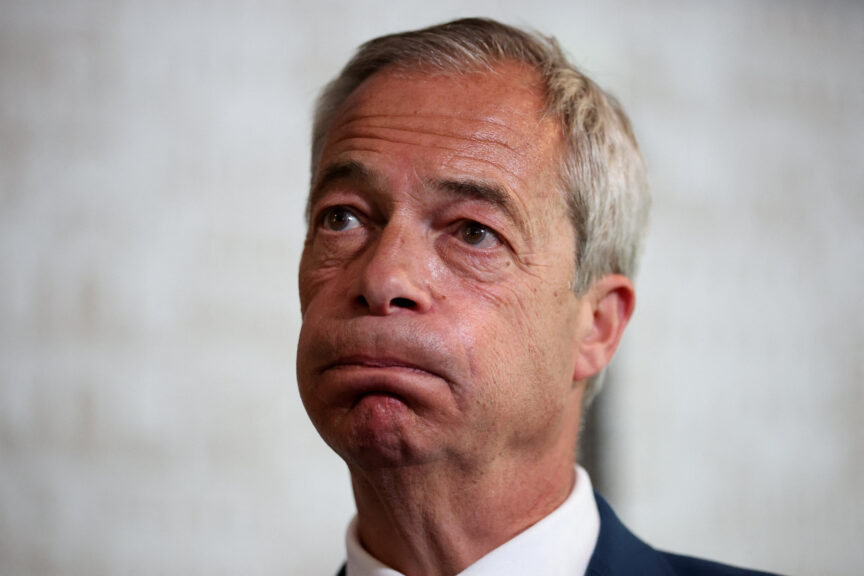
What will the next general election bring? Though question marks hover over precisely when it will take place, and three years is an aeon in politics, that hasn’t stopped pollsters from trying to predict what the outcome might be. Yesterday YouGov dropped an MRP poll which showed, if an election were to be held today, Labour would be on course to win largest party, but short of an outright majority. In music to Kemi Badenoch’s ears, the Conservatives would form His Majesty’s opposition, beating Reform into third place. The Liberal Democrats would stay roughly where they are, SNP and Plaid Cymru pick up seats, and the Greens – though gaining a few more MPs – would still not hit double-digits.
Considering that last year’s YouGov MRP showed Labour trailing Reform by more than 150 seats, this is the best news Andy Burnham’s had since Fred Perry opened up its Manchester premises.
Caveats, caveats. Though MRP polls are generally better at predicting election results than ones which presume a unified national swing, there are things they can’t tell you. An MRP can’t take into account how a party might allocate resources and prioritise battlegrounds. It can’t predict future swings in public opinion. And – just to hammer home the point – we’re still really far from the next scheduled general election. Anything could happen. And if the last decade of British politics is anything to go by, anything will.
But yesterday’s MRP poll suggests that Nigel Farage’s ambitions have taken, at least for the moment, a significant dent. Not so long ago, he was odds-on to be the UK’s next prime minister. Now, he’s in a fight just to be leader of the opposition. Though he’s tried to bluster through it with his usual unapologetic bumptiousness, the Reform donations scandal has put him on the back foot. He’s lost his chief of staff, Dan Jukes, and his head of policy, James Orr. And unlike in the 2024 election, Farage is now contending with a competitor to his right – the Rupert Lowe-led Restore Britain.
But it’d be foolish to count Farage, a man without shame, out at this stage. Scrutiny of party funding hasn’t stemmed the flow of big-money donations: just last week, it was reported that Reform had received £72m from two crypto billionaires. The street far right may, in recent weeks, have taken ownership of the small boats issue in the form of increasingly aggressive stunts (culminating most recently in far-right activist Danny Tommo’s arrest and charge for allegedly slashing a dinghy at sea). But generally speaking, Farage is never happier than when migration is in the news – it is Reform’s safest talking point.
As for Labour, the MRP is a marked improvement on last year’s poll. But it still ain’t a majority. If YouGov’s results played out today, 170 Labour MPs would be out of a job. Parliamentarians tend to be a self-serving bunch: getting the PLP to vote for an early election is tricky when so many of them are predicted to lose their seats. But hanging on until 2029 might be worse. We’re still in Burnham’s honeymoon period. It’s possible he hasn’t hit his ceiling yet – that a good budget, some popular policy announcements, or the spontaneous combustion of his rivals, could bounce him higher still.
But the Treasury is finding itself hard-pressed to free up the money for rabbits. The American-engineered crisis in the Middle East threatens to send energy bills spiralling, and the chancellor is said to be considering shrinking the fiscal buffer in order to avoid raising taxes, and to mitigate spending cuts, with a winter cost-of-living crisis looming. Burnham and John Healey, should they prove unable or unwilling to make substantive changes to the economic status quo, might find themselves polling like Starmer and Reeves did before long.
And what about the Greens? Zack Polanski, like many leftists before him, finds himself in the crosshairs of the Camden Labour party. The Holborn and St Pancras byelection, triggered by the petulance of a former prime minister, has forced Polanski to attend to local issues at the expense of making national interventions. That’s to be expected. But it’s also fair to say that the Greens find themselves in a party-facing, rather than voter-facing, moment. Their autumn conference looms, and the controversial ‘Zionism is Racism’ motion (and proposed amendments) has escaped party containment and broken into the mainstream press.
I’m not here to debate the rights or wrongs of the motion or its amendments – though, as a rule, I think that arguments over definitions and language matter a lot less than concrete commitments to action. But the great strength of Polanski has traditionally been his ability to pick fights slap-bang in the middle of the national conversation. His demands for a wealth tax in 2025 not only tapped into a popular policy position, but was totemic of a broader ideological difference with all the other major parties. It was one part of a wider vision. Polanski, when he’s snarled up in internal party debates, doesn’t get to talk to the public as much as he perhaps ought to.
All in all, take yesterday’s MRP poll as a snapshot of the present rather than a spoiler for the future. There’s still a long way before the next general election – and politics is nothing if not a greasy poll.
Read the full story at the source
Source: Novara Media