
Politics · labournet.de · · 3h
Protests, blockades and indefinite general strike in Bolivia against the increase in fuel prices and other attacks on the purchasing power of wages
Deutsch (original) · Auto-translated to English
dossier
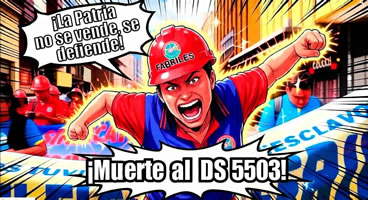
“The new government under Rodrigo Paz has issued a decree abolishing fuel subsidies. This measure, which affects the purchasing power of wages, has a direct impact on the cost of living for millions of people and has already sparked protests. Decree No. 5503, signed on Wednesday evening by the new government of Rodrigo Paz in Bolivia, has already sparked protests. The removal of fuel subsidies represents a direct attack on the purchasing power of wages of workers and the Bolivian population. On Friday, several cities in the country were left without public transport due to strikes and blockades. There have been blockades on the La Paz-El Alto highway since Thursday to protest against the “de facto” increase in public transport fares…” span.Report from the LID Bolivia editorial team from December 19th in La Izquierda Diario  (machine translated) with photos – see more information on further development:
- After accepting an IMF loan and abolishing the diesel subsidy, Bolivia extends the state of emergency by 90 days for fear of new blockades

"The government in Bolivia has extended the state of emergency on the grounds of a continued high potential for conflict in the country. Shortly after the decision, an economic policy measure was implemented with the acceptance of a loan from the International Monetary Fund (IMF) and the associated abolition of the diesel subsidy, which could once again fuel the potential for conflict in the country (...). Last Thursday, 100 of the 158 MPs present voted for the extension of the state of emergency after a nine-hour debate. This means that the state of emergency on 20. The state of emergency imposed by President Rodrigo Paz on June 17 is now in effect until December 17th (...) The state of emergency follows the severe political and social crisis in May and June (...). For seven weeks, various social actors blocked numerous roads across the country. La Paz and El Alto were particularly affected by shortages of food, medicine and fuel. The protests resulted in at least 16 deaths, 13 of which were due to a lack of medical care estimated at more than three billion US dollars. The timing of the measure seems strategically chosen, because on Friday President Paz announced the immediate and complete abolition of state diesel subsidies after Congress approved a loan of 1.9 billion US dollars from the IMF to stabilize the economy (…) Shortly after the announcement of the extension, the main traffic routes between Cochabamba, Oruro and La Paz were secured by 500 security officers at the weekend There were blockades.Several productive sectors, including farmers and drivers, had already spoken out against the abolition of the subsidies. It is therefore not surprising that the transport sector has already called for an indefinite strike on Monday due to the doubling of the price of diesel to 17.95 Bolivianos (1.59 euros). The trade union umbrella organization COB also rejected the complete abolition of diesel subsidies in a public statement and called an emergency meeting to assess the current situation and, if necessary, implement countermeasures. Contribution by Lia Helguero Kandt from September 21, 2026 in Amerika21(“Bolivia extends state of emergency by 90 days”) - Bolivia: Arrest warrant for Morales and other protest leaders in the 53-day protests from May to June
"Prosecutor Brayan Melgar has ordered another arrest warrant in Bolivia against Bolivian ex-president Evo Morales. (…) During the 53 days of protests that lasted from May to June, around 100 roads were blocked, cutting off entire parts of the country from supplies of food, medicine and fuel. (…) Prosecutor Melgar is now accusing Morales of a number of things because of his support for the demonstrators: terrorism, armed insurrection against the security and independence of the state, attack the security of transport and public services, criminal conspiracy and incitement to crime (…) The protests, which were triggered by a sharp increase in fuel prices and quickly culminated in the demand for the resignation of President Paz, were launched by the country's largest union, COB (Central Obrera Boliviana) and the farmers' movement, prosecutor Melgar also called for the arrest of the head of the COB, Marco Argollo, as well as Vicente Salazar, the chairman of the Farmers' Association Túpac Katari. Salazar is already in custody in the Chonchocoro detention center in La Paz for other investigations in connection with the protests. (...) Former MP Freddy Mamani has also been under investigation for inciting crimes, forming a criminal organization, terrorism and his support for the protests, as the Bolivian daily La Razón reported Statements they made during the protests.Mamani was reported because he publicly declared that the government was planning a state of emergency against the protests and because he called on the police and military not to take action against the demonstrators. During the protests, Morales posted on X that the Paz government only had two options: “militarize” the country or call new elections within 90 days. An arrest warrant for human trafficking has already been issued against the ex-president, who ruled Bolivia from 2006 to 2019. That is why Morales has been living in seclusion in his stronghold of Tropico in the Cochabamba department since October 2024, where he is guarded by hundreds of local farmers who are his closest supporters and have so far prevented his arrest. (…) On X, Morales described the judicial actions against him as political persecution. “They are trying to blame us for the social mobilizations in order to obscure the real drama that Bolivia is experiencing: a deep economic and social crisis as a result of a model that has failed the population and protects corruption,” said Morales. (…) Morales emphasized: “They will not intimidate us.”…” Contribution by Rodrigo Paz Pereira in German on August 2, 2026 at the Latin America news pool(“Bolivia: Arrest warrant against Morales and other protest leaders”) - Bolivia: Exhaustion and repression ended fighting on the streets
"After two months of massive protests against the government's neoliberal policies, the armed forces have lifted all road blockades in Bolivia. Farmers, mining and transport associations had put pressure on the government of Rodrigo Paz for 50 days. The reasons for this were rising fuel prices, inflation, wage devaluations and an agrarian reform that affected the common land. The population also criticized US interference, nepotism in President Paz's environment and the negotiations over a loan from the International Monetary Fund (IMF). (…) Applying the state of emergency law in force since June 20, President Rodrigo Paz authorized the deployment of the military to clear the remaining road blockades in La Paz, El Alto, Santa Cruz, Cochabamba and Pando. According to the Ombudsman's office, the blockades resulted in 22 deaths - three of them in police operations -, 88 injuries and 573 arrests, of which 255 criminal charges The social crisis ends for the time being with the withdrawal of resistance and the resumption of food supplies in the cities, but the economic crisis, one of the causes of the uprising, will have profound long-term effects. The growth model based on the export of natural gas has collapsed after the collapse of local production and international prices. For the social movements, the result of this phase of protest is seen as a defeat against the alliance between the center and the right and with regard to the central demand for the resignation of Paz (…). To criminalize and delegitimize, Paz claims that the uprising served the interests of narco-terrorism.The “ringleaders” of the blockades are to be prosecuted on charges of sedición (rebellion). (…) In its attempt to focus attention on other actors, the government cannot distance itself from the links to organized crime that its opponents accuse it of. After tons of cocaine were discovered hidden in wood exported to Brazil in June, the population sees links between the drug trade and the Paz government. The presence of the US Drug Enforcement Agency (DEA) on national territory is already rejected by social movements, but even more so when it allows smuggling networks to operate unhindered. (…) In December 2025, in the second month of its term, the government issued a decree authorizing the operation of the satellite internet company Starlink, which had been banned for years on digital sovereignty grounds. Elon Musk's company, operator of the digital center in El Alto, together with data analysis platforms such as Palantir, forms a system of technological and governmental power. (…) In addition, government data is passed on to private foreign companies that are connected to Trump and international authorities. Nevertheless, the government approved the Starlink plans without significant parliamentary debate. In Latin America, Ecuador is the first country to sign a security analytics system deployment agreement with Palantir.” Contribution by Javier Bedía Prado from July 20, 2026 at the Latin America news pool - Heading up after the COB trade union federation gave in? Bolivia's President Paz declares a nationwide state of emergency and clears road blockades
- The protest movement in Bolivia: looking back at the recent wave of protests. Governing without social movements is not possible
"By the time the roadblocks were lifted at the end of June, the protest movement in Bolivia had carried out demonstrations and road blockades for 52 consecutive days. This included a total of 50 blockade points in the national road network. In doing so, the demonstrators expressed their dissatisfaction with the current government of Rodrigo Paz. One of their main demands was the resignation of the head of state. (…) The last waves of demonstrations took place against the background of the law regulating states of emergency signed by Paz. This measure enabled the armed forces, to intervene in the protests. (…) Support for President Paz had waned after he took a series of measures that alienated him from the broader population. Bolivia was rocked by the crisis and the wave of protests and road blockades isolated the capital, led to a shortage of basic goods and paralyzed transport. Analysts pointed to the increase in violence in the clashes exhausted government, which was able to continue breathing thanks in particular to the airlift made possible by the USA, the signatory states of the “Escudo de las Américas” (Shield of the Americas) and the financially strong agricultural export group. On the opposite side was the ordinary population under the leadership of the COB, which retained its class character despite internal contradictions: it is led by miners, workers, farmers and militant groups, supplemented by the urban petty bourgeoisie of freelancers, trade unionists and others.The peasant organizations of the province of Los Andes in the department of La Paz decided to radicalize the mobilizations. They threatened to disrupt basic services at the Bolivian seat of government. This decision came after seven weeks of road blockades. These worsened the economic damage and shortages of basic foodstuffs that President Paz had promised to address both during the election campaign and at his inauguration. (…) The unrest initially broke out due to specific concerns: such as teachers' demands for wage increases, transport companies' protests against contaminated fuel and the indigenous population's resistance to the land law. The government was able to temporarily defuse some tensions by, among other things, offering teachers a bonus and repealing the land law. But their efforts to appease the population failed: they failed to stem the momentum of a rapidly spreading protest movement united by a shared feeling that the government was not caring about the needs of the vast majority of Bolivians. On May 6, indigenous groups from the Andean highlands began blocking roads around La Paz, demanding the president's resignation. The mobilization quickly drew in other groups, including workers whose wage demands had not been met and supporters of former President Evo Morales, who organized a 120-mile (190-kilometer) march to the capital. The unrest over specific demands eventually turned into direct calls for Paz's removal.After the original Spanish version of this article was published, the nationwide road blockades were ended (…). The basis for this was an agreement between the government and the COB, which suspended their protests…”Contribution by Sullkata M. Quilla in the translation by Susanne Schartz-Laux from July 16, 2026 at Amerika21 - Uprisings in Bolivia: Using all means against the left. High rejection among the population. President Paz is also pursuing the opposition legally
"In Bolivia, the state crisis continues even after the end of the road blockades and the protests against the neoliberal course of President Rodrigo Paz. While the head of state declared a state of emergency by decree in June, used the police against demonstrators and had blockades cleared by members of the armed forces, his approval ratings fell. After the police and the army, the judiciary is now apparently supposed to silence his opponents. Ultra-right allies are helping him in this. The "Citizens' Committee for Santa Cruz" filed criminal charges against the former left-wing president on Thursday Evo Morales, the chairman of the Central Obrera Boliviana (COB), Mario Argollo, and Vicente Salazar, the leading representative of the Aymara farmers' organization Túpac Katari. "They are the leaders of terrorism in Bolivia," said the vice-president of the "Citizens' Committee", Agustín Zambrana Farmer representatives had led a "movement of destruction" to stage a "takeover of power," said Zambrana as he submitted the applications together with entrepreneur and committee chairman Stello Cochamanidis. "The complaint will later be expanded to include deputies we have already identified and other officials," he added. On Friday, AP reported that Santa Cruz prosecutor Karina Lijerón was investigating alleged crimes against security and sovereignty of the state, such as armed insurrections, terrorism, attacks on transport and criminal association.According to the AP, Evo Morales denied the allegations on Thursday and said he did not "incite protests with road blockades that paralyzed the Andean country for more than 50 days." "We decided on a peaceful week-long march from Caracollo (in the southern Oruro region) to La Paz and no road blockades were initiated," he assured. The complaints against him and other members of the opposition are “politically motivated.” The “Citizens’ Committee” also had “no authority” or “moral justification” to report him, since this association had also organized several strikes and blockades in the past that were not legally prosecuted. (…) This obviously didn’t help his reputation. According to a survey conducted by the Ipsos Ciesmori organization between June 22nd and 30th, 45 percent of respondents now reject the head of state, while 38 percent still support him. When he took office in November 2025, Paz still had approval ratings of 65 percent and a rejection rate of 18 percent.” Article by Volker Hermsdorf in the Junge Welt from July 4th, 2026 - Farmers' associations in Bolivia clear blockades, government mobilizes military
“Agreement with government. Parts of the protest movement criticize the agreement as “treason”. Deployment of the military and police in the Trópico de Cochabamba
La Paz. After 52 days of blockades, the protest movement cleared the roadblocks earlier this week. The trade union federation COB had previously concluded an agreement with the government of President Rodrigo Paz and Paz initiated a nationwide state of emergency. The police were supported by the military. However, other parts of the protest movement initially announced that they would continue their protests.
The agreement between the general secretary of the COB trade union federation, Mario Argollo, and Paz provides for the end of the nationwide blockades, but attaches conditions to this. The COB calls for a ban on the privatization of strategic public companies and the rejection of shock measures by the International Monetary Fund (IMF). Argollo said after the agreement: "There must be reconciliation between the rulers and the governed. We must start building a country based on consensus." He rejected the accusation of treason and said the government had 90 days to implement the measures requested by the COB.
However, not all protesting organizations joined the agreement. After an emergency meeting, six associations of agricultural workers in the Trópico de Cochabamba region declared their rejection of the agreement and announced an extension of the road blockades. These include the Unified Trade Union Confederation of Agricultural Workers of Bolivia (CSUTCB), as well as the associations Túpac Katari and the National Association of Indigenous Rural Women of Bolivia…”Contribution by Yannik Mallmann from June 27th, 2026 in Amerika21 - President Rodrigo Paz declares a nationwide state of emergency
“The right-wing president wants to end weeks of protests by the military. It is intended to clear road blockages. Left-wing demonstrators demand Paz's resignation.
After weeks of mass protests and road blockades, Bolivian President Rodrigo Paz declared a state of emergency for the entire country on Saturday. Paz said in a televised speech to the nation early on Saturday morning that he had exhausted “all possibilities for dialogue” with the demonstrators. He was reacting to road blockades that have been ongoing for 50 days, which have brought the South American country's economy to a virtual standstill and indirectly led to several deaths.Paz explained that he decided to take this step because numerous protesters were trying to “destabilize Bolivia.” The president continued. He made agreements with those protesters “whose demands were legitimate.” He was apparently alluding to an agreement reached on Friday with the trade union umbrella organization COB. (…)
Paz said, referring to the blockades, that he had ordered the armed forces to “restore free traffic, regain control of the roads and ensure the safety of the population.” If the protesters continued the blockades, they would face “the full force of the law.”…”Agency report from June 20, 2026 in the taz online - Organizations in Bolivia declare resistance and announce an extension of the blockades
“They reject the presidential decree declaring the state of emergency and denounce that it is being used to persecute the popular leaders who are leading the uprising against neoliberalism
After Rodrigo Paz's government declared a state of emergency in Bolivia, a group of social organizations categorically rejected this measure, believing that it would be used to persecute popular movement leaders. They called for unity and announced that they would increase blockades until the president resigns.
The struggle continues, said in separate statements the 6 associations of the Trópico de Cochabamba, the Unified Trade Union Confederation of Agricultural Workers of Bolivia (CSUTCB), as well as the associations Túpac Katari and Bartolina Sisa, who rejected Supreme Decree 5636 - which authorizes the armed forces' support of the police to clear the streets - calling it “an act of militarization of social life and a violation of ours “fundamental rights”.
After an emergency meeting of their representatives, the 6 associations of the tropical region agreed to “resist the state of emergency imposed by the government” and announced an extension of the blockades in the department of Cochabamba.
They also rejected the peace agreement signed between the government and the Bolivian Confederation of Trade Unions (COB), believing that the group led by Mario Argollo had betrayed the struggle after 51 days of blockades. (…)
“We condemn with particular indignation the behavior of Mario Argollo,” the text continues, “who, after forming an alliance in struggle with our grassroots organizations, sold out to the government and signed a peace agreement that disregards the will of the people and betrays the cause of the trade union movement.” (…)
The associations Tupac Katari (Departmental Association of Agricultural Workers of La Paz “Túpac Katari”) and Bartolina Sisa (National Association of Indigenous Peasants of Bolivia – Bartolina Sisa) declared that they do not recognize the agreement between the COB and the government and therefore will maintain the blockades. They added that the agreements reached by these organizations neither reflect the organizational decisions of their base nor respond to the demands put forward. “As long as there are no concrete answers and effective measures to our demands, the pressure measures will continue, in accordance with the decisions of the 20 provinces of the department of La Paz,” they explained…” span.Report from June 20, 2026 on teleSURwith videos (machine translated) - Bolivia: Government and COB examine the files of those arrested during the popular uprising
“The government and the Bolivian trade union federation Central Obrera Boliviana have set up a legal commission to examine the situation of the demonstrators who were arrested after 49 days of protests. The government of the Plurinational State of Bolivia announced on Thursday that it intends to immediately resume negotiations with the leadership of the Bolivian Confederation of Trade Unions (COB). Policymakers are seeking a final agreement to end 49 days of road blockades and union protests in the country. On June 16, the COB presented a list of demands for pacification of the country, which includes, among other things, the release of demonstrators arrested during the popular uprising and road blockades. (…)
The leadership of the trade union federation made the continuation of the industry negotiations dependent on the immediate clarification of the legal status of the arrested workers, against whom charges were to be brought for alleged disruption of public order. In view of this demand, the teams made up of lawyers from the executive branch and the delegates of the trade union federation began examining the files.
The COB paper makes pacification dependent on the fulfillment of various demands. In the economic sphere, for example, it calls for a ban on any privatization, capitalization or covert contracting of strategically important public companies to domestic or foreign private interests, as well as any subordination to the shock measures of the International Monetary Fund (IMF), which would aim to impose neoliberalism and destroy the plurinational state, thereby reverting the country to a neocolonial state…” span.Report from Resumen Latinoamericano on June 19, 2026(machine translated) - The meetings decided: Bolivia is not for sale! The betrayal of the COB leaves the farmers and self-organized groups to their fate in the face of the reactionary government of Rodrigo Paz
“After 50 days of mobilization, the COB is finally turning its back on the farmers and self-organized groups that have resisted through long days of meetings, blockades and demonstrations - a blatant betrayal.
Argollo, Paye and Co. have just bowed to the government of Rodrigo Paz, just as the leaders of the Huanuni and Colquiri mines have done in recent days. In doing so, they join in with the companies' attempt to sell the land at a ridiculous price, leaving the farmers, the self-organized, the workers and the women who want to fight against austerity measures and exploitation to their fate. Despite his statements two days ago, Argollo signed the agreement without releasing all political prisoners imprisoned for their struggle and contented himself with the promise of “review commissions”.
According to the agreement, 90 days are needed to set up working commissions - which means nothing more than ending the mobilizations without anything concrete on the table. “The agreement envisages working in commissions to meet the needs of each sector,” explained Mario Argollo.
Not content with reaching an agreement with the government, COB officials have the audacity to call on the Tupac-Qatari movement to calm the situation and lift the blockades they have maintained for more than 50 days.
There is not a single concession to the protest movement, nothing concrete, just general formulations such as compliance with the constitution, a working commission that will examine the situation of prisoners on a case-by-case basis, “not pushing forward” privatizations, keeping their election promises or reporting on international loans.
Neither will any of the decrees already passed be repealed or repealed, which exposes this whole farce even more clearly: Paz has already implemented part of his neoliberal program, and now thanks to the COB - and together with it - he will be able to make much further progress.
To make matters worse, this agreement comes at a time when the government - neither stupid nor lazy - has quickly passed Law 1742, which amends the criminal law to facilitate undercover investigations, and has also announced the imminent devaluation of the Boliviano, which is putting a strain on families' wallets, and the signing of the agreement with the US Embassy to intervene in the country under the pretext of combating drugs.
Argollo has moved from “Bolivia is not for sale” to the stance that every resource issue should be “addressed through dialogue,” betraying the battle slogans of hundreds of thousands of farmers, workers and self-organized activists who are unwilling to allow the exploitation of Bolivia’s natural commons and mortgage the future…” span.Article by the LID correspondent Bolivia from June 19, 2026 in La Izquierda Diario(machine translated) – the currently most accurate representation of the agreement, see also: - Bolivia: Huanuni and Colquiri mining unions sell out to Rodrigo Paz's government
“As thousands of workers, farmers and residents have been protesting for almost 50 days, union leaders in the main mining centers are signing agreements with the government of Rodrigo Paz.
Just when Rodrigo Paz most needs to show that he has regained the political initiative, he receives a lifeline from the miners' union leadership in Huanuni and Colquiri.
While the will to fight is reaffirmed from below, every day and at every blockade point, people are voting to strengthen and expand mobilization and to consolidate and advance the unity of the mobilized sectors. A different direction began to take hold from above. The Bolivian Trade Union Central (COB) effectively abandoned the demand for Paz's resignation, dashed the prospect of an effective general strike and work stoppage, and began negotiations with the government. Now the leadership of Huanuni and Colquiri are taking this path one step further…” span.Article by the LID correspondent in Bolivia from June 19 in La Izquierda Diario(machine translated) - The Bolivian people demand that they be heard
“Bolivia: There will be no more stars on the American flag
The criminalization of social protests and the support of paramilitary groups by the government of Rodrigo Paz are driving the brother country into social chaos. The blockades have now lasted almost two months and require a concrete response from a government that appears to have misled the people.
The situation in Bolivia is changing from day to day. Various conflicts permeate the local power circles, subject to the policies dictated by the USA, Trump's “Shield of the Americas” and the Bolivian agro-industrial oligarchy, and on the other hand, the popular movements, both the historical - COB, farmers' associations, teachers' organizations, feminists - and the more recent - assemblies and neighborhood coordination bodies that have emerged in the context of the blockades that have now lasted 50 days.
Against a backdrop of societal exhaustion and lack of adequate responses to demands, President Rodrigo Paz and the Huanuni miners expressed their willingness to engage in dialogue, and the COB leadership called for a pause in negotiations. One of the issues raised to ensure dialogue is the release of those arrested. These decisions are not necessarily supported by some groups that took part in the blockades. They demand concrete answers to the demands they have put forward as well as clear information about the repression carried out not only by the police forces, but also by fascist paramilitary groups such as the Unión Juvenil Cruceñista (UJC).
Sitting in front of the television, listening to the radio or reading newspapers, a picture emerges of Bolivia in which society supposedly condemns the social protests that have arisen in various places in the country. However, the issues that have sparked these protests resonate with different segments of the population, even among some who voted for the current president seven months ago. The main reasons for the mobilization include the increase in fuel prices as well as the deterioration of fuel quality, as imported gasoline is considered “garbage” because it ruins vehicle engines. Under neoliberal policies there is also a food crisis, the risk of farmers losing their land, difficulties in accessing water and the question of whether a decent life can be guaranteed.
The first actions of Rodrigo Paz's government were perceived as a betrayal. Taxes on large fortunes were abolished – a gesture of “goodwill towards the oligarchy”. It was proposed to privatize strategic resources, promote the sale of small peasant plots of land, and allow farmers to take out mortgages and incur debts - a way to lose these plots of land while they were inalienable under the government of Evo Morales. The teachers stood up and demanded that their rights be respected. The health sectors also denounce the hollowing out of hospitals and the lack of consumables and measures to protect the lives of the entire population. (…)
If you talk to the resistance groups - whether already organized or not yet - you will notice an expression of dignity, an attitude that is not only associated with the defense of the rights that have been won, with the rejection of the privatization of the commons and with the defense of the land as an asset that cannot be expropriated, but also with the refusal that Bolivia becomes a country dominated by racist, patriarchal, homophobic and transphobic violence and by a politics of hate. It shouldn't be just another star on the American flag.
A part of these mobilized populations voted for the current president, Rodrigo Paz; Not everyone is a supporter of Evo Morales, but they feel let down because he has reneged on most of his promises and instead focused on negotiating the country's future with the agro-industrial oligarchy and the IMF. As in other countries on the continent, Rodrigo Paz felt protected by the “Shield of the Americas” and did not take into account the aspirations of the Bolivian people to defend their sovereignty and their cultural and political identity. They are a people with experience in battle and enormous dignity…” span.Article by Claudia Korol from June 20, 2026 in Pagina12(machine translated) - Bolivia at a crossroads: trade union federation talks to right-wing government. A comprehensive list of demands, but a radical base continues to demand the president's resignation
“Civil war-like conflicts have been shaking the Andean country of Bolivia for 47 days. Now representatives of the trade union umbrella organization Central Obrera Boliviana (COB) and the government of right-wing President Rodrigo Paz have agreed to negotiate. Details of the talks, which were scheduled to begin on Wednesday morning (local time) in La Paz, were not yet available at the time of going to press. But the fact that the government is even negotiating the COB's far-reaching demands, which aim for a fundamental change of course, is seen as an admission of its increasing political isolation and as a reaction to the fact that the protests have not subsided despite violent repression. The list of demands presented by the COB begins with a reckoning with seven months of neoliberal shock policies since Paz took office. The trade union federation, which has two million members, is now demanding guarantees for the right to social protests, an end to the criminalization of activists, an amnesty for those arrested and the suspension of the so-called anti-blockade laws. In addition, the COB calls for a ban on privatization of state-owned companies, the disclosure of international loans and a freeze on fuel prices. The president and elected officials should also be required by law to implement their pre-election announcements in which they ruled out agreements with international financing institutions such as the IMF and the World Bank. If the talks fail, the union leadership announced that the blockades would be extended. Paz's government tried to portray itself as willing to engage in dialogue on Tuesday, but tied the talks to the condition of "independence from political pressure."Shortly before the negotiations began, Paz quickly made a security policy U-turn and signed a new "anti-drug agreement" with the USA, which provides for training and equipment by US authorities. The rapprochement with Washington marks a further departure from the policies of previous left-wing governments. Former President Evo Morales had once expelled the US drug agency DEA from the country. Critics warn that the geopolitical realignment under Paz would strain the talks and further exacerbate domestic political tensions. In any case, it is questionable whether the negotiations can even lead to a “pacification” of the tense situation. So far, economic losses amounting to billions, at least 16 deaths and numerous injuries have been recorded. (…)
US Secretary of State Marco Rubio added fuel to the fire with a warning that the US would “not allow” Paz’s overthrow. Indigenous peasant leaders close to Morales therefore categorically rejected the dialogue and described it as a “deception.” The base is sticking to the central demand for Paz's resignation, said several indigenous and peasant representatives. They warned the COB leadership that any agreement reached without the support of the protesters would be worthless.” Article by Volker Hermsdorf in the Junge Welt from June 18, 2026 - Bolivia. After 42 days, the fighting continues unabated: 90 road blockades remain in place and various groups reiterate Paz's resignation
“This Thursday, the uprising in Bolivia against Rodrigo Paz's policies had already lasted 42 days. There has been strong criticism of police repression in La Paz. The Huanuni miners are ready to march if the COB calls them to do so. The farming communities reaffirmed their stance of struggle and unity. The organizations Tupak Katari and Bartolina Sisa convene a community meeting in the province of Los Andes…” span.Report from June 11th at La Izquierda Diario(machine translated) - Media response and international solidarity with our colleague from “La Izquierda Diario Bolivia” who was injured during the repression
“Our colleague, correspondent of “La Izquierda Diario” and human rights activist, Violeta Tamayo, was seriously injured in the arm on Wednesday during the violent dispersal of the demonstration organized by the farmers’ association “Federación Campesina Tupac Katari” and the Bolivian trade union federation “Central Obrera Boliviana”. This extremely serious incident received widespread media attention and sparked expressions of solidarity from organizations and various personalities.
One of the tear gas grenades used by the security forces on Wednesday afternoon against the demonstration organized by the farmers' association "Federación Campesina Tupac Katari" and the Bolivian trade union federation "Central Obrera Boliviana" hit our colleague Violeta Tamayo, correspondent for "La Izquierda Diario Bolivia" and human rights activist, as part of her coverage of the march. Violeta was injured in the police operation that left dozens arrested and other protesters bruised. In her case, she required emergency surgery in the hospital because the injury resulted in an open fracture of her forearm; She will need another operation in the next few days…” span.Report by the LID Bolivia editorial team from June 11th at La Izquierda Diario(machine translated) - Day of the fight. Resistance of workers and farmers on the streets of La Paz: Despite the repression, a mass rally took place
“The farmers' association “Tupac Katari” had called for a rally this Wednesday in El Alto, from where a march towards La Paz took place; The Bolivian workers’ union “Central Obrera Boliviana” also joined this call. More than 40,000 people took part in the demonstration. The police took a heavy-handed approach, resulting in arrests and injuries, including members of the media. Follow all the coverage in this special report from La Izquierda Diario Bolivia (Bolivian time stamp)...” span.Report of theEditorial LID Bolivia from June 10th  (machine translated) with the live stream from the big march
- The protest movement in Bolivia: looking back at the recent wave of protests. Governing without social movements is not possible
- Kidnapping and arrest of five COB union officials as well as other human rights violations - even before the state of emergency that has now been announced in Bolivia
- Resistance in Bolivia continues despite violence and repression: government creates legal basis for military operation. Attacks on roadblocks exacerbate the clashes
“…A central aspect of the law is the concept of “operational overload”, which allows the use of the armed forces if the police cannot handle the situation with their own resources. This measure appears to be controversial even within the government. After the law was announced, Defense Minister Marcelo Salinas and Education Minister Beatriz García resigned. As Telesur reports, they allegedly refused to sign a decree declaring a state of emergency. The measure comes into force just a week after the lifting of legal restrictions that limited the use of armed forces at demonstrations ( Amerika21 reported).
The approval of the Bolivian legislature met with sharp criticism from the protesters. The umbrella organization of Bolivian trade unions (COB) speaks of a betrayal of the people by the representatives. The farmers' association Tupac Katari sees the law as a violation of the Bolivian constitution and warns of massacres against the population. Bolivia's former left-wing president Evo Morales made similar comments in an interview with Radio Cochabamba, calling the law a "license to kill."
As the government prepares to violently crack down on the blockades by the military, the judiciary has arrested several protest leaders. According to Telesur, a six-month pre-trial detention order has been ordered against Justino Apaza, a central figure in the COB's mobilizations in El Alto. Police also forcibly arrested Simona Quispe, former senator from the left-wing MAS party, and Yesenia Vargas, former executive director of the Carrasco coca growers' association. (…)
In addition to arresting protest leaders, the government is also using physical force to end the blockades. According to Resumen Latinoamericano, serious clashes broke out in the town of San Julián, Santa Cruz department, when police, military personnel and members of the ultra-right paramilitary Unión Juvenil Cruceñista (UJC) violently attacked people in a road blockade.Despite the attack, the blockade initially remained in place. In response, residents of San Julián stormed the premises of the local police station and set it on fire. (…)
Despite the massive attacks by the government, only eight blockades have been cleared so far. According to RTP Bolivia, 85 of 93 blockades in the country were still active at the beginning of the week. The protesters apparently do not allow themselves to be intimidated and are sticking to their political demands. This is also clear in the COB’s statement. It ends with the words: “The voice and rights of workers cannot be silenced by repression!""Report by Yannik Mallmann from June 10, 2026 in Amerika21 - Bolivia in turmoil: COB reports kidnapping and arbitrary arrest of five union leaders
“The Bolivian Trade Union Central (COB) sounded the alarm bells on Monday, denouncing the kidnapping and arbitrary detention of five of its national leaders, as growing cross-sector protests and road blockades take place in the South American nation to demand the resignation of Rodrigo Paz as president due to his government's neoliberal austerity measures.
According to a statement distributed by the organization, the incidents occurred on Sunday afternoon on the street when the trade unionists were traveling peacefully in a private vehicle and were brutally intercepted by a group of masked, plainclothes men with firearms. The attackers, who did not present a police report or a court order, used tear gas inside the closed car to force the victims to flee, thereby putting their lives and physical integrity in immediate danger.
After this violent interception, the five leaders were taken to the Special Commission for the Fight against Crime (FELCC), where they will be held pending the submission of a police report on the direct action.
The COB found that this arrest had no legal basis, as there was no flagranza, no judicial order or authorization from competent authorities, which constitutes a “blatant violation of the political constitution of the State”. (…)
Even more alarming is the recent spread of videos on social networks that would show torture and violent attacks against those arrested. It was emphasized that if the authenticity of these recordings were confirmed, it would be considered torture and inhumane violence against our comrades, in direct violation of international agreements (…)
Given this situation, the COB called for the immediate and unconditional release of the five leaders, deeming the arrest “completely legally void.” At the same time, the urgent intervention of the Ombudsman, the Inter-American Commission on Human Rights (CIDH) and the International Labor Organization (ILO) was called for, while a national emergency was declared…”Article from June 8, 2026 in the German version by El Ciudadanowith original document and previous COB announcements - No to the declaration of a state of emergency in Bolivia!
“Bolivian President Rodrigo Paz announced a state of emergency law on Monday. There is a threat of harsher repression as leaders of key organizations are arrested. Down with the state of emergency and the suppression of rebellion!
After being passed in the Senate and the House of Representatives, President Rodrigo Paz finally announced the state of emergency law on Monday. He described the rebellion of workers, indigenous people, farmers and poor masses that Bolivia has been experiencing for over a month as “drug terrorism”. At the same time as the state of emergency law was announced, surrounded by military officers, Paz again spoke repeatedly about a new dialogue channel - something that has already failed several times and was rejected by a massive gathering in El Alto on Tuesday last week.
While Paz announced the state of emergency law, there are at least 90 blockades across the country calling for his resignation as president.
In recent days, attempts have been made to break down the blockades by persecuting and arresting leaders of various organizations, including five leaders of the Bolivian Trade Union Central (COB). The church is also exerting pressure to have the blockades lifted, otherwise limitless repression will break out. Finally, they also tried direct repression, as was the case at the weekend in San Julián: the police and military, together with right-wing gangs from the Unión Juvenil Cruceñista, tried to lift the blockade in a brutal attack. Eventually, however, they had to flee from the resistance of the demonstrators, who not only drove them away but also set the local police station on fire…” Article from June 8th in Spanish at La Izquierda Diarioin the translation by Stefan Schneider on June 9th, 2026 at Klasse gegen Klasse - Bolivia: Tyranny vs. the Right to Insurrection. President Paz announced the state of emergency law
“As the president attempts to portray the massive protests as linked to drug cartels, the Bolivian people are becoming more organized and alerting the international community to the human rights abuses the regime is committing.
Bolivian President Rodrigo Paz promulgated Law No. 1740 “Regulating the State of Emergency” on Monday, June 8, while the Bolivian people have been actively protesting for over a month against the privatization measures pushed by their government. (…)In this context, the Head of State assured that it is groups of “drug terrorists” who are leading the protests calling for his resignation and warned that “their days are numbered” thanks to this law, which will, among other things, allow him to use the military to crack down on demonstrations and road blockades, as well as restrict freedom of assembly and movement. In view of this, the opposition criticized the adoption of the law, pointing out that it undermines democratic guarantees and the protection of human rights, as highlighted by indigenous leader and former President Evo Morales…” span.Report from June 8th, 2026 in El Ciudadano(machine translated) - Bolivia: Security forces clear blocked highway after weeks of protests
“After more than three weeks of blockades, police and armed forces in Bolivia have cleared part of a key highway in San Julián. The protests are directed against austerity measures and rising costs of living.”Video online on June 7, 2026 in the Süddeutsche Zeitung
- Resistance in Bolivia continues despite violence and repression: government creates legal basis for military operation. Attacks on roadblocks exacerbate the clashes
- Government in Bolivia refuses to resign and threatens a state of emergency - new self-organized groups are demanding a real general strike from the COB instead of negotiations
- IMF in Bolivia: Government in La Paz confirms negotiations with International Monetary Fund on loan program. Protests continue unabated
“In Bolivia, trade unions and social organizations intensified their protests against the neoliberal restructuring of the state on Monday. More than 80 road blockades once again brought large parts of the country to a standstill, with the departments of Cochabamba and La Paz particularly affected. Despite repression, the trade union umbrella organization COB, farmers' organizations and indigenous movements continue their resistance against the government of President Rodrigo Paz unabated. They are demanding the immediate resignation of the head of state and accuse the government of having made a drastic economic policy reversal within a few months, which Paz had expressly ruled out during the election campaign. The role of the International Monetary Fund (IMF) is increasingly becoming the focus of the dispute. According to its guidelines, subsidies for fuel were cut, state-owned companies were to be privatized or closed and new liberalization laws were to be introduced. (…)
According to official information, it is a total package of between around three and five billion US dollars, which is to be made available together with other multilateral institutions. Paz tries to present the 180 degree change of course and the rapprochement with the IMF as a self-determined process. The negotiations would be conducted under conditions that Bolivia had set itself, he said on May 26. There will be no plan imposed from outside. The promised billions should not flow into the state budget, but directly into productive projects. In fact, the abolition of fuel subsidies, privatization of state-owned companies, liberalization of import and foreign exchange rules and the announcement of a 30 percent cut in public spending by 2026 correspond exactly to the IMF's usual conditions for granting loans…”Article by Volker Hermsdorf in the Junge Welt from June 3rd, 2026 - Law gives government in Bolivia free rein for state of emergency. The government offers dialogue, protesters initially reject it. Arrest warrants against union leaders lifted
"La Paz. Amid the ongoing protests, Bolivian President Rodrigo Paz has announced a new law that provides for the repeal of the previous Law 1,341 of 2020. This law set the requirements for declaring a state of emergency, set a time limit of 60 days and prohibited a new proclamation without parliamentary oversight. The repeal, which was passed with more than two-thirds of the votes in both chambers last week, gives The government now has legal freedom to declare a state of emergency and deploy armed forces. The measure is passed in the midst of protests and road blockades that have been going on for almost a month, which have led to supply shortages and paralyzed large parts of the country ( Amerika21 reported (…)
Similar to Salvadoran President Nayib Bukele and Ecuadorian President Daniel Noboa, he relies on states of emergency as a tool to control social conflicts. The abolition of Law 1.341 met with criticism. Trade unions and social organizations warned that the measures facilitated state repression against the protest movement. (…)
Meanwhile, last Friday, the criminal court of La Paz lifted the arrest warrants against Mario Argollo, secretary general of the Central Workers' Organization of Bolivia (COB), and Vicente Salazar, leader of the Túpac Katari peasant federation. These had been issued for “incitement to crime” and “terrorism” and the cancellation of the arrest warrants was considered the central demand of the social movements for negotiations to begin. Despite the new law, Paz continued to call for dialogue: "The country needs order, the situation is getting worse, time is short. We demand dialogue." (…)
On Sunday, the COB decided at its general meeting not to take part in the dialogue called by the government and to continue the pressure measures. Any possible approach must first be examined by the mobilized organizations. The representative of the Unified Trade Union Confederation of Agricultural Workers of Bolivia (CSUTCB), Severo Marca, explained that the rank and file adheres to its position and that no formal invitation for dialogue has been received. “No dialogue, we have not seen any invitation here either,” he reiterated, emphasizing that any possible rapprochement must be examined by the mobilized organizations. Humanitarian corridors for ambulances and medical emergencies should be maintained…”Article by Lilith Mić from June 2nd, 2026 in Amerika21 - Rebellion in Bolivia: Blockades and Self-Organization
“Bolivia has been experiencing a real rebellion of workers, farmers and the masses for a month. What is happening in the South American country and how are the masses organizing to fight against the government's plans? After months of betrayal by the various bureaucracies, Bolivian workers and farmers are developing new forms of organization and discussing the next steps together. They are sure that they cannot trust the “dialogue rounds” proposed by the government, as it then represses and cuts even more harshly. They know that it is necessary to work towards an effective general strike that will destroy the entire plans of the right-wing government of Rodrigo Paz and force his resignation. (…)
Amid the need to advance these demands, and as the demand for the overthrow of Paz intensified and grew, it became clear that the bureaucratic leadership of the movement, starting with the COB, was not implementing the commitments made in the May 1 list of demands, starting with the indefinite general strike.
So the workers and farmers began to take these struggles into their own hands and pushed forward a (still ongoing) process of no longer recognizing these sold tours. Because Paz, faced with the great dissatisfaction, tried to negotiate separately with the different sectors and their demands: with rural teachers, with urban teachers, with the health sector, with the departmental associations of Potosí, in the different departments of the country, with the Federation of Neighborhood Assemblies (FEJUVE) and with some organizations of the indigenous communities in the lowlands such as the CIDOB. This has caused even more anger among the rank and file because these negotiations only benefit the leadership and do not meet the demands of those who suffer most from the austerity measures. That's why people began to gather at the blockade points in the various neighborhoods of El Alto, who now felt called upon and discussed the need for organization. (…)
Based on this situation, there was a group of residents in the various districts, especially in Senkata, who organized themselves. When they wanted to join the blockades, they found that their leaders, on the contrary, sought dialogue and wanted to make agreements with the government, which is why they began to no longer recognize them. An example of this was in the neighborhood councils in the south, FEJUVE Sur de El Alto, whose leader was given a vehicle by the government of Rodrigo Paz. The base refused and asked him to return it. Eventually he had to comply and returned with the words "I have done my duty", but that was not enough and the rank and file finally "whipped" him, i.e. h. She enforced her own justice and explained that the rejection was due to the fact that he sat down at the negotiating table with Paz and, on top of that, received benefits in order to persuade the neighbors who are demanding his resignation to demobilize. And this repeats itself in different places. (…)
But they not only set up blockades, but also called for meetings (“cabildos”): an instance where, in response to the call, residents, workers, mothers with their children, students, traders or informal workers come together to discuss the next steps and how they can block their district. A few days ago, for example, a meeting took place in Ventilla, where one of the most important points was the decision that the meeting itself should call for further blockades and mobilizations to be intensified. (…)
This type of experience is crucial, as the first steps are also being taken in the coordination of the various committees in other areas and districts, calling on other sectors of workers and farmers to also join and participate in these democratic organizing bodies in order to take into their own hands the implementation of the indefinite general strike until the resignation of Rodrigo Paz. (…)
The threats from the government and the entire right to declare a state of emergency and intensify the repressive offensive must be a wake-up call to deepen the forms of coordination between the different sectors and to radicalize the combat measures, as one of the delegates to the Senkata Blockade Committee said, starting with demanding that the COB implement the general strike in every workplace, while we fight to force it from below.” SpanishArticle by Diego Iung from May 29 in La Izquierda Diarioon May 31st2026 in the translation by Stefan Schneider at Class against Class , see also: - Bolivia as a laboratory for class struggle
"The uprising of workers, peasants and people in Bolivia against the government of Rodrigo Paz is part of a turbulent regional situation marked both by the decline of the hegemony of the United States and by its renewed imperialist attempts to gain a foothold in Latin America. Against this background, Paz in Bolivia, Milei in Argentina and Kast in Chile - three faces of the same imperialist offensive - are experiencing an accelerating crisis. The strategic question of how to defeat the pro-imperialist right can become more and more concrete.
In these weeks it will be decided in Bolivia whether we are about to begin a counteroffensive on the streets against the new right-wing wave in Latin America. President Rodrigo Paz has been in office for just over six months and is already facing a rebellion that has been brewing since the beginning of the year, despite bureaucratic betrayals and repression. There were three weeks of road blockades and demonstrations between December and January. Now we are faced with an uprising of workers, farmers and the population. On May 16, the government attempted to suppress them with brutal repression that left four people dead. The result was the opposite: the next day there were even more road blockades, and the following Monday a huge demonstration marched from El Alto to La Paz under the slogan “Paz out.” Friday the 22nd saw another day of mobilizations and blockades. The following Saturday, the government attempted to break the blockades, but this operation, known as “white flags,” failed miserably thanks to the resistance. As of May 24, nearly 60 blockades were recorded across the country. On Monday the 25th, another mobilization day took place from El Alto to La Paz, the largest in recent weeks, with new populations joining the conflict.
The Paz government's plan includes raising fuel prices, attacking education and healthcare, while cutting taxes on big business; it aims to occupy the lands of small farmers and indigenous peoples, plunder lithium and commons, and deepen the country's subjugation to the IMF and imperialism. It is not surprising that the Trump administration has united behind Paz; Of course, Netanyahu couldn't be missing either, and Milei sent Hercules aircraft to the Bolivian government. This support can be explained by the fact that events in Bolivia open up the prospect of defeating the pro-imperialist right-wing governments on the streets. Amid the intensified imperialist offensive in the region, US imperialism sees the danger that the Bolivian insurgency could sweep away one of its henchmen. This must also be seen in the context of the conflict with China. It is an attempt to reassert geopolitical control over what they see as their backyard. And Bolivia is a strategically important area: together with Chile and Argentina, it forms the lithium triangle. (…)
The Bolivian insurgency, still in full development, raises a number of crucial questions for those fighting the region's pro-imperialist right-wing forces. First of all, it shows that direct action is the only language these governments understand. These governments cannot be defeated by asking them to respect the democracy that they themselves violate immediately after taking office in order to implement their pro-imperialist plans, but only through direct action. As long as there were declarations, communiqués and “dialogues”, the Paz government pushed forward with its austerity plan; As the blockades and mobilizations began, which could not be suppressed by repression, the Paz government fell into a deep crisis. The Bolivian uprising, still in full development, raises a number of crucial questions for those fighting against the pro-imperialist right-wing forces in the region. First of all, it shows that direct action is the only language these governments understand. These governments cannot be defeated by asking them to respect the democracy that they themselves violate immediately after taking office in order to implement their pro-imperialist plans, but only through direct action. As long as there were declarations, communiqués and “dialogues”, the Paz government pushed forward with its austerity plan; When the blockades and mobilizations began, which could not be suppressed by repression, the Paz government fell into a deep crisis.
Second, self-organization shows that it is the only alternative path to demobilization driven by bureaucracies. Bolivia shows tendencies in this direction: thanks to self-organization, which is essentially expressed in the blockades - supported by self-formed committees - the struggle continues despite the maneuvers of the COB and the repression by the government. The further development of these forms of self-organization towards higher forms of coordination can combine forces to enforce the united front that leads to the mass movement of struggle and the enforcement of the general strike to force the resignation of Paz and all coup leaders…” span.Article “From the federal associations” from May 27, 2026 on sindicalismo.org(machine translated) - Uprising in Bolivia. The Bolivian Federation of Trade Unions rejects negotiations and calls for the resignation of Rodrigo Paz, but does not call a general strike
“An expanded committee of the Bolivian workers' union "Central Obrera Boliviana" decided to continue to firmly demand the resignation of Rodrigo Paz, rejecting any dialogue efforts and calling for the blockades to be maintained…” span.Article by the LID Bolivia editorial team from May 31, 2023 in La Izquierda DiarioRead the full story at the source
Source: labournet.de
- IMF in Bolivia: Government in La Paz confirms negotiations with International Monetary Fund on loan program. Protests continue unabated