
Politics · Perspektive Online · · 2h
Bolivia: IMF loan and austerity policies continue to fuel protests
Deutsch (original) · Auto-translated to English
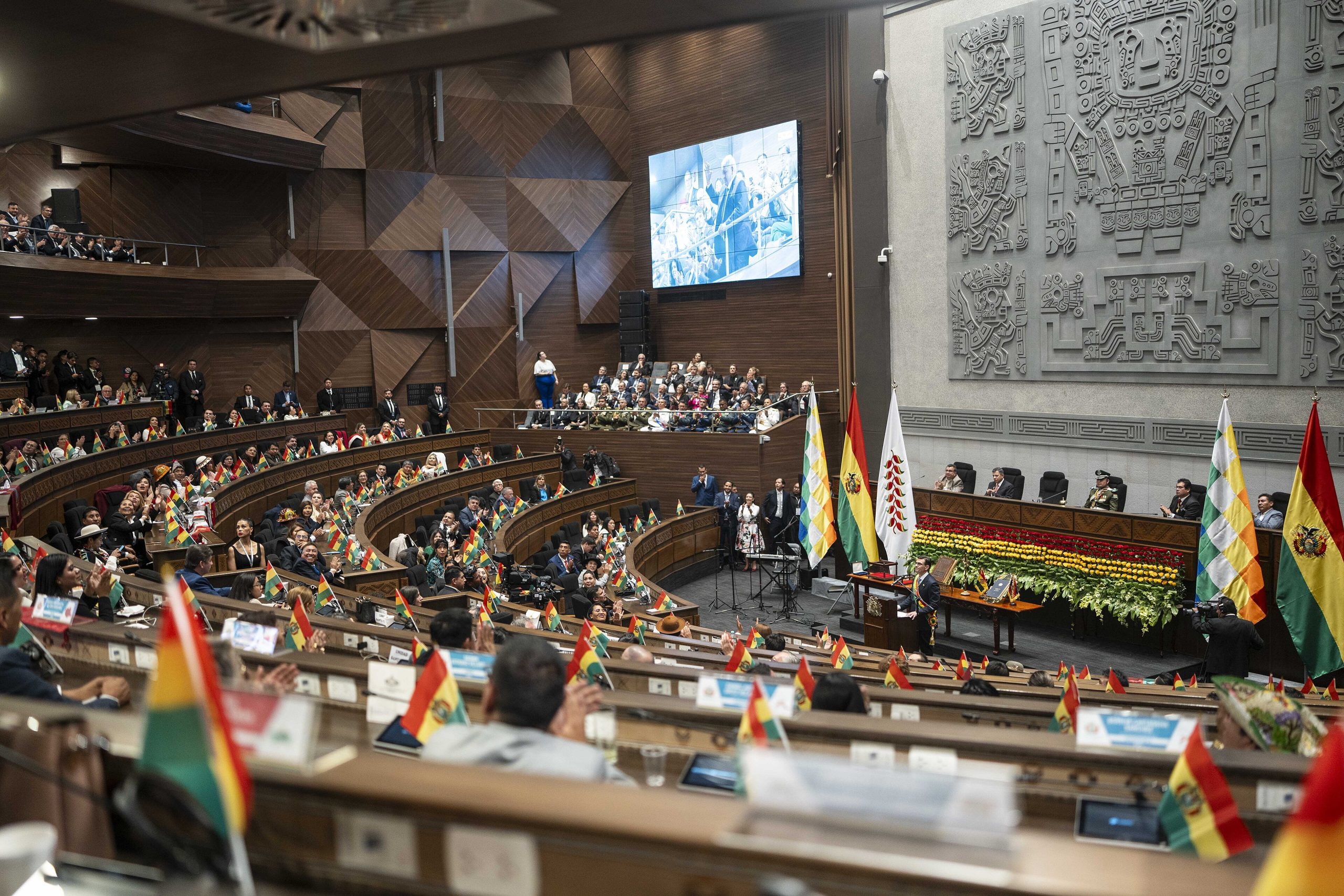
The Bolivian government wants to take out a loan worth billions. This is coupled with a brutal austerity policy that further attacks the living standards of the Bolivian population. While unions are already announcing protests, the government is preparing for greater repression.
On Friday, the Parliament and Senate in La Paz approved onecreditfrom the International Monetary Fund (IMF) in the amount of 1.9 billion US dollars. The disbursement of the loan is part of an economic program from the IMF, which is scheduled to last 36 months. However, the final payout is still subject to the approval of theExecutive Councilof the IMF.
The Bolivian government also expects further investments to be made through the agreement. The IMF loan provides access to more than five billion dollars additionalfinancing, through institutions such as the World Bank. At the same time, it is hoped that the agreement will once again appear more attractive to foreign investors and be able to reduce the budget deficit.
The government led by President Rodrigo Paz of the right-wing liberal Christian Democratic Party (PDC) announced that the loan would continueeconomic crisisto want to fight in the country. Bolivia has been suffering from a lack of foreign exchange, high inflation and fuel shortages since 2014 - and has become even more severe since 2024. In addition, natural gas exports, which were an important source of income, have declined dramatically.
Presidential election in Bolivia: Only 3% for Evo Morales party
Austerity program: further attacks against the population
However, by taking out the loan, the Bolivian government is committing to extensive economic supportSavings program. Stricter budget discipline, more flexible currency exchange rates, reforms to increase productivity and the reduction of state subsidies are planned.
The neoliberal program envisages several reforms that will make living conditions extremely difficult for the Bolivian population. The consequences of the economic crisis should therefore increasingly be passed on to the population. However, better conditions should be created for companies and investors.
For example, there are plans to repeal the wealth tax, while wages in parts of public administration are to be frozen. Also quitMinister of Economic AffairsCristian Andrés Morales Burgos announced the closure of public companies, which will result in a number of job losses: "In the short term - I'm talking about the coming months at least - there is a group of around eight to ten companies that we will start closing."
In a further step, price controls for basic foods are to be suspended and food exports are to be fully permitted.
Fuel subsidies suspended
Immediately after the discussion in parliament, the government began to implement the requirements: President Paz called for the complete abolition on FridayFuel subsidiesannounced, causing the price of diesel to rise dramatically. In a publicly broadcastMessagehe said: "We have decided that from today on diesel will cost the same here as it does abroad. We cannot buy it expensively and sell it cheaply."
Gas prices are rising, inflation is increasing - but we are not paying for their crisis!
The first parts of the subsidies have already been discontinued, and the entire subsidy is expected to be discontinued by January. The government publicly justified the decision with the high costs, international fuel prices and the ongoing problems in securing supplies.
For Bolivians, this means higher costs, especially for transport and therefore also for everyday products. Unions are already waiting for further increasesCost of living.
General strike and ongoing protests
The further attacks on the living standards of Bolivians are no coincidence, but can be understood as a direct response to both the economic situation and ongoing protests in the country. There have been weeks of strikes and blockades in Bolivia in recent months. Broad sections of society – including trade unionists, farmers, teachers and indigenous organizations – took partGeneral strike.
The protests were directed against the government's economic policies and demanded the resignation of President Rodrigo Paz.demonstratorsrepeatedly said that negotiations with the government made no sense and that the president had to resign.
Of particular importance were the road blockades, which paralyzed the country's central transport routes for weeks. These caused a massive disruption to economic traffic. Among other things, there were bottlenecks in the supply of food, fuel and medicine.
Six weeks of general strike in Bolivia – Where does the population’s anger come from?
State of emergency and suppression of protests
The protests responded not only to the rise in the cost of living, but also to previous attacks by the state. Even before the current IMF agreement, the government had ended subsidies and decided on reforms. For example, the constitutionally protected land rights of indigenous farmers should be attacked.
In June, in response to the ongoing protests, the government...State of emergencyexclaimed. The state of emergency allows the government to use the police and military to combat blockades and other forms of mobilization. In particular, however, the right to assemble can also be restricted.
Aside from the state of emergency, the government relied on leading forcesproteststo arrest in order to weaken the movement and contain the protest.
La Paz extends state of emergency
Against this background, the Bolivian government extended theState of emergencyon Thursday for another 90 days. The government justifies the extension by saying that the high potential for conflict as well as the risk of new blockades, strikes and protests continue. The Interior Ministry fears renewed restrictions on supplies in the country.
In making this decision, the government is basing its decision on police reports that warn of renewed mobilization by various social groups. A total of 100 of the 158 MPs present voted for the extension.
When extending the state of emergency, the government emphasized that the police would continue to be responsible for maintaining public order and that the military would only be used to provide support. Nevertheless, the government will not be able to resolve the conflicts by extending the state of emergency. By restricting the right to protest, the conflicts are simply suppressed and an attempt is made to postpone them until a later date.
Battle for Bolivia: popular uprising against right-wing offensive
New wave of protests already announced
With the approval of the IMF program and the abolition of the diesel subsidy, the conflict in the country is intensifying again. Even before the decision in La Paz, several unions and organizations had spoken out against the reduction of subsidies and threatened strikes.
The transport sector has already announced an indefinite strike from Monday. Also the trade union umbrella organizationCOBhas called an emergency meeting to discuss next steps and measures. Meanwhile, other unions and organizations are preparing new mobilizations.
This means that Bolivia is once again facing a confrontation between the government and the trade union movement. The IMF loan is intended to stabilize the country's economic crisis at the expense of the population. The planned cuts and the dismantling of subsidies will place an extreme additional burden on large parts of the population.
However, there is an organized protest movement that has repeatedly been able to put pressure on the state through strikes and blockades in recent months. How the conflict will develop is still unclear. The decisive factor will be whether the government can push through its reforms against the ongoing resistance of the population.
The postBolivia: IMF loan and austerity policies continue to fuel protestsappeared firstperspective.
Read the full story at the source
Source: Perspektive Online