
Labour · Labor Notes · · 3h
Mexican VW Workers Weigh Strike as Company Cuts Jobs Globally
English (original) · Read in Deutsch ⇄
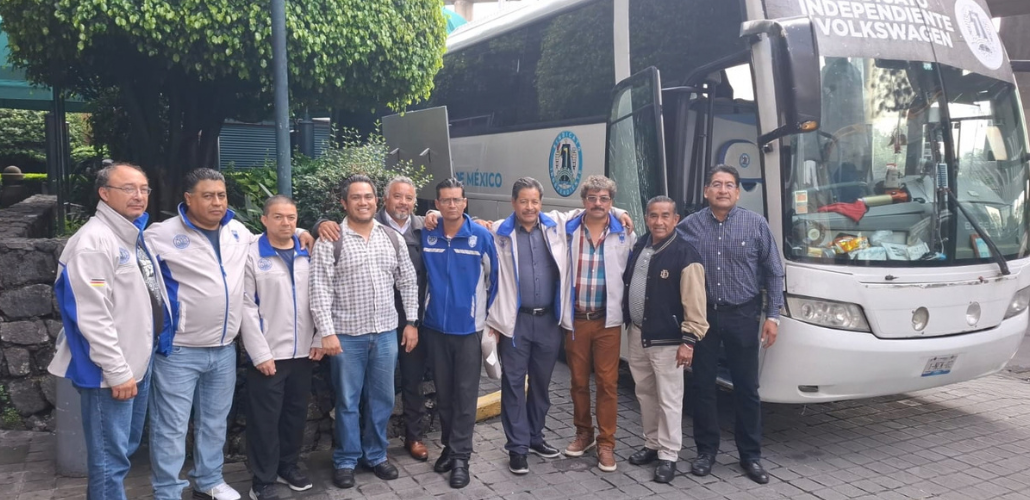
Mexican Volkswagen workers could soon be on strike if their salary demands are not met. The 6,500 workers build the Jetta, Tiguan, and Taos at the company’s Puebla plant, the largest Volkswagen facility outside of Germany. Their union, SITIAVW, is one of Mexico’s most storied independent unions, and is in the midst of an annual wage reopener at the plant.
On September 11, workers overwhelmingly voted down the company’s offer of a 10 percent combined increase to wages and benefits. (The union had been pushing for a 17 percent increase earlier in negotiations.) Days before the tentative agreement was put to a vote, Volkswagen cut one of three shifts in a segment of the plant that produces the Jetta and the Tiguan. Approximately 800 workers lost their jobs, El Financiero reported.
Within days of the firings, the union link text
announced that 611 of the workers—those who did not sign voluntary separation agreements—would be eligible for reinstatement when Volkswagen begins production of its Golf compact car at the Puebla facility next April. But the damage was done: 5,925 of the company’s 6,440 eligible voters participated in the ratification vote: of them, 73 percent voted to reject the offer, in what SITIAVW advisor Willebaldo Gómez Zuppa characterized as an expression of anger at the firings. The deal would have also pushed the next wage reopener to 18 months out instead of the yearly cycle, angering workers.
“We are not blind to the delicate crisis facing the German automotive industry, nor are we ignoring the global financial challenges Volkswagen cites,” the union said in a statement after workers voted down the offer. “But let it be heard loud and clear, all the way to Wolfsburg: corporate crises will not be resolved at the expense of the sweat, the rights, and the future of the Mexican working class.”
Volkswagen did not respond to requests for comment.
GLOBAL LAYOFFS
In September, VW announced plans to eliminate 100,000 jobs globally by 2030—marking the largest culling of jobs ever seen by a single automaker. IG Metall, which represents 120,000 Volkswagen workers in Germany and sits on the company’s supervisory board, told the Guardian that both sides had made concessions to stave off “a dangerous escalation of the conflict.”
It remains unclear how many more cuts are expected in Puebla. Since 2012, the plant has cut its workforce by 36 percent, Milenio reported, but it remains one of the largest employers in the state today. About 6,500 production workers are directly employed at the plant, which produces vehicles largely for export to the United States. Some 30,000 more work in the wider auto supply chain across the state.
“I think the company, from the first moment, never wanted to negotiate,” said Gómez Zuppa. “The fastest thing you can do to reduce costs is to fire workers. I think that in that sense, they are seeking a greater conflict to justify making greater cuts.”
Strikes in Mexico are different than in the U.S. Under Mexican labor law, companies must cease all production at a struck plant—unlike in the U.S., where companies can use managers and hire replacement workers to continue operations. That gives Mexican unions tremendous power. Yet strikes in the country’s auto industry, the world’s seventh largest, have been exceedingly rare in recent decades, with most of the industry’s contracts held by employer protection unions who have been a key partner in Mexico’s low-wage development model. SITIAVW, one of the few independent unions, has won the highest wages in the industry.
Strikes do pose some risk though.
In Mexico, employers must provide a justification to the government for firings. Among those justifications can be losses incurred due to a strike, Gomez Zuppa said: “It opens the door before the government to say, ‘That’s why I have to fire so many people.’”
“It’s not hard to go out on strike,” said Hugo Tlalpan, SITIAVW’s General Secretary. “The hard thing is ending it.”
ONE MINUTE LATE
The Puebla plant has been in operation since 1967. In the plant’s early days, workers were affiliated with the Confederation of Mexican Workers, or CTM, a labor confederation known for imposing pro-employer “protection contracts” on workers. But in 1972, workers split off from the CTM and formed the independent SITIAVW. Since then, the plant has seen a number of strikes and workplace actions—and nearly as many efforts from Mexico’s halls of power to subvert them.
In 1992, 14,500 workers at the Puebla facility struck to expel their union leadership that some workers felt was complicit in negotiating an employer-friendly contract. With the blessing of the Secretary of Labor, the company locked them out, then fired them. About 10,000 were rehired a day later, but under an agreement that imposed higher productivity targets, flexible scheduling, and a reduction in benefits.
In 2000, workers struck again, and once more their strike was quashed with support of Mexico’s labor authorities. Because workers went out on strike at 11:01 a.m. instead of exactly at 11, their stated strike deadline, the Federal Arbitration Board deemed their strike invalid. (They struck a year later and clinched 14.7 percent raises.)
The union is carefully weighing its options in this round of negotiations; so far, SITIAVW has extended its strike deadline four times.. Most recently, just two days before the September 17 strike deadline, the union extended the deadline to Friday, October 2.
“This is an attack on one of the most robust collective bargaining agreements [in the country],” Gomez Zuppa said. What happens next will have repercussions for autoworkers throughout Mexico and Volkswagen workers across the world.
 Natascha Elena Uhlmann is a staff writer at Labor Notes.natascha@labornotes.org
Related
Natascha Elena Uhlmann is a staff writer at Labor Notes.natascha@labornotes.org
Related

Trabajadores de VW en México podrían declararse en huelga en Octubre. »
September 28, 2026
Mexican VW Workers Weigh Strike as Company Cuts Jobs Globally »
September 28, 2026
Philadelphia Orchestra Musicians Protect Their Hearing and Their Craft »
September 24, 2026
AutoZone Workers Are Trying to Form the Company’s First-Ever Union »
September 21, 2026
Video Game Workers Win First Contract at Microsoft-Owned Blizzard »
September 21, 2026Read the full story at the source
Source: Labor Notes