
Housing Labour Hub
715 Days of Resistance: Evictions Begin on Lesnes Estate as Activists Face Daily Removal and Allegations of Stolen Property
Lesnes Resistance report on troubling events in Thamesmead, southeast London. After 715 days of occupation and resistance, evictions on the Lesnes Estate began in April 2026. What followed has been an
English (original) ·Read in Deutsch ⇄
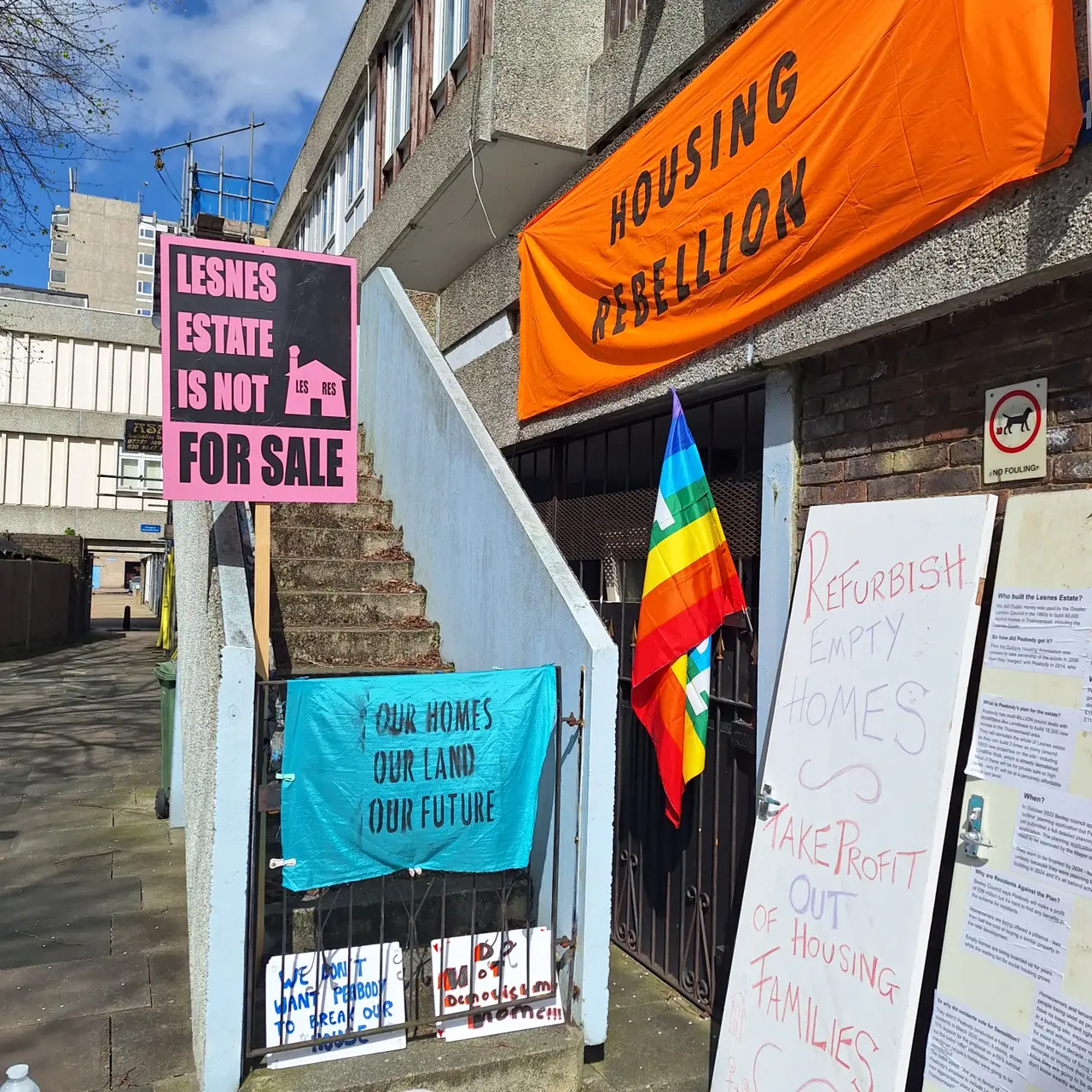
Lesnes Resistance report on troubling events in Thamesmead, southeast London.
After 715 days of occupation and resistance, evictions on the Lesnes Estate began in April 2026. What followed has been an escalating period of removals, with activists now reporting daily eviction activity, alongside serious allegations of unlawful evictions, the removal of personal belongings and property allegedly being stolen.
For those who have maintained the occupation, this is not simply about the removal of people from buildings. It is about the treatment of residents and activists who have spent months challenging the future of their community, defending their homes and demanding that the voices of local people are heard.
For 715 days, the occupation stood as a visible challenge to the proposed redevelopment of the Lesnes Estate. Activists and residents raised concerns about the loss of community, the displacement of existing residents, the condition of housing, the environmental consequences of demolition and the lack of meaningful recognition of the people whose lives are directly affected.
Since April 2026, the situation has changed significantly. Evictions have become an ongoing reality, with activists reporting that removals are taking place on a daily basis. Serious questions must now be answered about the legal authority under which these removals are being conducted, what procedures are being followed and what safeguards exist to protect people’s belongings.
We are particularly concerned by allegations of illegal evictions and stolen property. No individual should have their possessions removed, lost or disposed of without proper legal authority and accountability. Where property has allegedly been taken, those responsible must explain what happened, where the belongings were taken and what arrangements have been made for their return.
We are calling for transparency, proper documentation of every eviction, the preservation of evidence and independent investigation of any allegations of unlawful conduct or missing property.
We also want to make clear that the end of an occupation does not mean the end of the questions it raised.
What happens to a community when redevelopment takes priority over the people who have built their lives there? Who is held accountable when residents and activists raise allegations about the way they are being removed? And where is the protection for people whose belongings and personal possessions are caught up in these operations? These are questions that deserve public scrutiny.
1. An independent investigation into allegations of unlawful evictions and the removal or theft of personal property.
2. Full disclosure of the legal authority and procedures being relied upon for each eviction.
3. A complete record of belongings removed, stored, transferred or disposed of during eviction operations.
4. The immediate investigation of missing property and appropriate arrangements for its return or compensation where loss is established.
5. Accountability from all organisations, contractors and authorities involved in carrying out or facilitating evictions.
6. Protection of the rights, dignity and safety of everyone affected.
The Lesnes occupation lasted 715 days. Those days represented a sustained challenge to decisions about housing, community and the future of an estate.
The public should not look away simply because eviction operations have begun. The treatment of those being removed, the handling of their possessions and the legal basis for these actions must remain matters of public interest.
A community is more than a development site. A home is more than a property asset. And resistance does not become irrelevant simply because those in power decide it is time to clear the space.
We will continue to seek answers, document what is happening and ensure that allegations concerning evictions and missing property receive the scrutiny they deserve.
715 days of occupation: a struggle that cannot simply be erased.
For more information about Lesnes Resistance, see here.