
Housing taz
Homelessness in the capital: When it gets dark and cold in Berlin
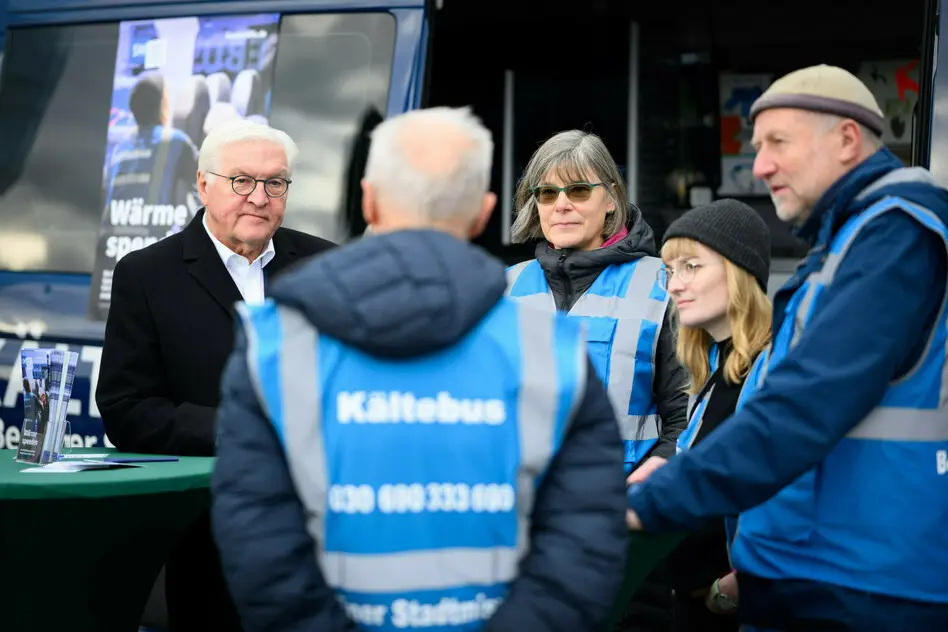
Frank-Walter Steinmeier did his doctorate on homelessness. Today more than 6,000 people live on Berlin's streets. An encounter with one of them. more...
Deutsch (original) ·Auto-translated to English
T he winter is coming soon. Between the leaves that have fallen to the ground with a barely perceptible sadness are individual gloves that were lost the first time they were worn. As temperatures drop, Berliners are gradually leaving the city.
Ten years ago, when Ali Celikkan had just arrived in Berlin as a young journalist from Turkey, he unexpectedly met Frank-Walter Steinmeier in parliament. Very casually and without context, he said a single sentence to him: “Keep me updated.” A lot has happened since then. This column is his long-awaited update about everything that he (as Federal President) otherwise misses. All texts in this column can be found here.
Some rent out their apartments to newcomers at a premium and spend the winter in Mexico. For everyone who isn't looking forward to Christmas, everything is now getting more difficult. Especially for those who don't have a living space that they can sublet or live in themselves. Those forced out of subway stations are seeking refuge in basements, stairwells or junk cars.
In the past 15 years, the number of homeless people in Berlin has risen to around 57,000 - more than the number of Turks living in Kreuzberg. They sleep in temporary emergency accommodation. Over 6,000 are now living on the streets without any accommodation.
Mr. Federal President, I read that you wrote your doctoral thesis on the subject of homelessness in Giessen. I am sure the work was not plagiarized. And you probably deal with homeless people in some way. Otherwise you wouldn't have said at an awards ceremony in Berlin in September: "Don't talk about homeless people, but with them." I see it that way too.
Still, I can't imagine that if you were taking the subway you wouldn't hastily flee to the next car if a homeless person got in and a smell suddenly appeared. Many people do this as if they could jump over it like a puddle. Because the suffering is too great, we cannot look directly. That's how it was when I looked at Nikolai's rotting finger one day.
Nikolai has light brown hair, a full beard, half-closed eyes, and teeth that are past their best. He wears different colorful clothes every day. Sometimes he hits everything in his path with a stick. Sometimes he runs after the joggers in Görlitzer Park or drives mothers with strollers to regret their decision to still live in Kreuzberg. Some shop owners believe he is addicted to lighter gas because he has stolen lighters from numerous kiosks. Nikolai is addicted to crack.
When he's in withdrawal, it doesn't take long: scrape together ten euros, take it to the park, take a train - and do it all over again ten minutes later. He then marches along Oranienstrasse with quick, short steps. Nikolai didn't always live like this. He tells me he used to be addicted to alcohol. From Estonia to Finland, from Karlsruhe to Berlin. Then he had a drunken accident that plunged his body into indescribable pain. Afterwards he swore he would never drink again. He kept his word.
Nikolai says he is used to the cold in Estonia. But living on the street in winter is not the same as falling asleep in the shade of a tree on Naunynstrasse in summer. He now carries a sleeping bag on his back, looks exhausted, and his steps have become heavier. You can tell he's not feeling well. Perhaps he has long since passed the point where he can still express his pain or even perceive it. Maybe he just doesn't have the energy to talk today. Nevertheless, as you advised, I will continue to talk to him. Keep you updated.