
World · Jacobin · · 4h
What Cedric Robinson’s Black Marxism Gets Wrong
English (original) · Read in Deutsch ⇄
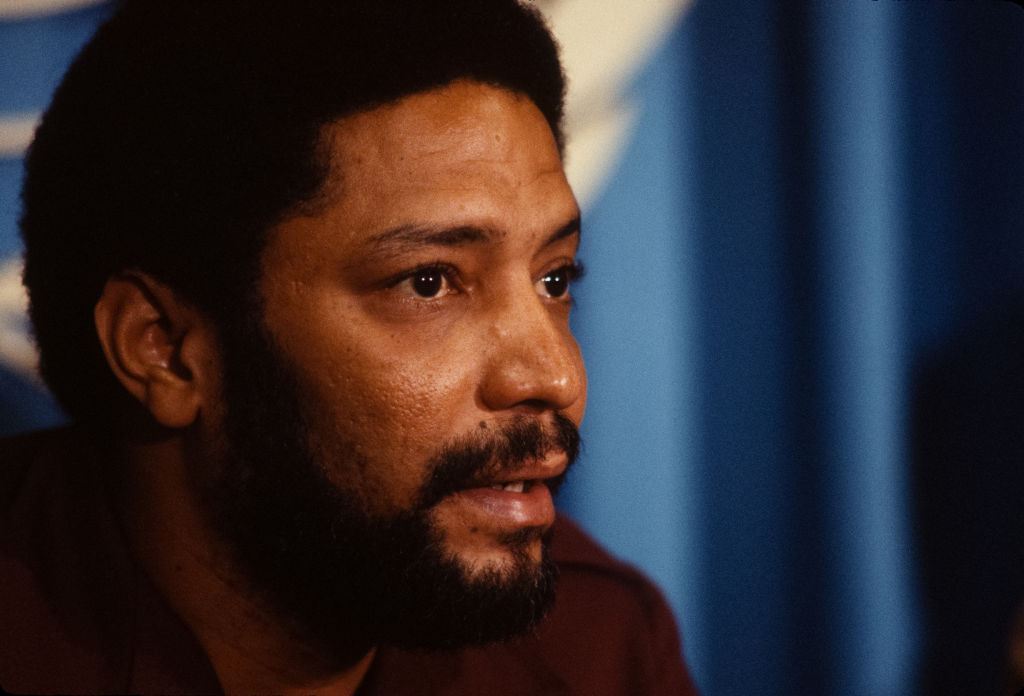
Cedric Robinson’s Black Marxism: The Making of the Black Radical Tradition did not receive widespread attention after its original publication in 1983. Since 2000, when it was republished with a new preface and an introduction by historian Robin D. G. Kelley, however, the book has enjoyed widespread appeal and influence in the anglophone humanities and social sciences as well as among activists. Robinson’s proposed theory of “racial capitalism” and his framework of a “black radical tradition” have shaped debates about racial inequalities in capitalist societies and Marxism’s potential for anti-racist politics in recent decades.
August Nimtz has engaged with the book’s arguments and trajectory, directly or indirectly, since its original publication. The recently published collection, Black Marxism: A Marxist Critique, makes accessible, for the first time, a critique that spans four decades and addresses Robinson’s claims and those made by his followers by putting forth an authentic Marxism as the most reliable method for human liberation in the real world and explaining why it remains the guiding principle for the transracial class struggle today.
Constantin Berlin
You recently said that your book has been in the making for over forty years. Indeed, your examination of Robinson’s book began with a critical review, published in 1984. What’s motivated you to have your original review essay of Robinson’s book reprinted, to republish two other related essays, and to write a new review? Why now?
August H. Nimtz
Context — the political moment in which we now live. Virtually all of my writings, beginning with my 2000 Marx and Engels: Their Contribution to the Democratic Breakthrough, are informed by historical context. They all constitute, in one way or another, a political intervention into the moment in which they are written. When the Stalinist regimes in Russia and Eastern Europe were unraveling and no longer claiming to be Marxist, I thought that it would be an opportune moment to make the case for the real Marxist project, specifically its democratic essence. Great, I said to myself, the Stalinists were no longer pretending to be what they never were. But I had difficulty finding a publisher. The not-so-subtle message from left publishers was “You’re swimming against the tide; the Marxist project is history,” as confirmed, apparently, by what had taken place a decade earlier with the regimes that claimed to be Marxist. After many rejection letters, I finally found a publisher, a mainstream academic one.
In contrast, as I’ve since thought about it, Robinson, it appears, had little difficulty in finding a new publisher for his 1983 Black Marxism, which had been largely ignored for more than a decade. He found a receptive audience who also believed that [Karl] Marx’s project was a spent force, a has-been, confined to the proverbial dustbin of history. Robinson’s book, which rejected the real Marx despite its duplicitous title, seemed to offer an explanation: Marx’s supposedly mistaken assumption about the revolutionary potential of the proletariat and his alleged Eurocentrism.
My starting point today is that, in the era of [Donald] Trump and what he represents, the last thing progressive forces need is a project that claims to be revolutionary, more revolutionary than what Marx had to offer, but is really a chimera and thus dangerous for that reason. A “wholly original theory of revolution,” according to historian Robin Kelley, with whom I respectfully disagree. Thus the need to critique Robinson, especially now.
Constantin Berlin
As you suggest, Robinson’s book is now highly regarded, but you were quite critical of it in your 1984 critique, the first detailed appraisal of a book that did not receive much attention when it was first published. Why was that and what did you find problematic with it?
August H. Nimtz
First, a bit of background. For more than a decade, there had been a bitter debate within US black nationalist circles about the relative merits of a cultural nationalist versus a class analytic approach to black politics. I had a front-row seat to those debates and actively participated in them. A few nights ago, in fact, in a Zoom session about Cuba, specifically the revolution’s unfinished business toward racial equality, I was reminded about those debates. The encounter reminded me of the fact that not many of us who participated in them are still alive, and those of us who are have an obligation to correctly recount them, including the views of those with whom we disagreed.
In 1984, the editor of the London-based Journal of African Marxists, who I knew from graduate school and who in turn learned that I was a public Marxist, a member of the US Socialist Workers Party (SWP), asked me to review Black Marxism — and produce a political intervention, in other words. The fact that it was the London-based Zed Press that published Black Marxism most likely explains why an also London-based venue knew about its debut. The book, which I soon realized in my reading, constituted a sophisticated defense of the cultural nationalist perspective, one that had been informed, though superficially, by the class point of view.
The debates required Robinson to know something about the Marxist perspective. But to claim as he did that three major Black figures, W. E. B. DuBois, C. L. R. James, and Richard Wright, had to abandon Marxism to find something more liberatory, a “black radical tradition,” flew, as I knew, in the face of the facts. For example, I had the privilege to attend a presentation that James gave in St Paul, Minnesota, in 1976, I believe, in which he praised some of the historic founders of the SWP, which was of importance for me, having recently joined the party.
Why would James say something like that? Because St Paul is the sister city of Minneapolis, the site of arguably the high-water mark of the 1930s workers radicalization in the United States, the 1934 Teamsters strike. It was led by a nucleus of communists that James had been affiliated with, Trotskyists, whites to boot. For a still (though less committed) black nationalist to hear someone with James’s credentials give a shout-out to the SWP helped to legitimize the decision I had made.
The correctness of that decision was brought home to me a month ago in São Paulo, Brazil, when a young worker, a subway engineer, came up to me after a talk I had just given in which I referenced the 1934 Teamsters strike vis-à-vis the anti–[Immigration and Customs Enforcement] actions that took place in Minneapolis in early 2026. “Oh, yes,” she said, “Minneapolis 1934, the Teamsters strike,” which she had read about. “I hadn’t made the connection.”
Robinson’s false claim about individuals like James having broken with Marxism was one of my major criticisms of the book. I knew better.
The other major criticism, in hindsight, was more important. Not only had those three historical figures not rejected Marxism, as Robinson contended — certainly DuBois and James — but there were also more contemporary individuals who embraced Marxism, not the least of whom was Maurice Bishop, the leader of a revolution unfolding in real time in Grenada as Robinson was writing his book. I knew enough at the time about the real Marxist project to reject any perspective that claimed to be revolutionary but failed to see a revolutionary project in real time, especially in the black world that Robinson’s book claimed to be the expert on. Instinctively, I knew Black Marxism to be politically deficient.
Not for naught did I end my 1984 critique with inconvenient advice from Bishop in 1983 to African Americans like Robinson: get over your hang-up about working with white workers — the real issue that had divided cultural nationalists from those of us who subscribed to a Marxist perspective. In hindsight, I was too close in real time to appreciate the full significance of Grenada’s absence in Robinson’s narrative — which I’ve tried to rectify in my new review of his book.
A few years ago, I learned, accidentally, that Bishop and I were members, at least on paper, of the same organization, the African Liberation Support Committee. Collating my ALSC files in my office to send them off to an invaluable archive at Michigan State University, I happened to read through the list of various affiliates of the organization in 1973 and noticed for the first time, maybe, that the chapter in Grenada was headed by Bishop, a list on which the Minnesota chapter is included, with me as one of the two contact people.
Constantin Berlin
In the preface to the new book, you write that you had basically forgotten about your original review until Black Marxism received renewed attention in 2017 through Robin Kelley’s writings. How did this impact your assessment of Robinson’s book?
August H. Nimtz
Yes, I was surprised to learn, after an extensive Google Scholar search, how influential Robinson’s book had become — which Kelley’s 2017 Boston Review article spoke to. I couldn’t find my 1984 copy and had to retrieve it through Interlibrary Loan. I later found the copy along with relevant correspondence. More surprising were all the accolades being paid to Robinson, given my largely negative reaction. That explained, I soon surmised, why I was mostly unsuccessful in getting it republished — a challenge to the orthodoxy about the book that now prevailed. Except for a Brazilian republication, the uploading of it to the Academia website and a black-politics-oriented podcast, I had little success in bringing attention to what was in fact, as I began to realize, the first detailed treatment of Robinson’s now highly acclaimed book.
It took the second coming of Trump to convince me to wage a bit of a campaign to have the 1984 critique republished along with other things I’ve written and a new review of Black Marxism. Thus I’m forever indebted to Michael Yates at Monthly Review Press, editor at the time, for making that possible. The world’s a more dangerous place since Trump’s inauguration in January 2025. It resembles increasingly the lead-up to World War I, a conflagration — the most sanguinary the world had ever seen — that was provoked by capitalist greed,as [Vladimir] Lenin so convincingly argued in the war’s second year in his magisterial Imperialism, the Highest Stage of Capitalism. And that it’s Trump who’s leading the charge, naked capitalist greed, unlike the monarchs in 1914, the most authentic capitalist to have ever occupied the White House, couldn’t be more instructive. Tariff and other economic wars can become shooting wars, as World War I taught.
But capitalist wars, Marx, [Friedrich] Engels, and Lenin argued, were not inevitable if the working classes take power. Therein the danger of Robinson’s influential book, which consciously dismisses, contra Marx, the proletariat. There is only one force on the planet that can prevent history’s most lethal weapons from being employed to begin World War III and thus the likely end to our species as we know it — namely, the US proletariat. Exactly because Robinson dismissed the American working class and viewed politics through the lens of skin color, his apolitical perspective is the last thing that humanity needs at this moment. Only if the US working class unites in all its identities and constructs a revolutionary workers party can the rest of the world be assured that capital’s inevitable march to World War III won’t happen. My book is a conscious intervention to aid and abet that process. Challenging Robinson’s influential claims constitutes an indispensable task in that campaign.
Constantin Berlin
Given the other essays in your book, specifically, the 2002 one about the Eurocentric charge regarding Marx’s project, and the 2024 appendix to your coauthored Marx-Douglass comparison, it looks like Robinson has been on your mind for quite some time. Is that accurate?
August H. Nimtz
I agree, both consciously and unconsciously. By the time I completed doing the research and writing of my 2000 Marx-Engels book (Marx and Engels: Their Contribution to the Democratic Breakthrough), I knew far more about their project than I knew in 1984. Robinson’s Eurocentric charge had been on my mind throughout the process, and I included in the final text the evidence to refute it. When the opportunity presented itself to me to sift out the details into a separate essay, I jumped at the opportunity, and thus the essay in the Cambridge University Press 2002 collection (“The Eurocentric Marx and Engels and Other Related Myths” in Marxism, Modernity and Postcolonial Studies). The most convincing evidence in my opinion to refute the charge was the detailed attention that Marx and Engels gave to the Russian question, a world beyond “the little corner” of the globe, as Marx once sarcastically described Great Britain and Western Europe. I should say, in general, the entire world was Marx’s and Engels’s theater of operation, as the evidence made all so clear.
I also learned along the way about another world beyond Europe that they prioritized, “North America,” as they sometimes called it. The US experience, I argue, figured significantly in Marx’s path to communism, one of the major claims of my 2003 Marx, Tocqueville and Race in America. But it was Marx’s response to the Civil War which instantiated, contrary to the implications of Robinson’s Eurocentric charge, that his European origins in no way handicapped him in expertly making sense of the conflagration on the other side of the Atlantic and thus acting efficaciously to be on the right side of history — the liberation of people of African origin from the bondage of chattel slavery. If Robinson were to be believed, what Marx did should have been impossible. A European?
I should say that my not-so-hidden agenda when it comes to Marx is to liberate him, as I sometimes say, half-jokingly, from the embrace of political philosophers — sometimes well-meaning — and to bring him back to the world he consciously chose to join in 1843, the world of politics. All my writings home in on his actions, treating his writings as a political act to advance the cause of the proletariat. That’s what my 2000 book does, still the only book-length treatment of Marx as a political activist. It’s worth noting that I wasn’t trained as a political theorist but rather as a political comparativist, which also informs my approach to Marx, who I claim, beginning with his very first publication, had comparativist sensibilities. Note how he was doing comparative jurisprudence, comparing press censor laws in various countries to draw conclusions — which soon motivated him to critique [Georg Wilhelm Friedrich] Hegel on the state.
Constantin Berlin
This comparative approach also informs your 2024 coauthored book on Karl Marx and Frederick Douglass (The Communist and the Revolutionary Liberal in the Second American Revolution: Comparing Karl Marx and Frederick Douglass in Real-Time), from which the appendix is reprinted in your Black Marxism book. Does the chapter inform your new appraisal of Robinson?
August H. Nimtz
Indeed! The 2024 book is another example of how Robinson was unconsciously on my brain all these years. Though I made no mention of him in the resultant book, Robinson’s Eurocentric charge, as previously mentioned, motivated my first dive into Marx’s Civil War writings. In hindsight, my 2003 Marx, Toqueville, Race book anticipated my 2024 Marx-Douglass comparison.
Again, I was trained as a comparativist, not a theorist. That fact is on display in my 2000 Marx-Engels book in which I devoted a chapter to comparing the actions of Marx and Engels on one side of the 1848–49 revolutions and Alexis de Tocqueville on the other side. Making comparisons is arguably the best method we have to test hypotheses in the social sciences. To substantiate my claim that Marx and Engels contributed more than any other figures to the democratic breakthrough in the nineteenth century required some degree of comparison, however minimal. Tocqueville was the best candidate for someone on the other side of the political divide. The evidence revealed that the two communists proved to have had better democratic credentials than the famous author of Democracy in America.
In my 2019 book, Marxism versus Liberalism: Comparative Real-Time Political Analysis, I did the same regarding Marx and John Stuart Mill during the US Civil War; again, Marx’s democratic credentials were superior to those of Mill. But Mill, as someone pointed out, was never the activist Marx was and thus I was comparing apples and oranges. When my former undergraduate student, Kyle Edwards, approached me with questions about the abolitionist Frederick Douglass and how he compared to Marx, the light bulb went on.
The result was a 417-page book. Marx’s democratic credentials, we discovered, were as good as Douglass’s during the four years of the Civil War. Afterward, we learned they were in fact superior to those of the now former abolitionist. The reason is that for Marx, unlike Douglass, ending chattel slavery was a means to an end rather than an end in itself. Why? To bring into existence a hereditary proletariat for the first time in America, the only class that not only has a class interest in real democracy but also has the capacity to ensure its realization. And when the US working class went into motion for the first time across racial lines, after the war — as Marx would have predicted — Douglass was missing in action, mostly unsupportive. His liberal defense of private property took priority over anything that might have brought about working-class ascendancy — in other words, real democracy.
Little did I know that when Robinson republished his 1983 book in 2000, he wrote a new introduction in which he doubled down on his anti-Marxist charges, adding that Marx ignored the question of slavery in America and didn’t relate at all to the abolitionist movement. Only after we completed the Marx-Douglass book did I discover Robinson’s charges. Claims, one might say, that fell right into my lap. The reason: we had just provided the evidence in our book that thoroughly discredited those charges. When the slave oligarchy fired on Fort Sumter in 1861, Marx dropped almost everything to aid and abet Union victory, one of the reasons why his magnum opus, Capital, was never completed. In other words, the 2024 book allowed me to criticize Black Marxism in a far more informed way than was possible forty years earlier.
Constantin Berlin
You said earlier that the most important problem with Robinson’s book was its political deficiency. Could you elaborate on this?
August H. Nimtz
Again, when Robinson wrote his book, whose subtitle “The Black Radical Tradition” suggested that it would be about the black revolutionary experience, such an example was underway in real time on the Caribbean island of Grenada and he ignored it — prima facie evidence for me that the book was of little political value. That’s also the reason, I argue, why it was largely ignored for more than a decade. From 1979 to 1989, global politics was characterized by revolutionary upheavals and victories, Grenada, Nicaragua, Iran, Zimbabwe, Angola. Nothing in Robinson’s book, mainly about a timeless and classless “black world,” helped its readers to make sense of that moment. Only later, when revisiting Robinson, did I realize why the Grenada revolution was ignored; it was Marxist inspired. The convergence of the black radical tradition with Marxism was an inconvenient fact for Robinson the cultural nationalist.
That also explains why someone else is missing in Black Marxism, which I failed to see in my 1984 reading of the book: Malcolm X. The black nationalist, very publicly, was on a convergence course in the last year of his life with the US Socialist Workers Party, a mostly Caucasian Marxist organization. Robinson, who once hosted Malcolm X at the University of California, Berkeley, in 1963, no doubt knew about that collaboration. Again, an inconvenient fact for him and thus the unpardonable absence of Malcolm X in a book that claimed to be about the “black radical tradition.” Just as important as Malcolm X was the black revolutionary Robert F. Williams, someone who impacted Malcolm X and someone whom Robinson also once invited to speak at Berkeley. Like Malcolm, not coincidentally, Williams also collaborated with the SWP and thus the reason, I contend, why he’s missing in Black Marxism; another inconvenient fact for a cultural nationalist.
Lastly, when Robinson republished his book in 2000, another moment in revolutionary black politics had taken place, the government of Thomas Sankara in Burkina Faso between 1983 and 1987. But Sankara’s name is missing in Robinson’s 2000 introduction. The reason? Sankara, like Bishop, was an unapologetic Marxist — ineligible, therefore, for Robinson’s pantheon of black radicals. Not coincidentally, it’s the US Socialist Workers Party that keeps in print, until today, the speeches of all three black figures, which someone who claimed to be an advocate for the black radical tradition should have applauded. But not so in Robinson’s case.
What the examples of Malcolm X, Maurice Bishop, and Thomas Sankara all testify to is the potential for the convergence of revolutionary black nationalism with Marxism — authentic Marxism that is. The more than decade-long debate about the merits of Marxism versus nationalism was being answered in the flesh, which Robinson was unwilling to recognize.
I would like to reiterate the point I made earlier: The only force on the planet that can assure that the weapons of mass destruction now in the hands of the US ruling class will not be used in capital’s inevitable march to World War III, and thus the likely end to our species as we know it, is the US proletariat. Thus the importance of finding an answer to the race/class question and forming working class unity in the United States. The example of Malcolm X especially demonstrates that there is indeed a solution to that historical conundrum about working class unity in the United States, the place where the future of our species will be decided.
Robinson’s book is an obstacle to clarity on the question. I do everything possible, therefore, to dispute his claims. Too much is at stake not to do so. Thus the reason for my book. For the luck of the genes, I’m one of the few people still alive who participated in those debates and see their historical/political significance. I’d be politically derelict not to make the intervention I intend with the book.
Constantin Berlin
Lastly, you begin the book with what you call “fortuitous” biography. How did your upbringing shape your politics and ultimately influence your critical reading of Robinson, and why did you include this in the book?
August H. Nimtz
Yes, my social science/comparativist sensibilities are on full display in that chapter. Given the many similarities in mine and Robinson’s backgrounds, I assumed that many readers of my critique of Black Marxism would wonder how to explain the profound differences between the two of us, especially given the nearly sacrosanct status the book has now achieved, one that I’m now challenging. “Who are you to do so?” they might ask. An interesting puzzle, as we sometimes say in the academic world, that requires an explanation. Comparing our backgrounds might offer one. Robinson’s biography, detailed in Robin Kelley’s foreword to the 2000 republication, is available to the public; mine is not, at least, a version that I’ve had the opportunity to curate for the comparison — that’s what the first chapter purports to do.
Robinson and I, African Americans, are age cohorts, both affected to one degree or another by the political world of that era, particularly the one that impacted African Americans. We both graduated from college in spring 1963, went to graduate school at about the same time, reading some of the same literature, receiving our doctorate degrees in political science, and publishing our first books in 1980. Yet I think New Orleans, where I grew up, in all its racial/skin and color/class complexities as I describe, was determinant in my case and so different from the two worlds that formed Robinson, namely Oakland, California, and Alabama, through his family. Oakland, specifically, as my Black relatives who moved there in the early ’50s testified, was quite different from New Orleans regarding the black question. Growing up in the Crescent City taught that the white/black binary was insufficient in making sense of social reality, and that class inequalities figured into the equation. The black world in New Orleans was far bigger and more complex than the one that formed Robinson. It taught me from an early age, therefore, that there was not one such world. The city, in other words, primed me to be open to the intersection of race and class when first presented with the opportunity for investigation.
Both Robinson and I visited Africa in our academic preparation. He, basically an undergraduate summertime intern in 1962; I, a graduate student for a year and a half in 1969–1970 to do dissertation research. The two visits, I contend, were more determinant than anything in our political trajectories. The main reason being where we fortuitously went. Robinson to colonial Africa, what was then called Southern Rhodesia, while I had the good fortune to go to Tanzania, almost a decade into independence and the headquarters of the Southern African liberation movements. As I point out in the chapter, I was able to verify with my own eyes what Frantz Fanon’s critique of postcolonial Africa, The Wretched of the Earth — a book that many of us of that generation had dutifully read — argued: namely, the replacement of a European colonial class in Africa with a homegrown one, an emergent bourgeoisie — and with all of the negatives that outcome entailed, ones we tragically live with until today. Fanon’s book, to be noted, figured significantly into the debates between cultural nationalists on one side and revolutionary nationalists on the other side. Bobby Seale, one of the founders of the Black Panther Party, and at the center of the race versus class debate when it first erupted, confirmed in a conversation with me in 1980 that the book was a mandatory reading for the organization — and informed the Black Panther Party’s class-oriented position in the debate.
Our two different destinations in Africa were, again, determinant. Robinson could imagine an ideal Africa after independence. Tanzania revealed, at least for me, that independence was insufficient for bringing about social equality in Africa. And if Tanzania seemed to be the best that African independence had to offer, then something more fundamentally radical was needed to achieve that end. That there was a rich debate in Tanzania about that very issue by individuals who impressed me, not the least of whom was Walter Rodney, a neighbor and age cohort, was also my good luck. Thus, why I sometimes say that I went to Africa as a black nationalist/Pan-Africanist and left in search of communism. Perhaps in 1983, when Black Marxism was published, it was too early for Robinson to have an informed opinion about the reality of independence in Zimbabwe. By 2000, however, when the book was republished, he should have known better. His silence then about the tragic situation in Zimbabwe was telling — an inconvenient fact about the “black radical tradition.”
Something I didn’t include in my biographical chapter and only thought about later is the vast distance, epistemologically, between Robinson’s and my first book, both published in 1980 — and a reflection of our different African experiences. My Islam and Politics in East Africa: The Sufi Order in Tanzania and his Terms of Order: Political Science and the Myth of Leadership. The two books spoke to our different graduate school training, he largely as a political theorist and I, a comparativist. Terms of Order operates almost exclusively at the level of ideas in books; Islam and Politics is empirically grounded, based on original field research. While the former argues that politics are mainly a Western ordering of the world and absent in traditional African societies, the latter instantiates that politics, the struggle for power, existed in precolonial, colonial, and postcolonial Africa, accompanied by, contra Robinson, leadership. The latter, in fact, was at the very center of my book, namely, how Islam was employed by a religious leader to advance the interests of the formerly enslaved through modern political action. If Robinson were to be believed, the reality I discovered and described was the exception to Africa’s “metaphysical,” as he called it, reality. I contend that what I found and wrote about was more representative of real Africa than Robinson’s mostly classless, apolitical, and ahistorical portrait of Africa. Without going into more detail, suffice it to say that both our books anticipated the very different political trajectories we would take.
However influential my background and training might have been in my political direction, I end the chapter with a reminder about luck — good luck specifically — advice all so important for youth today. That’s why I dedicate the book to “the radicalizing youth everywhere in quest of the real Marx.”
Read the full story at the source
Source: Jacobin