
World Jacobin
Socialists Need Our Own Foreign Policy Agenda
As socialists expand our footprint in Congress, we will need to articulate a distinctive agenda for US foreign policy — a vision different from both the wanton imperialism of MAGA and the feckless imp
English (original) ·Read in Deutsch ⇄
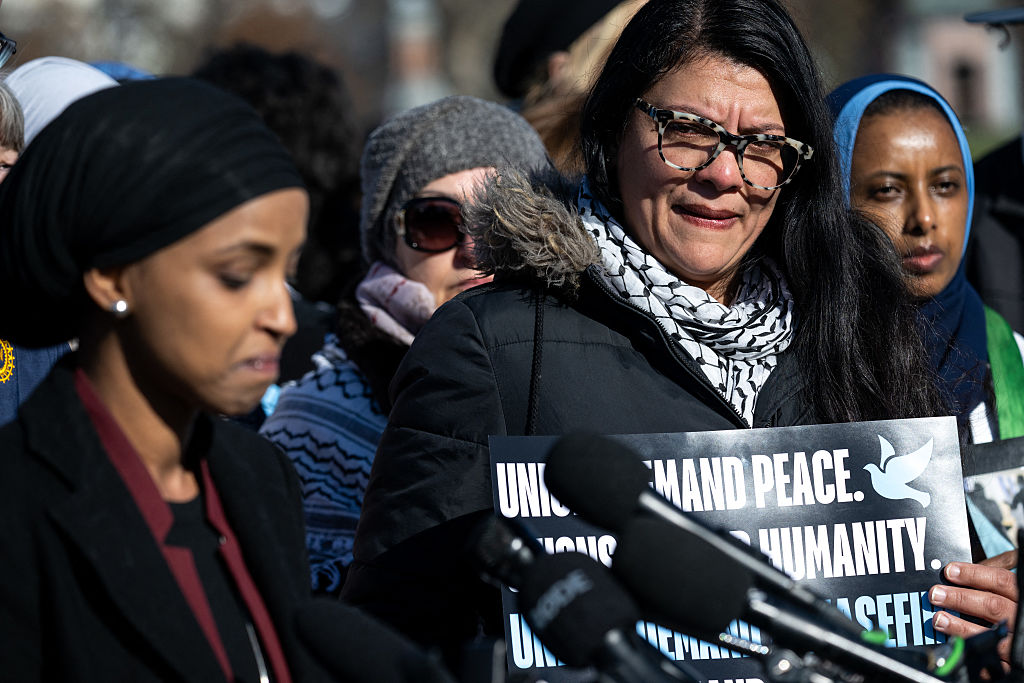
It is common for mainstream news outlets and political commentators in the United States to describe socialists as “very liberal” or simply “progressive,” or to puzzle over how to draw ideological lines between democratic socialists and others on the broad Left. There are, in fact, serious differences — differences that socialists would do well to sharpen and articulate for the public. At the same time, as the Democratic Socialists of America (DSA) grows by leaps and bounds, some commentators prefer to highlight those DSA positions that are furthest from common agreement.
I have previously tried to distinguish between socialists and liberals when it comes to domestic economic policy. But what about foreign policy? Here I propose a socialist agenda for this field. Again, one of my objectives is to show how a socialist approach would differ from a liberal one when it comes to US relations with other countries.
As socialists work their way into positions of governing power in the United States in the form of urban mobilizations and the growth of the Squad and the DSA-allied bloc in Congress, we could expect the organs of “national security” to be among the last to open up. Historically, they have enjoyed considerable autonomy and have been the least susceptible to democratic accountability. The ease with which presidents of both parties have launched armed hostilities against other countries without the approval of the Congress, rumored to be a constitutional prerogative, has become notorious. Still, with growing political power will come opportunities for the Left to play a serious role in foreign policy.
Understanding US Foreign Policy Since World War II
There was a moment in the 1970s when the fabled Church Committee exposed an endless series of dirty deeds committed by the Central Intelligence Agency, the Federal Bureau of Investigation, and others. That exposé was in 1975–76, and Senator Frank Church hailed from Idaho — these days as far right as a state can get.
Going back further, there was a moment in 1956 when a Republican president, Dwight D. Eisenhower, blocked US support for British and French imperialist machinations against Egypt after it nationalized the Suez Canal, which was surely Egypt’s right. Other than these anomalies, however, US-led Western imperialism has enjoyed free rein since World War II.
The basic dilemma for the Left is that the good deeds we might hope for our government to perform with the aid of its military would be the responsibility of a state that gives no sign of interest in beneficent acts. A libertarian friend impressed upon me the inevitability that any intervention by the (capitalist) state would be poisoned by craven, ulterior motives.
My thesis is that the overriding ulterior motive in US foreign policy since World War II has been world hegemony, enshrined in the infamous George Kennan “X Article,” which has superseded narrower economic concerns. It is this to which the quasi-autonomous institutions of US national security have been dedicated, hastening to fill the gaps left by the dissolution of the British and French empires.
Liberalism is compromised by sympathy for the hegemonic imperative. One notorious example was given by President Bill Clinton’s secretary of state, Madeleine Albright, who referred to the United States as “the indispensable nation.” In other words, hegemony was essential.
Another Democratic foreign policy maven and former human rights activist Samantha Power played the genocide card in her celebrated book, A Problem from Hell, to argue for a more interventionist US foreign policy. But when hell settled over Gaza and Ms Power had a chance to say something, her response to the carnage in 2024 was to send tents.
The Biden administration fiddled while Gaza was being blown to smithereens. It also dithered on the revival of Barack Obama’s deal with Iran, which likely made it easier for Donald Trump to initiate hostilities with the country when he returned to office. Of course, under the George W. Bush administration, we had the flaming lies about “weapons of mass destruction” (WMDs) in Iraq, now being replayed in absurdist form by President Trump with regard to Iran. Meanwhile, the US withdrawal from Iraq has left that field open to our supposed enemy, Iran. Nobody said foreign policy had to make sense.
Socialists and Interventionism
The narrower, default stance on the Left has been blanket opposition to military intervention by the United States or its allies. The posture of liberal pro-interventionists is to exaggerate the horrors of a failure to intervene. These justifications have usually been spurious. Historically, every assault by a great power is justified by claims, usually fallacious, of a prior injury or of an overriding humanitarian purpose.
Complicating the picture, there are ways a powerful nation can commit aggression against a weaker one without resorting to military means. One has been the predatory use of indebtedness, about which much has been written. Another is the imposition of sanctions on the movement of capital and trade goods. The current weapon of choice is the tariff, not to mention the actual, lethal use of force by the United States and Israel currently on display in the Middle East. The effectiveness of sanctions and tariffs is open to question. And now the Trump administration is discovering in Iran that even its military might cannot always wrest concessions from a recalcitrant government.
Socialists, given the opportunity, would at the very least place a high bar before any proposals for US military intervention. We must reject the default to liberal excuses that skirt the underlying motivations for aggression. We saw many of these in the debates about Iraq: The Bush administration would not competently prosecute the war. The search for WMDs should have been allowed to continue. We failed to gain the cooperation of allies. Bush failed to get the proper approval from Congress.
Now the critique of choice is that “President Trump has no plan”; we also see efforts to use the spike in gas prices to score political points. We should be wary of putative anti-Trump voices with thin critiques of the Iran attacks. The issue is not the lack of an end game, Israeli connivance in the war, the shifting excuses for objectives, or the carnival of MAGA national security leaders.
And Trump does in fact have a plan: it is to flex, blow things up, kill people, and pose as the second coming of Douglas MacArthur. It may seem to boil down to the president’s deranged personality and feeble intellect, but the fact is that the US foreign policy establishment, guiding both parties, has had Iran in its sights for decades, ever since the rise of Prime Minister Mohammad Mosaddegh in the 1950s and later the fall of the US puppet regime led by the shah.
War-skeptical liberals hoping for criticism of Trump’s Iran adventure from less militaristic US allies have been disappointed by the repetition of the bankrupt mantra that Iran must be blocked from possession of nuclear weapons. The allies have also been weak in their criticism of the machinations of Trump and the Israeli state in the Middle East, much like centrist or corporate Democrats in the United States.
Wars for Oil?
One theory for US aggression that is bandied around is the notion that the international reserve currency status of the dollar would be endangered by oil exporters such as Iraq or Iran. But world trade is already conducted in a variety of currencies, not just the dollar, and this will increasingly be the case as the rest of the world — particularly the People’s Republic of China — continues to grow economically compared to the United States. Nations with large stocks of dollars also face the dilemma that if the dollar declines in value, which would happen if they tried to reduce their holdings in favor of another currency, their own wealth would take a hit.
Reductive economic explanations have plagued left-wing foreign policy debates more broadly for a long time. Back in the day, it was suggested that the Vietnam War was about the quest for control of rubber exports from Southeast Asia. In Kosovo, there was talk of vast mineral resources for which Western powers lusted. With Afghanistan, it was said that a pipeline was really what was at issue.
Now everything is supposed to be about oil. This may be so for Trump himself, but we know he is ignorant. The relevance of oil can be exaggerated. First, the world is weaning itself off fossil fuels, since wind, solar, and even nuclear can be more economical and secure. Second, the United States itself is a net exporter of fossil fuel. Third, much oil extraction sits uneasily on a knife-edge of profitability: a limited shift in its world price puts the higher-cost extraction operations out of business, which naturally limits investment. And fourth, investment in new extraction takes time and is prey to large, up-front, fixed costs that become sunk costs. Investment in oil and gas extraction is discouraged by the obstacles and uncertainties noted above; it can’t be turned on and off like a spigot.
This classic economic explanation for US aggression has been given new life by Trump’s nakedly acquisitive Venezuelan venture. We should not doubt that commercial opportunities existed in all of the targets of US interventions, including opportunities for fossil fuel exploitation. But the politics of hegemony, behind which stand the broad interests of capital, looms above them all. This basic analytical framework distinguishes socialists from liberals.
Today Donald Trump seems to have reduced the overarching, historic priority of Western imperialist hegemony, strongly founded in economic factors, to his personal dominance, wealth, and unrestrained freedom of action. We still lack a comprehensive story that explains the current regime, other than loose talk about nutty billionaires who want to go to Mars. Perhaps their influence, along with that of crypto bros, Gulf monarchs, and Israel’s rampages, exercise more leverage on Trump and US foreign policy than ordinarily understood.
Exception to Anti-Interventionism?
We could imagine exceptions to default anti-interventionism. The big one now is Ukraine. Nobody proposes to send North Atlantic Treaty Organization (NATO) troops up against Russians in Ukraine, but other types of assistance have been supported. I won’t try to resolve the Ukraine aid debate here, except to claim that there is a legitimate anti-Russian-imperialist rationale for aid. Socialists will probably remain divided on this question. There is a thin line between sending Ukraine missiles and sending US soldiers to fight alongside Ukrainians. (I don’t doubt the latter is also in progress, sub rosa, in the form of quasi-official trainers and operators.)
The broader issue is the fate of Europe, threatened on one side by the Russian Federation and on the other by Trump’s disdain for the NATO alliance. Europe is the chief redoubt of social democracy in the world, with all its faults, in sharp contrast to neofascist trends in Russia, India, Turkey, Hungary, Israel, the Philippines, and the United States itself. The fixation of the Left on NATO tends to gloss over this fact. Europe might also be considered a preferable rival for US hegemony; it would certainly be an improvement over Trumpist governance.
The other elephant in the room is Israel. By now the case for a liberal, much less a socialist, Zionism is dead. There can be no arguing about a death toll of seventy-thousand-plus, with a count that grows with new atrocities every day. The political collapse of Labor Zionism opens the way for a recovery of the history of Bundism, celebrated in the fabulous new book by Molly Crabapple.
The Right to Self-Determination and Its Limits
A common theme for Ukraine, Palestine, and Iran is the right of a people to self-determination. This is a principle socialists ought to keep at the forefront; it was good enough for V. I. Lenin. Socialists have always been pioneers in the furtherance of democratic rights in capitalist countries, and democratic rights in domestic affairs logically extend to democracy in foreign policy — hence national self-determination. We may not like how some nations exercise such rights, but we often regret how other individuals exercise their freedoms, too. That doesn’t mean we are against freedom.
If an imperial hegemon is going to be meddling in affairs outside its borders, it should be limited to sending money and material assistance where it is needed, without conditions. In Ukraine, we could say that nation’s right to self-determination overrides concerns over the dangers of US-centric hegemony. In any case, the chief beneficiary of support for Ukraine is Europe.
An implication of the right of nations to self-determination, which in principle would logically, unavoidably apply to Israel, is the rightful sovereignty of nations. The dark side of sovereignty is the implied freedom of national governments to commit crimes against their own residents. There can also be a collision of national self-determinations, again vividly illustrated in Israel versus Palestine, so the principle cannot be an absolute one. But it can’t be ignored either. Israel has arguably forfeited its right to self-determination, just as could have been said of Cambodia under the Khmer Rouge.
One good rationale for the rights of nations and peoples (among which I would include Palestine) to be free from aggression is for the sake of world peace. I would designate peace the second socialist principle for foreign policy. Socialists like peace; the working class always bears the greatest costs of war.
Against “Realism”
Once military force is put to the side, the other sorts of economic aggression can be dealt with by diplomacy. Setting aside how Trump’s addled mind conceives of them, tariffs are ideally a device to more fairly apportion high value-added manufacturing, which every country seeks, among nations. So too can disagreements that lead to sanctions be resolved, short of the use of force.
Predatory international lending can be reformed. Debts can be relieved and payments rescheduled on more bearable terms, or canceled outright. Support for international institutions of diplomacy and aid such as the United Nations, which Trump is trying to supplant with his “Board of Peace,” can be strengthened. Most of this is consistent with a liberal perspective, but that doesn’t make it useless.
Regarding tariffs, liberals tend to swing against the working class in favor of a mythical “free trade.” For socialists, tariffs ought to serve a fair trade agenda that assists economic development in the poorer nations and promotes economic sustainability, especially with respect to climate change.
One debatable off-ramp from foreign policy liberalism is the so-called realist school in international relations. In recent years, the most visible public faces of this thinking have been John Mearsheimer and Stephen Walt, mostly for their bracing criticism of Israel and the Zionist lobby. Yet underlying “realism” is a chauvinistic, foundational prioritizing of US national security — hence it is not a suitable framework for socialists.
The realists do tend to have better arguments than liberals, as the latter are caught between the impulse to do good deeds and the realities of national power. The realists’ skepticism and hardheadedness about military adventurism have been more persuasive. This restraint could prove to be reversed, however, in the case of escalated conflict with China, which is an unambiguous rival to the United States for superpower status.
International working-class solidarity is my proposal for a third basic socialist principle of foreign policy. But that idea is bedeviled in the near term by the reality that presently workers rely on their own governments for security. In that light, the straightforward posture is to stand for national self-determination, which means noninterventionism and peace.
Why Socialism Beats Liberalism
Liberals tend to be animated by a desire to see the government right wrongs elsewhere. Consequently, they are suckered by appeals for humanitarian interventions. They are also reluctant to call a crackpot excuse an outright falsehood motivated by bad intentions. And out of patriotic reservations, they gloss over foreign policies rooted in exploitative economic schemes. They have yet to figure out the disastrous trend, not least for Jews themselves, in Zionism. (Some on the Right have, it seems: former US Ambassador to South Africa Patrick Gaspard pointed out that there was no resignation from the Biden administration over Gaza equivalent to the recent protest by the MAGA neofascist Joe Kent.)
In this respect, socialists, going against stereotype, are often much more realistic about government and politicians. Liberals are the dreamers, and US foreign policy is the nightmare from which we all have to wake up.
The three basic socialist principles of national self-determination, peace, and international working-class solidarity offer a way out. The liberal, on the other hand, is caught between patriotic hopes for humanitarian interventionism, invariably dashed, and a desire for peace; they also fail to reckon with the relevance of trade policy to working-class interests. Incidentally, trade policy could conceivably benefit workers in the countries of our trade partners by upholding labor-rights components of trade agreements, a purpose for which liberals are usually asleep at the wheel.
It seems possible that socialist principles for foreign policy would even have some currency among Trump voters. The divisions among them over the Iran war are well known. Their neo-isolationism dovetails with socialist opposition to the hegemonic imperative, not to mention “forever wars.” Neither is the Democrats’ embrace of free trade doing them any good among working-class Trump voters.
The biggest obstacle to a peace-oriented foreign policy is the susceptibility of voters of all political types to paranoia. For that, a ready antidote is at hand: the manifest, recent failures of bipartisan-cum-Trumpian foreign policy in Libya, Syria, Iraq, and Iran. Aside from the usual, scandalous neglect of ongoing genocides in Africa and Palestine, the key fact undermining the usual US foreign policy nostrums is that its adventurism has failed in its own terms.
This article originally appeared in Jacobin, a democratic socialist magazine publishing long-form essays and analysis on politics, economics, and culture. Subscribe to the print edition for $20 a year.