
World Jacobin
Do Peasants Hold the Key to Humanity’s Future?
A new book attempts to revive interest in peasants by casting them as humanity’s last defenders against ecological catastrophe. But this perspective misconceives the peasantry’s relationships to both
English (original) ·Read in Deutsch ⇄
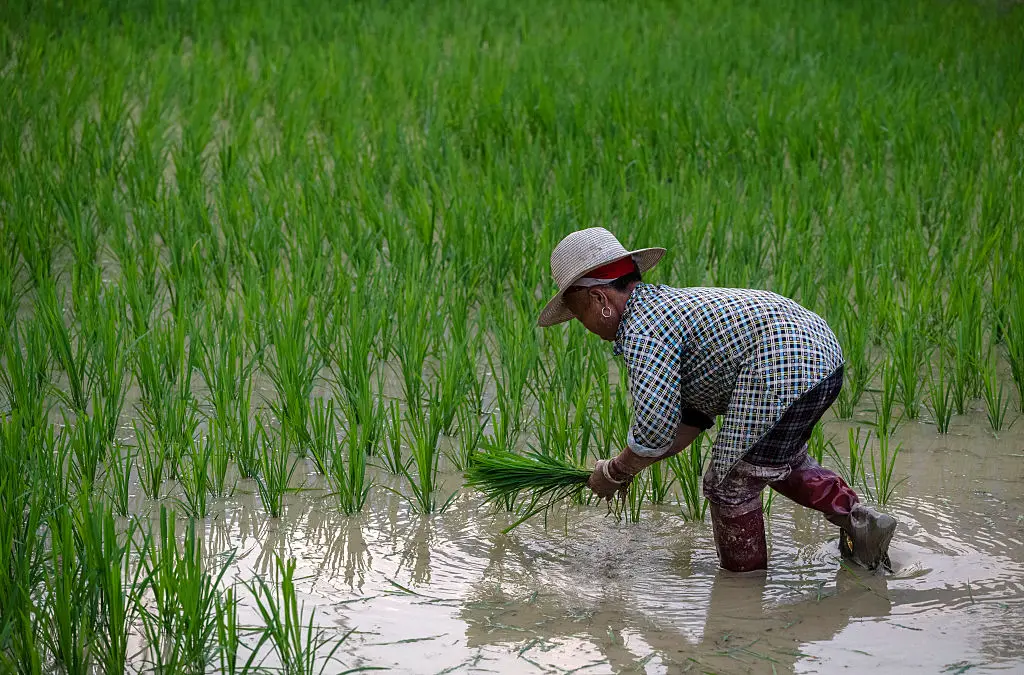
In 1966, the sociologist Teodor Shanin boldly asserted that “peasants are the majority of mankind.” This declaration coincided with the beginning of a decades-long increase in academic focus on the peasantry, which, in addition to its demographic weight, was the driving force of some of the most important political movements of the twentieth century. Classic works such as anthropologist Eric Wolf’s 1969 Peasant Wars of the Twentieth Century chronicled the various ways in which subsistence farmers asserted themselves on the world stage.
In the sixty years since Shanin made that declaration, the situation of world agriculture has changed dramatically. On large farms, highly mechanized operations have raised productivity and output to unprecedented levels. Smallholder agriculture has been transformed by the adoption of Green Revolution technologies such as synthetic fertilizer, high-yielding crop varieties, and pesticides. A continuous flow of migrants exiting agriculture has swelled the urban areas of both rich and poor countries alike.
The epic overhaul of the global countryside has caused the peasantry to recede as an object of interest. Historian Eric Hobsbawm’s assessment that the twentieth century witnessed the “death of the peasantry” is often taken as a final judgment on the peasantry’s political relevance. That epitaph was reiterated two years ago in the most recent work on (European) peasants targeted at a general audience.
A new book attempts to counter this conventional wisdom on the peasantry by arguing that reports of the peasantry’s death have been greatly exaggerated. Maryam Aslany’s Peasants: Makers of the Modern World insists that there are actually more peasants living now than at any point in history: two billion who produce a third of the world’s food. Drawing on her fieldwork in India, Cambodia, Peru, and Ghana, Aslany attempts to “restore to the countryside the visibility it demands.”
And the visibility it demands is, in her view, superlative. In an article previewing the arguments of the book, Aslany argues that the present crisis of the peasantry is “the most important story of the 21st century.”
Aslany believes peasants to be a supremely important topic, because she thinks these agriculturalists are humanity’s final defense against total ecological ruin. Peasant cosmology’s sacral reverence for nature and peasants’ unique capability to steward natural resources, she claims, provide “our last protection against environmental collapse.” The peasantry’s eco-preserving essence is under continuous attack from urban-based and purportedly progressive forces that do not appreciate the indispensable role peasants play in environmental conservation. Humanity’s survival, then, depends on a global shift in agricultural policy toward supporting and strengthening the peasantry. This is all the more true, in her view, because intolerable urban conditions must lead to future repeasantization.
But Aslany’s revisionist perspective on the peasantry suffers from critical flaws. Her misleading historical account of global economic development confounds the role of both states and peasants in it. These distortions lead her to erroneously inflate the peasantry’s potential future importance. Ultimately, her peasant exceptionalism is unconvincing: it is highly doubtful that peasants possess a unique solution to the world’s environmental dilemmas.
What Is a Peasant?
Where does the two billion peasants figure come from? The source that Aslany cites for her claim regarding the existence of two billion peasants is her article, where she makes a slightly different claim — namely, that the rural populations of the three less-developed continents comprise two billion people: “By my calculations, as many as 2 billion people live in the countryside of Africa, Latin America and Asia, where small family farms dominate.” The article itself does not give any sense of how this particular statistic was derived, but two billion is in line with other estimates of the number of people involved in smallholder agriculture globally. Nevertheless, peasants, smallholder agriculturalists, and rural dwellers are overlapping but distinct categories whose differences should be preserved.
Defining peasants is a controversial endeavor. Aslany’s definition of a peasant — “a smallholder farmer who lives off the land . . . relies mainly on family labour, and farms both for subsistence and for the market” — blurs the distinction between farmers who primarily produce for exchange and those who are not fundamentally dependent on markets for their survival. This move allows her to to include a larger swath of people in her study, beyond only those rustics who raise crops and animals primarily for their own family’s consumption.
In fact, the cultivators Aslany studies are often highly dependent on markets, either on the input side, to purchase seed, fertilizer, and chemicals, sometimes via financial markets, and/or on the output side, through income generated by sale of their produce. They often cannot subsist on their own produce since they are husbanding nonstaple crops (e.g., coca, cocoa, or sugar).
Farming is not even the main income generator for some of the people Aslany profiles. One Cambodian farming couple’s income is overwhelmingly provided through the remittances generated by their children working in South Korean factories. Another farmer, this one in India, holds onto his land only though revenue earned from a transport business.
The point here is not to argue for one or another sociological definition of the peasantry or attempt the near-impossible task of precisely enumerating how many people fit any such definition worldwide. Rather, it is to note that a less expansive conception of what a peasant is would lead to an estimate of the peasantry’s size significantly lower than her marquee two billion figure.
Repeasantization?
Part of Aslany’s desire to stress the continuing importance of the peasantry derives from what she considers the failure of cities and industry to provide a tolerable existence for the future of humanity. The increase in world population over the next several decades will, she predicts, see many return from cities to rural areas and agricultural activities: “When all else fails, land is the only thing; in this sense, peasant cultivation must have a significant role to play in securing humanity’s future.”
Aslany tries to buttress this prediction by arguing against the veracity of two “compelling — if unexamined — stories about [the peasantry’s] demise.” The first is that peasant agriculture will decline in tandem with the progress of industry, and the second is that cities will absorb the peasants departing the countryside. Since these are precisely the processes that the world has witnessed over the past century, readers may be perplexed when encountering Aslany’s pushback on these claims.
Aslany attempts to rescue the first contention by writing that predictions of peasant agriculture’s demise was an “based on an extrapolation from the highly specific experience of north-western Europe” and “has still not happened.” But depeasantization is a phenomenon that has advanced far beyond the borders of the richest countries. For instance, taking as a sample the countries that Wolf profiles in Peasant Wars — Mexico, Russia, China, Vietnam, Algeria, and Cuba — the International Labour Organization reports the share of labor working in agriculture as under 10 percent in Algeria and Russia, under 20 percent in Cuba and Mexico, and, in China (22 percent) and Vietnam (25 percent), it is half of what it was mere decades ago. The countries Aslany visits in her book generally have higher labor shares in agriculture, but even they have come down rapidly in the twenty-first century: Cambodia’s, for instance, fell from 73 percent in the year 2000 to 33 percent in 2025.
On the second claim, Aslany recognizes that some formerly peasant countries like China have seen tremendous rural-to-urban migration. But, she insists, “China is exceptional: it cannot become the general condition.”
Again, the data intrudes on this perspective. United Nations figures show the Peasant Wars group with all non-Chinese countries at over 75 percent urbanization, with the exception of Vietnam, which has doubled its urbanization rate to 39 percent in the past generation. The countries Aslany visited, too, exhibit secular trends toward urbanization. In fact, of the three continents Aslany mentions as having significant rural populations, only in Africa is the rural population growing absolutely (although less rapidly than the urban population on the continent). Latin America’s and Asia’s rural populations have seen slight absolute declines over the twenty-first century.
It is therefore difficult not to be skeptical about Aslany’s predictions of saturated cities producing a demographic movement to the countryside; her statement that “even Europe is seeing traces of what some experts call ‘re-peasantization’” is baffling.
It is true that legitimate questions remain about how burgeoning urban populations in less-developed countries will be absorbed into the labor force, especially given that many of these countries are experiencing “premature deindustrialization.” However, outside of some massive crisis of urban life above and beyond what is currently being experienced in Global South cities, in all likelihood current trends of depeasantization and rural-to-urban migration will continue into the near future.
The State as Villain (Marx in Supporting Role)
The sense that peasants are currently facing an existential crisis (despite a somewhat contradictory insistence on their endurance) provides the motivating drama for Aslany’s book. Peasants themselves, Aslany avers, are not responsible for their endangerment. Rather, that is the fault of the states that have persecuted them over the last century: “Peasants are in crisis today not because they are somehow unsuited to modern conditions but because they have been hunted to the limits of possibility.” In this “class war between humanity’s urban and rural factions,” deliberate anti-peasant efforts by states have driven many peasants off of their land and threaten to eliminate the peasantry as a category in years to come.
The underlying reason that states have hit upon these anti-peasant policies, Aslany contends, is primarily ideological. Drawing on the English example, in which a vanquished peasantry coincided with rapid economic growth, the world’s technocrats adopted this experience as an ideal and, aided by British imperialism, exported it to the rest of the world. Thus, Aslany writes, “The world’s managers have believed their own urban fairy tale: that the peasantry no longer exists – or that it should, in the interests of ‘progress,’ cease to do so.”
Chief among the ideologists was Karl Marx, “who did the most to convert the dying peasant of bourgeois fantasy into scientific ‘fact.’” This peasant-averse ideology reached its most grotesque expression in various episodes of the twentieth century, when Marxist-influenced governments, through collectivization or otherwise, waged lethal mass campaigns against the peasantry.
This is a radical reinterpretation of the motives of state managers in the past centuries of global economic development, which completely neglects the more straightforward reasons that they pursued policies that did not prioritize peasant interests. State managers’ aspirations to increase economic prosperity derived primarily from the political pressures they faced both domestically and internationally.
Domestically, populations clamored for increasing living standards, and businesses demanded assistance in competing with foreign goods. Internationally, state managers wanted to avoid being dominated economically and/or militarily by rival states. Any successful historical example of rapid national economic development has required a transition of the labor force out of agriculture and into services and, especially, industry.
While not ignoring the suffering that peasants faced in historical episodes of persecution, it is also true that peasants themselves have found many reasons to voluntarily leave the country for the city. Urban wages are often higher than agricultural ones, and, for many, backbreaking labor in the fields is less preferable than employment in a factory or an office. Cities offer a more exciting cultural life and an escape from rural social conservatism and patriarchal family structures. Not every peasant who left their farm for the city over the past centuries was marched off at gunpoint by the state; migratory flows from countryside to city have existed both in times of acute crisis and in times of relative stability.
Therefore, it is misleading to portray depeasantization as a wholly top-down enterprise devised by sinister state bureaucrats drunk on Marxism or modernization theory. Many peasants have voluntarily chosen, for various reasons, to take their chances in the uncertain city rather than on the familiar farm.
The Thin Green Line
The book’s ultimate argument for the importance of the peasantry lies in peasants’ ecological sensibilities. “The fact that a substantial proportion of the world’s cultivable land is controlled by peasants,” Aslany writes, “protects us enormously against the final exhaustion of natural systems.” Peasants’ sacral veneration of their land and environment, Aslany argues, is actually superior as a form of conservation compared to more conventional legal approaches: “Over prolonged periods, the sacred offers a much stronger form of environmental protection than the law.” Peasant cosmology amounts to a kind of Thin Green Line preventing the world from tipping over into environmental catastrophe.
The balance sheet of the peasantry’s relation to the environment, however, is not exclusively on the side of conservation; peasants can play a very damaging ecological role. Smallholder agriculture requires land, which excludes the land from serving other purposes. The more small farms propagate, the more deforestation and biodiversity loss might result. On an individual level, too, small farmers are often compelled to adopt the latest potentially ecologically-damaging cultivation practices, whether it is synthetic fertilizer, pesticide and herbicide use, or others. In the extreme case, as Aslany documents in Ghana, small farmers might opt to despoil their plots with what is euphemistically called “artisanal and small-scale mining,” overwhelming a once-viable farm with toxic waste from gold extraction.
In truth, peasant agriculture is not inherently ecologically superior to other forms of agriculture — or, for that matter, other forms of economic activity. Agriculture undoubtedly has an important place in any plan for environmental sustainability. But comprehensive solutions to the climate crisis (to mention just one pressing ecological challenge) must go far beyond the areas where peasants purportedly have expertise. Transitioning to renewable energy sources, for instance, and decarbonizing industry and transit are necessary components of a climate strategy on which peasant cosmology will have very little bearing. All the more reason to abandon notions of peasant exceptionalism when thinking about how to achieve our ecological goals.
To the extent that Aslany has a political program in mind to address smallholder agriculture, she advocates placating the farmers who “would love a bit more capitalism in their lives” by deregulating state-sponsored commodity monopolies. But hers is not simply a laissez-faire program. Aslany also urges state support for “iron-clad protection for [peasant] land,” “forms of credit that are quite different from other kinds of businesses,” and “protection from excessive price fluctuations, or downward pressure applied by powerful buyers.” At base, the political program she outlines is one of subsidizing smallholder agriculture rather than an ecologically driven project per se. Perhaps this could be a small component part of a larger ecological strategy, but handouts to small agrarian businesses does not seem like a route to averting climate disaster.
Makers of a Previous World
Peasants raises pressing questions about agriculture, urbanization, migration, ecology, and economic development, particularly in the Global South. The stubbornly persistent absolute number of people involved in smallholder agriculture is certainly an important phenomenon that must be grappled with in both national and international contexts.
But such an assessment is not aided by mangling the history and present of the peasant predicament. Peasants have not left their land over the past few centuries exclusively because they were victims of state persecution. And states have not undertaken industrialization programs only or primarily out of ideological anti-peasant animus. Rather, peasant attraction to cities and new forms of employment provided reason enough for many to migrate. It seems highly unlikely that present trends of urbanization and deagrarianization will sharply reverse in the decades to come. Finally, peasants do not possess a privileged position when it comes to formulating a comprehensive solution to the planet’s environmental crises.
Peasants can be said to be “makers of the modern world” only in the sense that in the preceding epoch they provided the demographic foundation for agrarian empires. Today they account for an ever-dwindling share of the world’s population, a minority of global food production, and only really survive in the least developed countries. Extrapolating into the future, repeasantization on a significant scale looks far less likely than absolute peasant numbers dwindling further with the continuing advance of capitalism and falling fertility rates.
Karl Marx is often criticized, including by Aslany, for proclaiming that “The country that is more developed industrially only shows, to the less developed, the image of its own future.” However, insofar as this premonition is read as sketching the broad historical arc of depeasantization and urbanization, it hews closer to developments across the subsequent centuries than his critics might care to admit.
This article originally appeared in Jacobin, a democratic socialist magazine publishing long-form essays and analysis on politics, economics, and culture. Subscribe to the print edition for $20 a year.