
Politics · Jacobin · · 40m
Democrats Have Created a Consultant-Driven Echo Chamber
English (original) · Read in Deutsch ⇄
“The number one rule of political fundraising,” Evan Barker writes in the first line of Nothing Left: Confessions of a Democratic Operative, “is to never, ever, under any circumstances, speak about it publicly.” Then she spends 288 pages talking about it, and it’s a wonderful thing that she does.
Barker’s insider account of her time deep in the bowels of the Democratic Party often reads like The Jungle of Democratic fundraising: Upton Sinclair showed readers how the sausage got made, and Barker shows how the candidates do. By the end, it’s clear that the Democrats are a glorified fundraising organization with an electoral department attached, one that absorbs idealism, monetizes it, and then disciplines anyone who threatens its arrangements, often with the cynical deployment of identity politics.
Some of its most compelling sections are autobiography. At times, it’s like Hillbilly Elegy but one that wears a blue lanyard. Like J. D. Vance, Barker is a striver from the hollowed-out middle of the country. In her case, that’s Missouri, where her mother and grandmother live on Social Security checks and the towns feel, as she puts it, “stripped for parts and left behind.” At seventeen, she was cutting class to intern for Barack Obama in Kansas City, running phone banks for volunteers three times her age.
For Barker, politics was a matter of life and death in the most literal sense — she has a rare genetic lung disease. Insurers could reject her because of a preexisting condition, and her parents could not simply buy their way around the problem. “My disease will kill me if I can’t get insurance after high school,” she told the law students she trained to register voters, and a version of her story later turned up in a Michelle Obama speech.
Barker Joined the Dems for All the Right Reasons
It’s an interesting paradox: Barker joined the Democrats because she believed they could turn a private struggle into a collective solution, but her career reveals a party that’s much better at turning that struggle into a fundraising pitch. The book follows her journey as she climbs the ladder: Brent Welder’s Bernie Sanders–backed 2018 primary campaign in Kansas’s Third District, then Adam Green’s Progressive Change Campaign Committee, and finally Left Rising, a progressive consultancy.
Barker’s specialty was “call time,” the hours-a-day ritual in which fundraisers artfully beg rich people for money. Along the way, she found an unlikely professional inspiration: Alec Baldwin’s character in Glengarry Glen Ross, the motivational sadist who browbeats salesmen into following his personal mantra: “ABC — Always Be Closing.” Left Rising’s ambition was to “professionalize” the Left, equipping insurgents with the skills to navigate the corrupt political system their establishment opponents already knew. This strategy had obvious logic: candidates cannot win on righteous intentions alone. But professionalization also brought the insurgency deeper into the world it hoped to overturn.
Through Barker’s career, we peer behind the curtain and watch political candidates, many handpicked by the establishment, learn the art of being a Democrat in the 2010s. This was the decade both parties got taken over. Donald Trump seized the GOP like a casino he’d leveraged to the hilt. The Democrats were captured by something softer: they tried to keep perpetuating incremental Clinton- and Obama-era politics while adopting the vocabulary of a humanities seminar/HR department.
The machine’s main job was keeping the Bernie wing out. The Democratic Congressional Campaign Committee (DCCC) blacklisted any consultant who worked for a primary challenger, and Barker says she ended up on the list. EMILYs List, which she argues cares about little except money, lined up early behind the establishment candidate, Sharice Davids, against Welder. In Omaha, in 2018, the House Majority PAC pulled its money out of left-populist Kara Eastman’s winnable race in the home stretch, and she lost to the Republican. Barker is convinced that the Third Way and the establishment preferred this outcome, even if it meant handing a seat to the GOP. In Texas, she claims that the Democratic Senatorial Campaign Committee (DSCC) helped plant a spoiler candidate to drain Latino votes from Cristina Tzintzún Ramírez’s Senate primary. And in an election twist that Jacobin readers are no doubt familiar with, Elizabeth Warren smeared Bernie as a sexist on a debate stage in 2020. Barker is less successful with her half-hearted criticisms of the Bernie left (if the insurgents are too pure and the establishment is bought, where exactly is a left-winger supposed to go?) and the man himself, who has the gall to ask for his water bottles at rallies to be stripped of their labels — how dare he!
Many of Barker’s other observations and behind-the-scenes details ring as grimly funny. Her working theory is that politicians are often high-functioning psychopaths, and she teaches trainees a taxonomy of candidate types. Gavin Newsom is “The Machine.” Jasmine Crockett is “The Influencer,” convinced she’ll go viral and raise millions — no matter where those millions come from (the crypto industry, the American Israel Public Affairs Committee). Last on the list comes “The Lost Cause,” who are “regular people who are running for the right reasons but who lack the ruthlessness required to fundraise.” Her example: “No one you’ve ever heard of.”
Fittingly, Barker eventually ends up at a fundraiser in Alec Baldwin’s New York home, surrounded by portraits of Civil War generals and a jelly bean tower. Baldwin, gruff in public, turns out to be warm and curious in private, asking Barker where she’s from. He may be the most likable figure in the book.
How “the Race-Class Narrative” Dooms the Dems
But it’s not all bad. Early in the Biden years, Barker describes a moment of hope, when the Democratic Party seemed to have learned something from the Bernie campaigns. There were stimulus checks, an expanded child tax credit that cut child poverty nearly in half, and a Build Back Better agenda that was the closest the Democrats had come to embracing material politics in a generation.
Then the child tax credit lapsed, and Joe Manchin killed Build Back Better. The party’s energy went instead into what Barker calls “RCN” (the Race-Class Narrative), a framework in which every economic demand had to justify itself in racial, rather than universal, terms. She recounts one Zoom call that raised almost half a million dollars for outreach to “the LatinX community,” with Christine Pelosi — Nancy’s daughter — among the donors.
She also describes a bleak working environment after 2020 in which “life became a virtue-signaling contest between me and other white operatives.” If you couldn’t sh-t talk white men or self-flagellate about your white woman privilege in Dem World, you were playing the game wrong. After Bernie lost, Barker observes, universal health care went from the primary issue to a secondary one as “identity politics and social justice issues were a good distraction for us all.” But health care is what brought Barker into the belly of the Democratic Party beast in the first place.
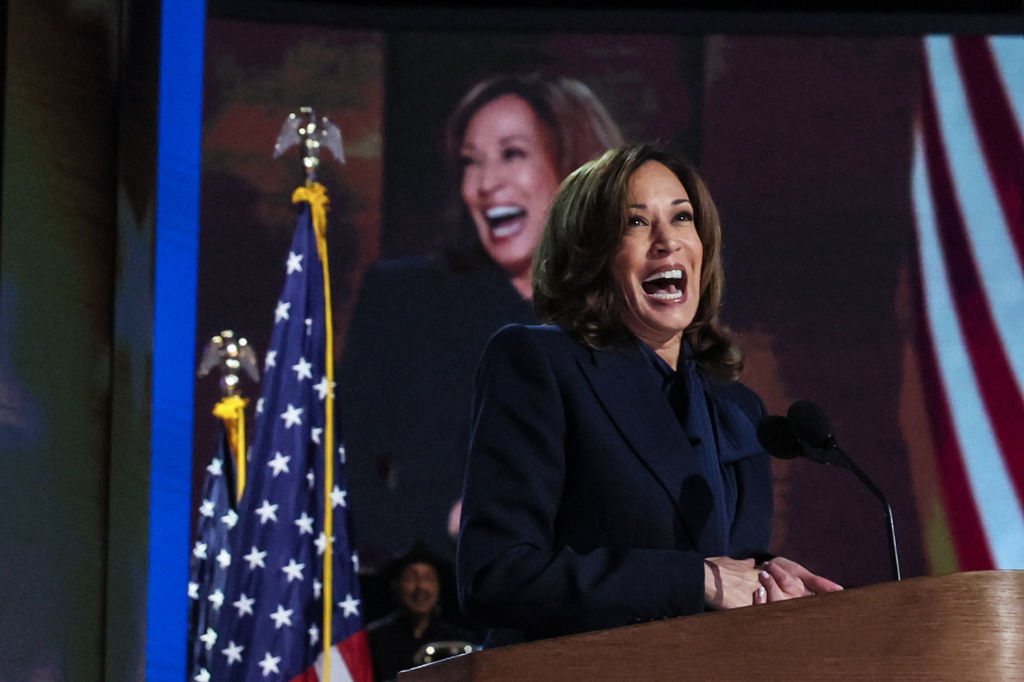
By the time she reaches the 2024 Democratic National Convention (DNC), when she’s surrounded by goofy chants of “joy” and “Brat Summer” while her mother and grandmother struggle with grocery bills back home, she cracks. A woman with a camera asks her to name her favorite Kamala Harris policy, and Barker’s mind goes blank. She walks out partway through the convention and, as her book’s title suggests, finds there is nothing left for her at the DNC.
The problem is that somewhere along the way, Barker gets red-pilled. The podcast Red Scare becomes her secret refuge (“Finally, I had friends to laugh with at the dumb politicians I was helping elect”), and after the convention she sits for a friendly interview with Lara Trump. Then she votes for Donald Trump. She presents the vote as revenge, a middle finger to the people who burned her. But the two years since have not been kind to the politics of “F-ck you.” The Republican mega-bill Trump signed in July 2025 made the deepest cuts to Medicaid in the program’s history; the Congressional Budget Office projects the bill will leave around ten million more Americans uninsured. For someone whose political awakening began with a preexisting condition, it’s a strange way to get even.
To modify a line from Glengarry Glen Ross, Barker was right that the Democrats’ leads were weak. Her mistake was taking them to Trump.
This article originally appeared in Jacobin, a democratic socialist magazine publishing long-form essays and analysis on politics, economics, and culture. Subscribe to the print edition for $20 a year.
Read the full story at the source
Source: Jacobin