
World · Jacobin · · 1h
Debating Victor Serge
English (original) · Read in Deutsch ⇄
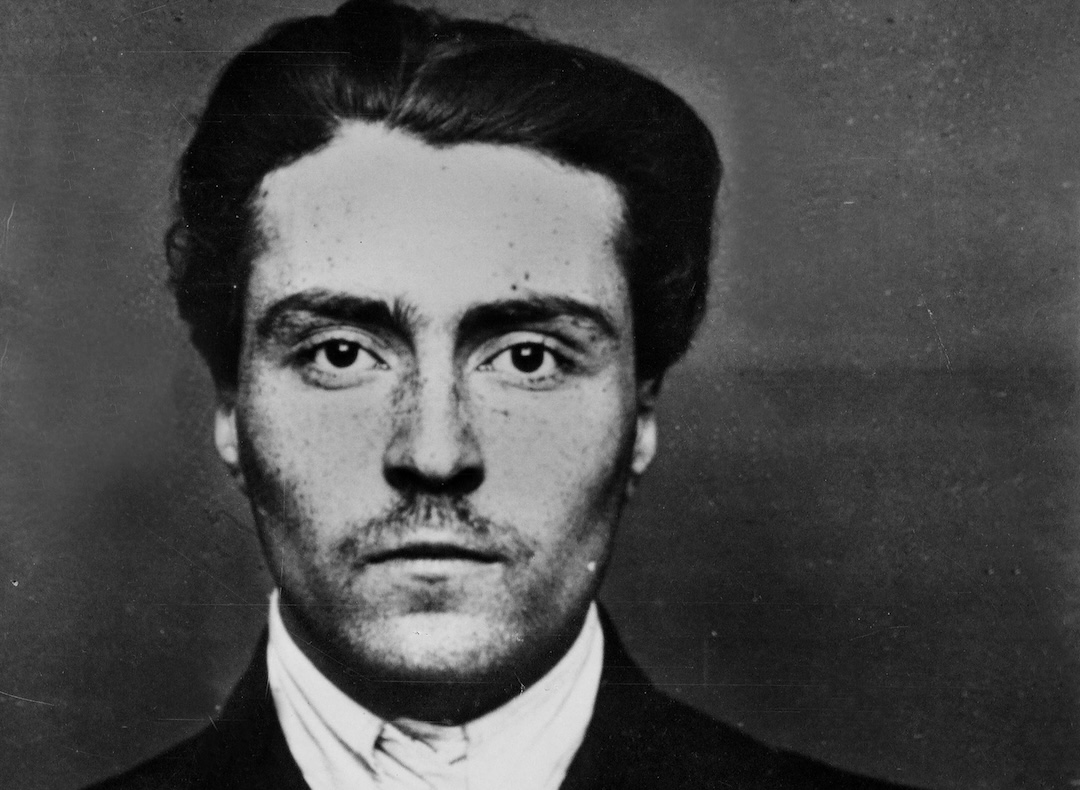
When I began writing Victor Serge: Unruly Revolutionary, I expected to write a biography in keeping with the image common on the left of Serge as an uncompromising enemy of Stalinism who never fell into anti-communism and fought all his life for revolutionary socialism. This is what we find in the many writings of Richard Greeman, who single-handedly rescued Serge from oblivion by translating his novels and tirelessly writing about him. In fact, my biography began as a collaboration between me and Richard, one we abandoned due to differences in interpretation. Suzi Weissman presents that image as well in her biography of Serge, The Course Is Set on Hope.
A fuller account of this Serge was what I thought I was going to write. Things did not turn out that way.
I worked mainly from primary sources from archives around the world as well as long-forgotten newspapers and magazines for which Serge wrote. What I found was a man far different from the one we find in Greeman’s and Weissman’s books (and all those who draw from their work) but also the one Serge presented in his justly famous Memoirs of a Revolutionary, 1901–1941. I found a man who ceaselessly evolved politically, which I found admirable.
But the evolution I found went in directions even I was shocked to find: that Serge was a man who came to believe in his final years that socialist revolution was no longer in the cards, and that those who believed it were frozen in the past. I was also shocked to discover in his correspondence, articles, and notebooks that Serge became an anti-communist and in certain regards an apologist for the West in the early days of the Cold War.
There was no denying the evidence, and everything I wrote is documented in my book. I knew I’d upset people, and I offered to debate some of those I told of my discoveries. I was never offered the chance to do so, and the recently published critique of me and my findings first appeared in several European publications and now in English in Jacobin.
To fully respond to the attack by Suzi Weissman, Carlo Albertani, and Christian Dubucq on Victor Serge: Unruly Revolutionary, I would have to quote the entire book. I respond here, however briefly and incompletely.
An example of their hasty and incorrect reading is their claim that I imply Serge was a police spy at the time of the Liabeuf Affair. The trio writes that “Abidor notes that the socialist journalist Gustave Hervé was prosecuted for public statements, whereas Serge was not. Although he acknowledges that no documentary evidence explains why Serge escaped prosecution, he nevertheless invites the reader to infer that his immunity reflected dubious dealings with the police.” I wrote or implied nothing of the sort, and what I said is unambiguous. In fact, I very specifically said that in writing about the Liabeuf case, “Gustave Hervé took a similar tack [to that of Serge], and in fact used many of the same words that Serge would a couple of weeks later. It is indicative of the relative threat posed by Hervé and Serge that, though they wrote the same things, Hervé went to jail for his opinions while Serge went undisturbed by the police.” Yes, I note Serge went undisturbed by the police, but I clearly say that this was because he was not a threat, while the well-known Hervé was. How this can be read as an accusation that Serge was a police informant is a mystery.
I’m not even certain they read the book. My critics write, “As an anarchist, one might reasonably have expected Abidor’s criticism to focus on Serge’s decision to join the Bolshevik Party in 1919, marking his break with the anarchism of his youth. But this is not the case.” Had they actually read the book, they would have seen that the lengthiest and densest chapter is on Serge’s dishonesty about the Soviet Union in his writings on the new state and anarchism. I make the case that Serge lied when writing propaganda pieces for the international Communist press. In these articles, he claimed that the USSR was the fulfillment of the anarchist dream.
As I show, using contemporary accounts in the anarchist press by anarchists from several countries who met Serge in Moscow in the early 1920s, Serge privately told his former comrades that the Soviet state was awful, while writing articles that claimed the opposite and encouraged anarchists to join him there. This is part of a chapter in which I also detail the Bolsheviks’ brutal and underhanded war on anarchists and anarchism.
I will plead guilty to one thing that this group didn’t bring up. I attempt to explain why Serge might have knowingly written falsehoods. Is this an incidence of the “psychologizing” I’m attacked for? I look at this matter from many angles, all sympathetic to Serge, who was truly in a bind. Anarchists have told me that Serge’s conduct was inexcusable, and that my search for extenuating circumstances was unacceptable: lies are lies, and leading anarchists to move to the USSR was leading them to their deaths. Sometimes a biographer just can’t win.
Weissman and her friends write, “Abidor treats the anarcho-individualist movement, in which Serge was an active participant for nearly a decade, with scant sympathy.” This is absurd. I would have hoped that people who admire Serge would be aware that I translated and edited Anarchists Never Surrender, a collection of Serge’s anarchist writings in 2015, the first and only one of its kind in English. That book is an admiring one, and in both that volume, the biography, and two other books I’ve dedicated to French individualist anarchism, I defend this tradition that Serge once so ably represented. I do subject the school to lengthy analysis and draw some critical conclusions, but that’s not a sign of “scant sympathy”; it’s proof I take it seriously.
Had my critics actually read every page of Unruly Revolutionary, they’d have seen that I also note and criticize Serge’s harsh treatment of anarchist individualism in his novel The Birth of Our Power. I even located and approvingly quoted the review of that book by his former coeditor of the anarchist paper L’Anarchie and first wife, Rirette Maîtrejean, who condemned her former companion for the way he had “evolved’ and for his “disdain” for his former individualist anarchist comrades. In any case, criticizing my treatment of anarchism is odd coming from Weissman, who dedicated three pages to Serge’s anarchism in her book on him, none of it showing any familiarity with Serge’s writings in French. Credit where credit is due, Carlo Albertani is not guilty of this error in the first volume of his biography of Serge, published in France last year.
Serge’s ideas evolved greatly over the course of his life, and his attachment to revolutionary socialism took a blow during and especially after World War II. He grew increasingly exasperated with his fellow left-wing anti-Stalinist exiles in Mexico, who thought World War II would end in revolutions, just as World War I had. He turned his back on Marxist orthodoxy and denied that possibility. I write about this approvingly and at length in the chapter “The Revolution Revised.” The working class, in his eyes, had suffered an enormous defeat and was not in a state to carry out revolution.
In this book and in my other writings on Serge, I have praised him for this change in point of view. He wrote extensively of his shift in his Notebooks, and I highly recommend that anyone who hasn’t already read that essential volume do so. In it, we find this diagnosis by Serge of the politics of the revolutionary socialists among his fellow exiles: “Their extremely optimistic and schematic conviction that the Russian Revolution will soon be repeated in Europe. ‘The workers will occupy the factories (Pivert), they’ll take power (Gironella), etc.’ So deluded are they that the POUMists think that they’ll be back in a free, socialist Spain in six months, and Pivert speaks proudly of the potential for the formation of a Red Army in France!” All of this revolutionary sloganeering was detached from reality, and Serge told his comrades just that and did so bluntly.
The final years of Serge’s Notebooks are full of evidence supporting the case for Serge’s abandonment of the “revolutionary” in revolutionary socialism. So bad had things become that Serge was informed in a letter that “the comrades of POUM . . . and Marceau [Pivert], Stein, and Jacob unanimously consider that, for ideological and political reasons, collaboration with you is impossible.” It’s certainly not by chance that Weissman and her friends refer only to the French edition of the book, which is an essential and impressive piece of work. To speak of it as Serge’s Notebooks, published by New York Review Books, would require that they acknowledge that the translator, who would necessarily know precisely what is contained in a book that details Serge’s evolution was . . . me.
The immediate postwar period proved Serge right about revolution and permanently soured his relationship with the revolutionary left. His ignoble physical fight with fellow exile Jean Malaquais in 1944 was over the latter’s accusation that Serge called for an alliance with the Tories. This was an exaggeration of Serge’s actual position, since he hoped for a “socialist-leaning” future, but Serge was in no way a revolutionary socialist at the end of the war and in his final years. As I show, in his final interview, coincidentally published the day he died, he nowhere even mentioned socialism. His primary concern, one that recurs in his public and private writings, which I discovered in his archives, was the protection of the human person. Personalism had become his guiding philosophy.
Victor Serge, the Anti-Communist
My most controversial claim is that Serge was an anti-communist, for which I provide ample evidence, too ample to lay out here. I don’t speculate about what his future direction would have been. I wrote, “To say Serge would have evolved in the same directions as his comrade in anti-Stalinism Boris Souvarine, who eventually supported the US in Vietnam, might be going too far. But it’s hard to deny, given the positions he took and the language he employed in expressing his opinions . . . that Serge agreed with the point of view of ex-communist anti-communists like Arthur Koestler.” I spoke only of where he was, not where he might have gone. And where he was was obsessive anti-communism.
A large chunk of the book is dedicated to this period and this phase in Serge’s political evolution. To spell everything out would extend this response to dozens of pages. My claim is not based solely on his writing for the anti-communist press, like the liberal anti-communist New Leader. His private correspondence is replete with references to “reds” and “commies.” He considered communism “the worst danger, a mortal danger” to humanity, more of a danger than the West, which he considered a benign, even positive force. Weissman and co. argue he wrote for the anti-communist New Leader because the communists blocked him from publishing elsewhere. Were the communists really that powerful everywhere that they could sway publishers at will? As I ask in the book, how is it that the French Communists were unable to block Koestler from publishing Darkness at Noon, which appeared with no difficulty and to great success?
No less a figure than Dwight MacDonald, as I show in my book, warned Serge against the path he was taking. His correspondence with Emmanuel Mounier, the brilliant philosopher and founder of the variant of personalism to which Serge adhered, is filled with anti-communist screeds and attacks on Mounier for being soft on communism. When Serge died, Mounier wrote, “Since the war his letters were polarized around a single concern: the Soviet dictatorship and the camps in the USSR. . . . Far from France, he spoke inaccurately of realities he didn’t know. But we forgive him this, for men of his mettle and humanity are few.”
Serge also suffered from the paranoia of a Cold Warrior, seeing the communist hand everywhere, particularly within the United States and its government. In a 1940 letter, he wrote, “I know that the Stalinist work is being done in the United States on a large scale by a goodly number of journalists, and Stalinist intellectuals who have arrived there. They even have a certain amount of support in the Administration. . . . Their action is and will be camouflaged. . . . They would do anything to get all their personnel installed in the United States.” Elucubrations like these are clearly the work of an anti-communist or, to phrase it better, a premature Cold Warrior.
See this quote from a 1946 essay in a collection of Serge’s articles called The New Russian Imperialism. I wrote in the biography:
He downplayed the threat and even importance of Western imperialism. In that publication he insisted that the British Empire, led by the Labour government, “is evacuating from Egypt and offers India its independence. The old methods of colonial exploitation are exhausted.” As for the exemplar of the new form of imperialism, the United States, Serge claimed that he “knew Americans sufficiently well to know that they don’t contemplate imposing tyrannies on the five continents and on the contrary desire a sustainable reorganization of international relations.”
Leaving aside how poor this all was as a prediction, especially as regards America, this is hardly revolutionary socialism, which I think we can all agree would be anti-imperialist. The “exhaustion of the old imperialisms” Serge spoke of didn’t prohibit France from fighting for years to hold on to Indochina and Algeria. The Mau Maus of Kenya would have been surprised to learn that England was gladly setting their colonies free.
Weissman and co. omit any mention of Serge’s 1947 letter to André Malraux, in which Serge says that if he were in France, he would have voted for de Gaulle. Though his son claimed the letter was a fake, there’s no reason to think it was, and the sentiments it expresses are in keeping with his beliefs at the time. He so hated communists and communism that he would have been willing to support France’s main barrier to Communist victory in France’s elections. This shocked the revolutionary left of the time, none of whom cast any doubt on the reality of this letter or Serge’s authorship.
Two final things: As I did with Weissman and Richard Greeman, whose lifelong work on Serge I benefited from, I informed Birchall while I was writing the book of the conclusions I was reaching. He expressed his disagreement, and before reading the book told me that my thesis was incorrect. Ian and I disagree about many things, but he is an honorable man. He read the book with an open mind and was convinced by what I had to say about Serge’s anti-communism. Ian is a lifetime Trotskyist and a respected scholar and activist. The baseness of Weissman and her friends is revealed by their attack on him for being convinced by my documentation.
Suzi Weissman has held fast over the years to a mythical version of Victor Serge, revolutionary socialist sans peur et sans reproche, one that was also propagated by my friend and mentor, Richard Greeman. I did not start writing Victor Serge: Unruly Revolutionary thirteen years ago as the critical volume it turned out to be. It was my reading of his anarchist writings, which contradicted his claims in his memoirs about not supporting anarchist illegalism; the transcript of the Bonnot Gang trial; in which his conduct was less than stellar; and what I found in archival sources that led the book to go in an unexpected direction. It was not my “anarchism” that led me to write the book that so displeases those who cling to the myth. It was the facts and, as I say in the introduction, my lack of the phrenological bump for veneration that forced me to write the book I wrote.
Serge was at one time a revolutionary socialist, and at one time he wasn’t an anti-communist. He ceased being the former and became the latter in his final years. There’s no shame or surprise in the fact that Serge’s ideas changed with circumstances: that was a constant throughout his life.
Let me end by quoting some apposite words of Serge’s concerning his fellow exiles who remained attached to out-of-date schemas. He said they were “idealists hemmed in by the sclerosis of doctrines and circumstances, and dominated by their convictions and their emotional attachments; in short, by fanaticism. Under such conditions the person who disturbs the inner security of the others is a hateful heretic.” Weissman, Albertani, and Dubucq cling to an imaginary Serge, one who fits their political needs and desires. They’re free to believe they’re right, but hagiography is not biography, and facts are stubborn things.
Read the full story at the source
Source: Jacobin