
World · Jacobin · 1h
Britain’s Health Crisis Is Becoming a Political Crisis
English (original) · Read in Deutsch ⇄
Britain is becoming a sicker country. A country in which millions of people can expect to spend an increasing share of their lives in poor health is not just a recipe for a social crisis but a political one too.
The latest figures are extraordinary. Healthy life expectancy in the United Kingdom has fallen to its lowest level since the present Office for National Statistics series began in 2011 to 2013. A boy born today can expect around 60.7 years of good health; for a girl, the figure is 60.9. Yet even these averages conceal the more disturbing story. In the most deprived areas of England, healthy life expectancy is just 49.8 years for men and 48.2 for women. In the least deprived areas, it reaches 69.2 and 68.5 years, respectively. Measured across the deprivation gradient, the gap is 19.3 years for men and 20.1 for women.
Increasingly, Britain has become two countries separated by twenty years of healthy life.
We usually describe this as a health inequality. That is correct but inadequate as an explanation. These figures are also a measure of political inequality: a biological record of where security has been withdrawn, public infrastructure allowed to decay, and entire communities exposed to conditions from which wealthier populations are largely protected.
Earlier this year, I argued in Jacobin that the dominant political account of ill health performs a convenient act of misdirection. When obesity increases, governments talk about individual discipline. When diabetes becomes more prevalent, they talk about diet. When anxiety, addiction, or depression spread through poorer communities, they discover resilience. Structural conditions are translated into personal shortcomings; the political becomes behavioral. There is another danger in treating illness this way: if we understand population health only as the accumulated consequence of individual choices, we fail to recognize what sickness can tell us about the condition of society itself.
Increasingly, it may also serve as a proxy measure of our politics, too.
The Geography of Sickness
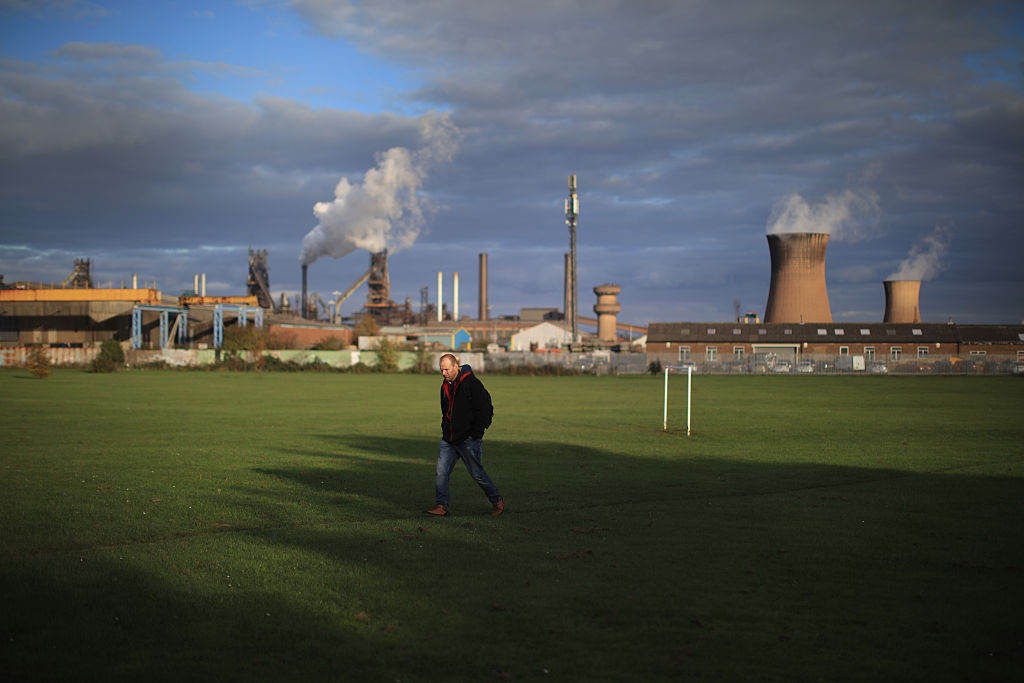
Britain’s geography of poor health is stark. Places subjected to deindustrialization, poverty, and economic insecurity have carried a disproportionate burden of illness for decades. Indeed, research on Britain’s former coalfields, for example, has repeatedly identified persistent health deficits in communities left behind by manufactured industrial collapse.
Recent research examining deaths from suicide, drugs, and alcohol in former mining communities in England and Wales found elevated mortality even after contemporary deprivation was taken into account. This matters because economic abandonment does not simply remove a wage packet. When an industry disappears, it can take with it the institutions anchored around it: trade unions, social clubs, apprenticeships, commercial centers, community organizations, and, eventually, younger generations themselves.
Local tax bases weaken; public services contract; high streets empty; employment becomes more precarious. What begins as an economic shock becomes a social environment. The social environment, of course, in turn becomes a lived reality.
For years, political scientists have attempted to explain the growth of the populist and radical right through two competing stories. One emphasizes material insecurity: deindustrialization, unemployment, austerity, and declining economic status. The other emphasizes cultural backlash: immigration, identity, and changing social values. The division has always been somewhat artificial. Economic insecurity changes how people experience social change; cultural resentment provides a language through which economic insecurity can be interpreted. Yet there is another neglected explanation: health.
In 2021, Nolan Kavanagh, Anil Menon, and Justin Heinze analyzed every wave of the European Social Survey between 2002 and 2020. Their findings were striking. Respondents reporting worse health were significantly more likely to vote for right-wing populist parties. The association persisted after accounting for measures of economic vulnerability, cultural attitudes, life satisfaction, and satisfaction with the health system.
Britain now has its own version of this finding. Anthony Laverty and Nicholas Hopkinson examined all 543 English constituencies following the 2024 general election. Constituencies electing Reform UK members of Parliament recorded the highest average prevalence of fifteen of the twenty health conditions studied. More important, across England, Reform vote share remained associated with several markers of poor health after adjustment for age, sex, and deprivation.
A 10 percentage point increase in Reform vote share was associated with a 0.261 percentage point higher prevalence of chronic obstructive pulmonary disease, a 0.113 percentage point increase in asthma, and a 1.479 percentage point increase in obesity.
Yet we must resist the temptation to be reductionist in these findings. It is not simply that as people become sick, they move to the radical right. That conclusion would be both scientifically weak and politically confused. The English study is ecological. It tells us about constituencies, not the motivations of individual voters. The European research demonstrates an individual-level association, but association is not destiny. Neither proves that illness somehow creates authoritarian attitudes. But there is a question, if we scratch beneath the surface, that proves more useful and operationalizable: What if the forces producing poor health are also producing political revolt?
One Crisis, Two Symptoms
Researchers examining England and Wales found that areas experiencing larger rises in suicide and drug-related deaths before the Brexit referendum were also more likely to vote Leave. Yet once education and other socioeconomic characteristics were introduced, much of that statistical relationship disappeared. The authors�� conclusion was particularly important: worsening mortality and Brexit voting appeared to have similar antecedents. In summarized terms, sickness was not necessarily causing political rebellion. Both could be expressions of the same wound.
Austerity provides perhaps the clearest example. The economist Thiemo Fetzer’s influential analysis of Britain’s post-2010 welfare reforms found that areas and individuals more exposed to austerity subsequently showed greater support for the UK Independence Party, stronger political dissatisfaction, and greater support for leaving the European Union. His counterfactual modeling went further, suggesting that without austerity the referendum could have produced a Remain majority.
The finding is no longer peculiarly British. Research across Western democracies has shown that austerity disproportionately increases populist voting in economically vulnerable regions, with radical right parties benefiting particularly strongly in those areas. A major 2026 review of the political science literature reached a similar conclusion: austerity magnifies rather than protects people from social risk and, in doing so, increases support for nonmainstream and frequently populist parties among economically vulnerable voters.
An economy is restructured. Security disappears. Welfare protection is withdrawn. Public institutions retreat. Health deteriorates. Political trust declines. Then, at the end of this process, commentators arrive to marvel at the irrational anger of the people who remain.
When the State Becomes Something That Happens to You
Poor health may deepen this estrangement in another way: it increases people’s exposure to institutions whose deterioration they experience directly. For somebody who is healthy and economically secure, government can remain relatively abstract. For somebody awaiting an operation, dependent upon disability support, caring for an ill parent, unable to obtain a general practitioner (GP) appointment, or negotiating an increasingly punitive welfare system, the state is not an abstraction. It is encountered repeatedly. The state should not be in a precarious triangulation of help, humiliation, or hampering.
Research across nineteen Western European countries has found that people reporting poor health exhibit lower levels of political trust than those in good health. The relationship between health and political participation is more complicated, but no less important. European research suggests poorer health generally suppresses electoral turnout, while certain health problems can simultaneously encourage other forms of political activity.
Illness, therefore, does not produce political passivity in any simple sense. It can exclude people from conventional democratic participation while intensifying grievance elsewhere. We mustn’t lose fact of this distinction: a person who no longer believes that established institutions represent them has not ceased to be political. They may simply become available to a different politics.
The radical right understands this exceptionally well. Its political skill has been to recognize material experiences that liberal politics too often denies — and then supply a false explanation for them. The abandoned high street is real. The inaccessible GP is real. The insecure job is real. The sense that Westminster regards entire communities as little more than electoral scenery is often entirely rational.
The migrant is made responsible for the hospital corridor; the asylum seeker for the housing shortage; the welfare claimant for fiscal scarcity. A political economy organized around inequality disappears from view, replaced by a morality play in which equally insecure groups are invited to fight over the remains. Now, this is not to downplay the grievance, which is very real; the target, however, is manufactured.
Health Is Part of Democratic Infrastructure
This should change how the Left thinks about public health. Health inequality is generally approached as a question of social justice: poorer people should not live shorter and sicker lives simply because they are poor. On its own terms, the argument holds, but there is another political reason to care.
Good health is a part of the democratic infrastructure. Secure employment is democratic infrastructure. Social housing is democratic infrastructure. An adequately funded welfare state is democratic infrastructure. So are buses, libraries, youth centers, functioning local governments, and a health service that appears when people need it. These institutions do something more than redistribute resources. They provide daily evidence that collective action can improve ordinary life. The UK’s experiment in austerity provides a teachable moment: destroy enough collective action, and you dismantle the fabric of democracy.
Recent European research provides support for the inverse proposition. Across sixteen Western European countries, populist parties performed worse where governments provided stronger income support to people experiencing unemployment; reductions in labor-market protection were associated with greater populist support, particularly among people directly exposed to economic insecurity.
Yet this is not a lesson in welfare spending equaling political obedience; quite the opposite — it’s about the empowerment of individuals and enfranchisement of communities. And this empowerment and enfranchisement is, through the aforementioned determents of health, equitably distributed to the most deprived and vulnerable communities.
There is no blood test for authoritarianism, and hardship carries no predetermined politics: it has produced trade unionism, socialism, mutual aid, and solidarity as readily as reaction. But suffering does demand an explanation. I have seen this repeatedly as a National Health Service doctor, when a consultation ostensibly about breathlessness, aches, and pains, or poorly controlled diabetes, quickly becomes a conversation about a cold home, insecure work, benefits, or housing; medicine can treat part of the problem, but not the conditions producing it.
Yet patients also notice when the system works; when they are listened to, properly treated, and followed up with; and when a public institution does what it was built to do. That is why health inequality is also a democratic question: when institutions repeatedly fail, somebody will eventually explain why, and the danger lies in who supplies that explanation and whom they persuade people to blame. Population health is not merely an outcome of politics; it is one of its vital signs.
Read the full story at the source →
Source: Jacobin