
Politics · In Defence of Marxism · · 3h
Sweden: an election with no alternatives – how the left missed an open goal
English (original) · Read in Deutsch ⇄
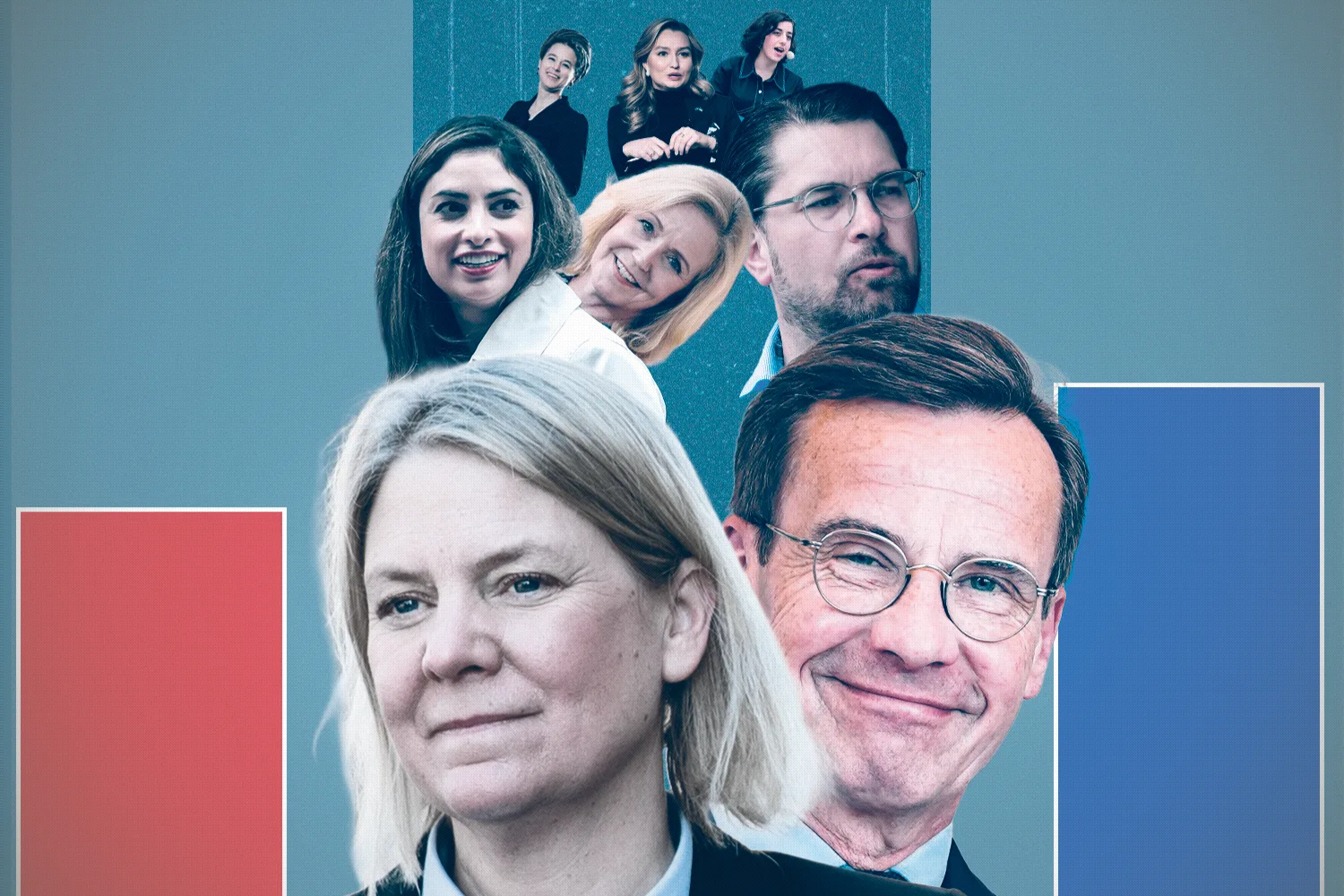
Even if Social Democrat Magdalena Andersson manages to become Prime Minister, the majority in the Riksdag will remain right-wing. Not because Swedes want right-wing policies – quite the opposite.
[Originally published in Swedish at marxist.se]
The 2026 election points more than anything else to simmering discontent, not least amongst young people, workers, and those from the country’s poorest areas, who have turned their backs on both the right and the Social Democrats. But there was no genuine left-wing option on the ballot paper.
A month ago, things looked hopeless for Prime Minister Ulf Kristersson’s right-wing, racist gang. With Magdalena Andersson’s team leading by ten percentage points, Jimmie Åkesson of the Sweden Democrats was preparing to lead a future right-wing opposition against a Social Democrat-led government.
The Social Democrats, the Green Party and the Left Party were significantly larger than the right-wing ‘Tidö’ bloc, even without the Centre Party. It should have been a landslide victory.
Instead, the Social Democrats plummeted in the polls, day by day, week by week. Neither the Green Party nor the Left Party managed to capture the bulk of the fleeing voters. In the end, the Social Democrats recorded their worst election result since the introduction of universal suffrage. Together, the so-called ‘red-green’ parties (the Social Democrats, the Greens and the Left Party) matched their all-time worst result from 2022.
When Ulf Kristersson spoke on election night, he not only noted that the Tidö parties had staged a huge recovery. Above all, he emphasised that the Riksdag has a clear right-wing majority.
Now, if Magdalena Andersson is to become Prime Minister, she will need the support of the Centre Party. But the Centre Party is a bourgeois party; however much the Social Democrats might wish otherwise. It will demand more right-wing policies: take from the poor, give to the rich.
It should have been easy for a left-wing coalition worthy of the name to win.
Before they came to power, the Tidö parties had promised to help ordinary people through the inflation crisis of 2022-2023. They did not.
Kristersson’s government has been a government of naked Swedish imperialism / Image: Edelseider, Wikimedia Commons
The number of Swedes living in material poverty has doubled since 2021. Real wages have fallen. Underemployment has risen. Unemployment has risen.
At the same time, the fortunes of the super-rich have risen to increasingly absurd levels. Over the past year, Sweden’s 46 dollar billionaires increased their wealth by 204 million dollars… a day. This clique of people – just enough to fill a lounge suite at Stockholm’s Grand Hotel – own more than eight million Swedes put together. Kristersson’s government has governed for them.
Kristersson’s government has also been a government of naked Swedish imperialism. It has been one of the most supportive governments in the world of Israel’s genocide in Gaza. It hailed the US’ abduction of Venezuela’s president as ‘liberation’, and indirectly supported the attack on Iran. They have redirected Swedish development aid to more clearly serve the interests of major Swedish corporations abroad – and to fund the deportation of refugees to war zones.
Never before has the policy of a ruling Swedish coalition been so venomously racist and Islamophobic.
Just listen to Jimmie Åkesson of the Sweden Democrats at the last party leader debate, in which he attacked the Left Party and the Social Democrats for trying to get people from areas with high densities of immigrants to go out and vote:
“This could be the first election in Sweden where the Muslim immigration we have experienced tips the balance in a general election. Let that sink in.”
After years of attacks on immigrants, particularly Muslims, the implication of this is clear. As the Christian Democrats wrote in February: “Imported Islamism has become a threat to the system”. On the same theme, the Tidö parties wrote in June that “Islamism and political Islam are a threat to the whole of Swedish society.” The idea is that we should be afraid of Muslims and therefore support the Tidö parties.
Racism in Sweden has become increasingly toxic. Far-right organisations such as Alternativ för Sverige and the fascist Aktivklubb have become more active in ‘defending Sweden’ against immigration. Far-right terrorism, such as the attack on Brinell School in Fagersta, is becoming more common.
But this is provoking an ever-stronger backlash.
The government crossed the line for most people when it ramped up the deportation of teenagers. 76 percent of Swedes opposed these deportations. Even among Sweden Democrats’ voters, more people opposed the deportations of teenagers than supported them. A wave of protests swept across the country. The government was forced to back down.
During the election campaign, bus drivers in Skaraborg refused to display Sweden Democrats’ advertising: “Do you miss Mogadishu? The repatriation grant will help you get home.”
In Malmö, pupils at Latinskolan went on strike to protest their caretaker being threatened with deportation. Large sections of the population have had enough of racism.
Even Deputy Prime Minister Ebba Busch of the Christian Democrats, who until then had been trying to outflank the Sweden Democrats with her xenophobia, sensed the winds of change and performed a U-turn. Suddenly, the Christian Democrats were ‘the right with a heart’, concerned that people did not feel welcome in Swedish society.
The 2026 election could not be won on the basis of racism. It was an open goal for the left.
The opposition held a commanding lead in virtually all opinion polls throughout Ulf Kristersson’s entire term. When the government began dishing out unprecedented election handouts – a temporary cut in VAT on food, reduced fuel prices, lower prices for monthly public transport passes and so on – it was a sign of desperation.
Poll after poll has shown that a majority of the public wants left-wing policies. A clear majority is opposed to profiteering in the welfare sector. A majority wants to renationalise the railways and pharmacies, and reduce income inequality. An overwhelming majority wants a six-hour working day with no loss of pay.
Although most politicians agree that imprisoning 14-year-olds is a good thing, most ordinary Swedes do not. Swedes lack trust in Israel and the US – despite the fact that politicians agree that cooperation should continue. At the same time, people are feeling the effects of poverty and are demanding that politicians do something about it.
Had the red-green parties shown that they were serious about fighting for issues such as a six-hour working day with no loss of pay, the renationalisation of privatised infrastructure and welfare services, and if they opposed US and Israeli imperialism, then they would have won a landslide victory.
Every time the media attacked the Left Party’s Palestine activists for alleged antisemitism, the Social Democrats cheered on the attacks / Image: Revolution
The problem was simply that the opposition’s policies were, at their core, no different from those of the right-wing government.
Poverty had already begun to rise rapidly whilst the Social Democrats were in power, a fact the Tidö parties were only too happy to point out. Unemployment was already high. The rich were already getting richer.
In foreign policy, the Riksdag has been remarkably united. Everyone has accepted that enormous sums need to be spent on rearming the Swedish military, as part of rearming Trump’s NATO. Both the Left Party and the Green Party accepted Sweden’s NATO membership and support rearmament just as readily as the other parties.
Of course, the red-green coalition grumbled a little about the diversion of development aid, support for Israel and so on. But they have no real alternative. Every time the media attacked the Left Party’s Palestine activists for alleged antisemitism, the Social Democrats cheered on the attacks against their prospective ally. The Left Party leadership caved in and responded by expelling the targeted activists.
Ida Gabrielsson of the Left Party tried to defend herself by scoring an own goal:
“There is research showing that people on the left are more prone to embracing conspiracy theories.”
It is so daft that it almost leaves one speechless.
Members of the Left Party are not antisemites. The left are not conspiracy theorists, whereas there are plenty on the far right. To right-wing voters, Gabrielsson’s statement comes across as a truly pathetic attempt to shift the blame.
Defending yourself in politics by relying on your opponent’s description of reality is like defending yourself in football by shooting into your own net. In this regard, the opposition has truly excelled.
Kristersson complained that the Social Democrats could never have taken the initiative for legislation such as imprisoning 14-year-olds, because they cooperate with the Left Party and the Green Party. Magdalena Andersson defended herself by arguing that the Social Democrats had indeed overhauled their criminal justice policy (to make it more like the policy of the Moderates) and would seek cooperation with other parties (read: the Moderates) to get it through.
Exactly the same applied in the debates on migration. The Social Democrats emphasised that they had ‘revised’ their policy. In other words, they have accepted the right-wing’s racist portrayal of reality: that immigration creates major problems in Sweden.
The Left Party has shown that it is prepared to sell out its entire programme just to secure a place in government / Image: Revolution
Even the Left Party indicated a willingness to retain many of the government’s changes to criminal policy. They failed to defend their own policies, refusing to acknowledge that they would lead to increased asylum-seeking migration. The aim was clearly to avoid debate.
What should have been a genuine offensive against the government’s Islamophobia and racism transformed into a poorly executed defence against the government’s attacks.
When Ulf Kristersson attacked the Social Democrats for raising taxes, the Social Democrats promised they would not raise them too much. For its part, the Left Party combined attacks on billionaires with boasts about its links with the business community.
Another prospective coalition partner – Elisabeth Thand Ringqvist of the Centre Party – spent most of her speaking time in the debates attacking the Left Party. She acted as a guarantor that a Social Democratic coalition government would pursue economic policies favouring the rich.
On the climate – the current government has gone out of its way to increase emissions and destroy the environment – the opposition’s lack of alternatives enabled the right to refocus attention on nuclear power. This is yet another area where the Social Democrats have accepted this nonsense, whilst they present the Left Party and the Green Party as a problem.
Many voters must have asked themselves: do we want the original – or the pale, divided copy? The more people saw of the opposition during the election campaign, the less they wanted to vote for it.
Their so-called ‘red lines’ sum all of this up. The Left Party has shown that it is prepared to sell out its entire programme just to secure a place in government. The Social Democrats have attacked them and emphasised that they wish to cooperate with both the Moderates and the Christian Democrats. The Centre Party refuses to cooperate with the Left Party and demands a centre-right policy. But the Left Party’s seats are needed.
So what will Magdalena Andersson’s policy ultimately be? No one knows exactly, probably not even herself. But it will be a right-wing policy.
In truth, no one expects anything else. Three out of four people believe that you can never trust the parties to keep their promises.
A long history of experiences with Swedish politicians of all stripes has hammered home that conclusion. How many times have the Social Democrats, with the support of the Left Party and the Green Party, promised to tackle the crisis of the welfare system and poverty? How many times have we been promised an end to mass unemployment?
Instead, we have seen the opposite: over three decades of cutbacks and privatisations. Whoever has been in government has made no fundamental difference. Fewer than one in five Swedes have confidence in political parties.
It is for good reason that enthusiasm for the Left Party, the Green Party and the Social Democrats has long since vanished.
In fact, during this election, trust in politicians fell the sharpest for voters for the red-green coalition – most of all for supporters of the Left Party and the Green Party. Trust in politicians amongst the Left Party’s voters has not been this low for 28 years. At the same time, the proportion of the party’s voters who said that the leader – the public face of the party’s policies – was of great importance to their vote fell to the second-lowest level among all parties.
The 2026 election would have been a golden opportunity for a radical, militant left-wing alternative.
After four years in a coalition government, 59 percent of Sweden Democrats voters now believe that the party has ‘become just like the others’ – an ‘establishment party’. In the Sweden Democrats’ rural strongholds, voter turnout fell, as did the number of votes for the party. Support for the Sweden Democrats also fell sharply within the Swedish Trade Union Confederation (LO).
At the same time, the Social Democrats continued their trend of losing significant support amongst LO voters and across most of the country, particularly in rural areas. This should have presented the Left Party with a clear opportunity to win over disaffected working-class voters from both the Social Democrats and the Sweden Democrats. Yet their gains were only marginal.
Instead, it was a myriad of local protest parties that benefited. In northern Sweden, the Norrland Party won seats in several municipalities. On the far right, the Örebro Party secured 17 percent of the vote in Örebro.
This shows just how doomed the Left Party’s strategy is – to make itself acceptable and fit for government, to present themselves as professional politicians ready to haggle over anything to secure a place in government. The more they tie their fate to a Social Democratic Party that is rapidly shifting to the right, the less opportunity there is for the Left Party to grow.
Only among two groups did the Left Party make any real gains. Among young voters, there was a shift to the left, and the Left Party secured over 13 percent. The difference was even more pronounced in the suburbs. In the 311 electoral districts located in what the police refer to as ‘vulnerable areas’, the Left Party increased its support by a full 14 percentage points, to a total of 31.9 percent.
In Rinkeby, Stockholm, the party secured more than 54 percent of the vote. In Rosengård, Malmö, the party secured over 45 percent in several districts. Areas like this were the driving force behind the Left Party’s gains in the election.
The fact that racist agitation is one of the few issues on which the Left Party has not yet aligned itself with the other parties made them the party of choice for the many immigrants and young people who have been desperate and furious about this racist agitation.
“The Left Party are the most humane. They want to get us immigrants into the labour market and into schools, whilst the other parties just want to exclude us. They’ve used us as a political pawn in the debate,” said Syrians in Rosengård to Sydsvenskan.
“Many people talk about Rosengård as if it’s nothing but problems. And many have made racist remarks. But the Left Party is giving me a chance”, said a cleaner.
This anger at the right wing’s racism explains why voter turnout in the so-called ‘vulnerable areas’ rose by over five percent, whilst it fell in the rest of the country. People went out to vote for something as far removed from the ‘Tidö parties’ as possible.
But what they’ll get is more of the same.
Whatever government is formed on the basis of the right-wing majority in the Riksdag, it will pursue anti-worker, imperialist and xenophobic policies in the interests of Swedish capitalism.
People are looking for an alternative – and we must build it / Image: Revolution
Magdalena Andersson becoming Prime Minister will give the Sweden Democrats a chance to regain their lost role as an alternative to the establishment. This will be made even worse if the Left Party, in one way or another, aligns itself with the government.
Jimmie Åkesson seems to realise this. When the opposition was leading by ten percent a month ago, he did not merely talk about leading the new centre-right opposition. He hoped that this might secure him the post of Prime Minister in 2030.
If the Sweden Democrats fail to reposition themselves as a party of discontent, other parties – perhaps the Örebro Party – will be able to grow to the right of them. Nature abhors a vacuum. The revulsion towards politicians will find an outlet in one way or another. As long as there is no alternative on the left, it may be a right-wing party that fills that space.
For those who truly wish to fight against racism, against right-wing extremism and against right-wing politics, there is no way forward through parliamentary manoeuvres, compromises with the right and selling out their own policies.
The Social Democrats, the Green Party and the Left Party – not to mention the Centre Party – have nothing else to offer. They base their policies on administering Swedish capitalism. The interests of big business always come first. This means that imperialist interests dictate foreign policy and that workers are being exploited ever more ruthlessly at home.
The fact that the opposition lost its huge lead in the last month is not fundamentally due to problems with their electoral tactics. The problem is that they offer no real alternative to right-wing policies, as these policies flow naturally from the needs of Swedish capitalism.
63 percent of Swedes believe that Sweden is heading in the wrong direction. Only 12 percent believe that the next generation will be better off. This is a damning indictment of the entire system.
Capitalism in 2026 means imperialism, war, poverty, crime, climate crisis and more. People are looking for an alternative – and we must build it.
In the Revolutionary Communist Party, we have set ourselves the goal of tripling our membership by the next election, so that we can become a point of reference on the left. This is both possible and necessary.
Read the full story at the source
Source: In Defence of Marxism