
Climate Green Left (Australia)
The climate-changing policy behind Türkiye’s floods
Türkiye is suffering from floods and landslides, which have severaly disrupted people’s lives, even killing a young boy. It will soon host COP31, where the Action Agenda does not even name coal, oil o
English (original) ·Read in Deutsch ⇄
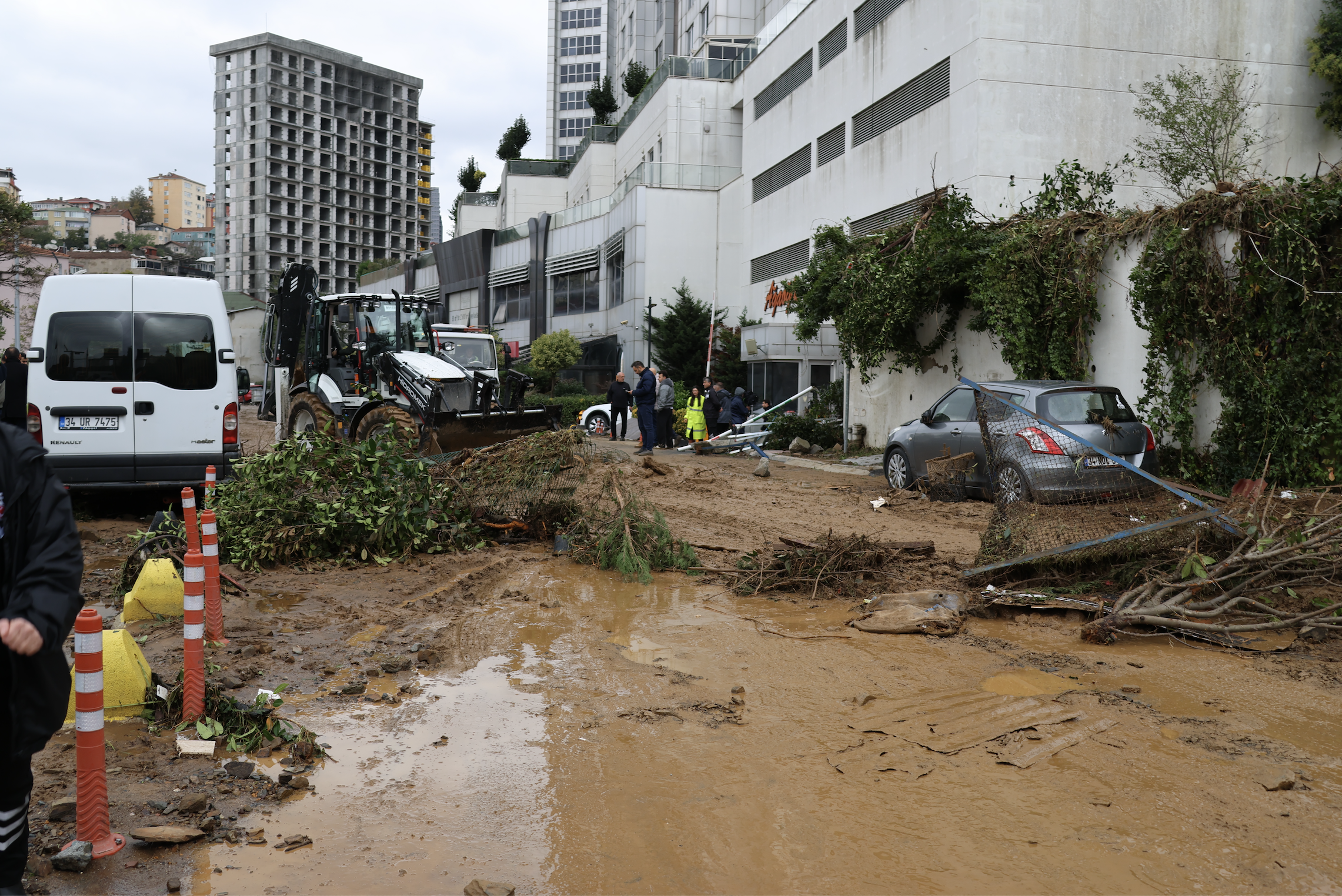
On October 14, a 14-year-old boy stepped into a puddle in a park in Balat, in Istanbul’s old city, and was electrocuted. A surveillance camera captured the moment. The governor’s office has opened an investigation.
The same storms flooded five other provinces, including Antalya, which will be host to COP31 in less than four weeks.
Istanbul alone recorded 1277 floods and 15 landslides; schools closed the next day.
None of this was a surprise. The day before the state meteorological service forecast about 21–50 millimetres of rain for Istanbul; parts of the city’s north received nearly 194mm. Cities are meant to be built for the worst case scenario, not the forecast.
Was this climate change? Without an attribution study, it is too early to say, but we do not need one to explain what happened.
Istanbul is a city of concrete and asphalt. Over five years, 98 square kilometres of new floor space was completed and 124 square kilometres started; more than a million new cars joined the traffic.
If you could park every vehicle in the city nose to tail, you would have a 12–lane car park from Istanbul to Paris.
The heaviest rain, up to 194mm, fell in the north, the city’s new construction frontier. Yet in the southern districts, where as little as 7mm fell, streets also flooded; they were paved long ago and “urban renewal” now even means concreting over the gardens between apartment blocks.
Is climate change responsible for the boy in Balat’s death?
In a similar case, in İzmir in 2024, the court-appointed expert blamed the municipal utility and the electricity distributor. Whoever is responsible must be named.
When “climate change” is continually discussed as a “natural” event, with no one behind it, it becomes the scapegoat. But it has a culprit, and that is the climate-changing policy.
Türkiye imports coal, oil and gas, and burns them; it forces everyone into cars and parcels the country out to cement companies.
Over 20 years, the number of vehicles rose from 8.5 million to more than 32 million and new floor area grew by 300%. Last year alone, Türkiye produced 98 million tonnes of cement.
It now emits two and a half times the greenhouse gases it did in 1990.
This is not just fossil fuels, but the fossil infrastructure which burns them — roads, concrete, cars and power plants.
In Demre, 22 people, including students and teachers who were trapped in a school, had to be rescued. The mayor said they had not seen such rain in 100 years.
That is a confession: a town with 25 centuries of history never planned for a once–in–a–century storm.
None of this will be on the table at COP31. Its Action Agenda does not even name coal, oil or gas, let alone fossil infrastructure.
The summit site is itself a concrete project. The company that won the US$160 million contract to build it is also a COP31 sponsor. The COP31 president, Murat Kurum, is the minister in charge of construction and zoning.
Türkiye has close to 2 million empty homes, not counting holiday houses. Ankara alone plans to spend US$480 million on asphalt in 2026. Put empty homes to use. Move asphalt budgets to public transport, pedestrian streets and bike lanes, and make public transport free.
But even that is not enough. Allowing existing fossil infrastructure to run to the end of its life would by itself push the world past 1.5°C. It has to be stopped, and public money moved from changing the climate to protecting cities from floods and heat.
That is what I call a climate revolution. It starts with naming the problem correctly.
The boy in Balat did not die because of the weather. He died of a policy. Name it.
[Önder Algedik is a climate researcher and activist with 350Ankara. His new book, Ya Fosil Düzen Ya Devrim (Fossil Order or Revolution), is published by İletişim.]