
Climate taz
Climate strategy for the EU: Brussels is preparing for 3 degrees plus
After the “Summer of Truth”, the EU Commission is presenting a framework for greater climate resilience. It's not concrete. And where does the money come from? more...
Deutsch (original) ·Auto-translated to English
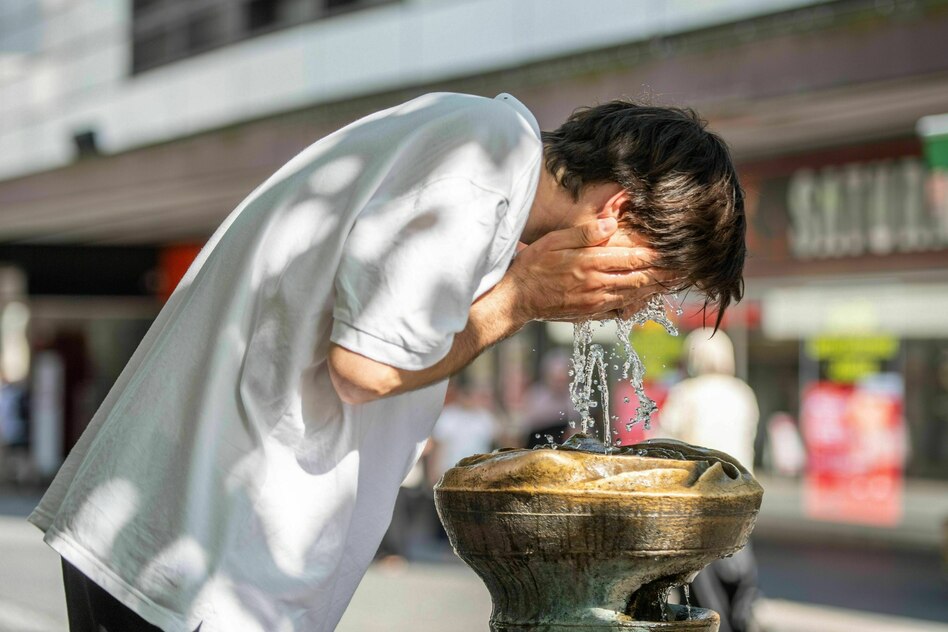
The EU Commission has called on Germany and the other 26 member states to prepare for global warming of up to three degrees Celsius and to present national plans to combat heat waves and other climate crises. Governments, regions and municipalities should pay attention to adaptation to climate change “in all major policy areas”.
In doing so, the EU Commission is throwing its own plans overboard. Previously, it had assumed that global warming could be limited to 1.5 degrees through climate protection measures. Now there is talk of 1.5 degrees by 2030, 2 degrees by 2050 and up to 3 degrees by 2100. The authority also admits that the current climate policy aimed at saving CO₂ is not enough.
Now it's about adapting to the consequences of climate change - a topic that the EU has so far neglected. But after the “Summer of Truth”, this is no longer possible, admitted EU Climate Commissioner Wopke Hoekstra. In addition to the loss of up to 50,000 lives due to the heat and 700,000 hectares of land due to fires, the economy also suffered enormously.
Experts estimated the costs of the extreme summer at more than 100 billion euros, said Hoekstra. For the period 2022 to 2025, the estimated losses from climate damage were around 200 billion euros, which is around 50 billion euros per year.
The EU Commission estimates that investments of around 70 billion euros per year are necessary to adapt to new weather extremes. However, the “EU framework for climate resilience” that Hoekstra presented in Brussels does not contain any fresh money. Brussels is also not proposing any tightening of the “European Green Deal” or a stricter climate policy.
On the contrary: the EU has recently softened its climate policy more and more. The combustion engine phase-out planned for 2035 is being undermined by arithmetic tricks. The rules to protect against the climate killer methane will be postponed for at least a year, possibly for three years.
The EU Commission also shows little ambition when it comes to adapting to climate change; many proposals are little more than hot air. The 27 EU countries should align their measures with a “uniform strategic plan”. A new climate resilience law should ensure this. A website, European Climate Viewer, aims to make dangers visible.
Anyone looking for concrete measures – such as equipping hospitals with air conditioning or greening inner cities – will be disappointed. This is left to cities, municipalities and governments. The EU calls on member states to determine which authority is responsible for what. That's more efficient, they say in Brussels.
Criticism comes from the environmental association Nabu. “Paper alone does not protect anyone from heat and floods,” said office manager Raphael Weyland. The plans are too non-binding and the financing is inadequate. “There is a lack of supportive EU funding, without which the climate adaptation plans risk remaining mere paper tigers,” says MEP Delara Burckhardt from the SPD.
Peter Liese (CDU) is in favor of more air conditioning: “We need these especially where old and sick people are at home or are being treated.” Thanks to EU legislation, air conditioning systems no longer contain any climate-damaging F-gas, says practicing doctor Liese.
Meanwhile, a team of experts led by University College London is calling for much more radical measures. The World Health Organization must declare the climate crisis a health emergency, demand researchers in the Lancet magazine. Politicians must give health protection the highest priority and provide the necessary financial resources. However, not even the EU is ready for this, as the proposals from Brussels show.