
Climate Green Left (Australia)
Seven things you must never say about COP31
Önder Algedik writes about the seven things which will not be mentioned at COP31, including the public bill for climate disasters, fossil fuel deals, asphalt-and-concrete cities, a summit-turned-trade
English (original) ·Read in Deutsch ⇄
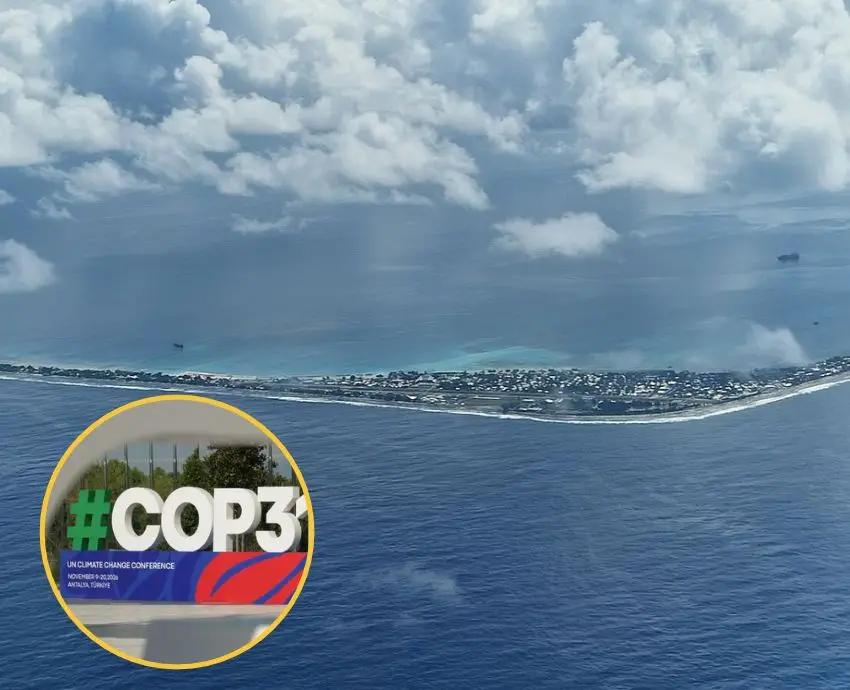
COP31 opened in Antalya on November 9 and its two hosts — Türkiye and Australia — have been busy.
Australia’s Labor government, despite being elected on promises to act for the climate, has approved 37 new or expanded fossil fuel projects since 2022.
Since September 2025 it has signed 19 fossil fuel agreements: 20-year liquefied natural gas (LNG) contracts, oil and gas exploration pacts with ExxonMobil, Chevron and TotalEnergies, drilling rights from Syria to Somalia, and a deal with Australia’s Woodside.
On top of those come six nuclear and mining agreements, three of them were signed in Seoul on November 3, six days before the summit opened.
One host approves the projects. The other signs the contracts. Together they will run a summit whose Action Agenda does not name coal, oil or gas even once.
Everything is going smoothly. In Türkiye, censorship helps; at least 1270 X accounts were blocked in September alone and, over the past 20 months, trustees have been appointed to 10 television channels.
So, to keep the hosts comfortable, here are seven things you must never talk about.
In June, the foundations of the companies that change Türkiye’s climate the most, including a refinery, car factory, coal power plant, an electricity distributor and even the operator of Antalya airport, set up “Philanthropy for Climate”. They invited environmental groups to the table. The polluters bring the money; civil society brings the legitimacy. Australians who have watched gas companies sponsor festivals and sport will know the model.
COP31 is expected to cost close to US$2 billion. When the host agreement came before Türkiye's parliament in July, one party wrote a dissenting opinion and then abstained. Only five MPs voted “No”. An agreement that cost to the public up to US$2 billion bill passed in near silence.
COP31 is, in a sense, a rubbish summit; “Zero waste” heads its list of themes. In August, as rubbish washed up along the Mediterranean coast, the national debate was only about waste imported from Britain. Meanwhile, according to Türkiye’s statistics office, more than 10 million tonnes of waste was burned in 2024. The sky became the landfill.
Has anyone at COP31 mentioned the deals Türkiye signed while preparing to host it? The energy minister posed for photos at every ceremony. A 20-year LNG contract with Mercuria. Exploration in the Black Sea and Eastern Mediterranean with ExxonMobil and TotalEnergies. A global partnership with Chevron, from Iraq to Venezuela. A stake in Kirkuk’s oil fields. Rights to drill in Syria, Libya, Somalia and Pakistan. And Woodside’s LNG.
When I counted in October, there were 14. Now there are 19.
5. Don’t talk about cities without resilience
On October 14, Istanbul, Sakarya, Kocaeli, Yalova, Muğla and Antalya went under water on the same day. The minister of urbanisation, who is also COP31 president, called it a “disaster”, blamed climate change and moved the topic onto the summit’s “Resilient Cities” theme. Were these resilient cities or cities stripped of their resilience? Between 2002 and 2021, Türkiye laid 603 million tonnes of asphalt and poured close to a billion tonnes of cement. If you must, talk only about river beds and pretend the valley slopes above them were never paved. In three days, everyone forgets.
COP stands for Conference of the Parties. But it has become a Fair of the Parties. The minister announced that 1.5 million visitors are expected! That is not a venue for negotiation; it is an exhibition ground. As I argued last month, the stands will be busy and the products green. Never call it a fair. Say “climate summit”, a phrase with no actor and no action.
Say “coal phase-out”, but never mention oil. Ask for a coal exit date, which buys the government time. Don’t touch the summit’s global business partner, Koç Holding, which owns Türkiye's oil refineries. Call gas a “bridge fuel”. Australians know this one: Labor’s Future Gas Strategy says gas will be needed to 2050 and beyond.
So here are the seven things we must not talk about: Fossil philanthropy, the public bill, a country turned into a dump, fossil deals, asphalt-and-concrete cities, a summit turned trade fair, and oil and gas.
Nobody has to ban any of this, because we already don’t talk about it. We don't talk about the groups that sit at the table with fossil foundations. We don’t talk about asphalt and concrete, because their owners would come next.
We write reports about the changing climate, not about those who change it.
In Antalya there will be plenty of talk about “climate change”, with no subject and no verb. There will be no talk of 37 approvals in Canberra and 19 signatures in Ankara. No talk of three fossil fuels and two fossil infrastructures: coal, oil, gas, asphalt and concrete. Because if anyone talked about them, the conversation would arrive at the one policy both hosts share: the fossil order.
So, talk about it. In Sydney, in the Pacific and in Antalya. Thirty-seven and 19 new or expanded fossil fuel projects. Count them out loud.
[Önder Algedik is a climate researcher and activist with 350Ankara. His new book, Ya Fosil Düzen Ya Devrim (Fossil Order or Revolution), is published by İletişim.]