
World · Freedom News (UK) · · 4h
Papuan traditions and Empire’s mess
English (original) · Read in Deutsch ⇄
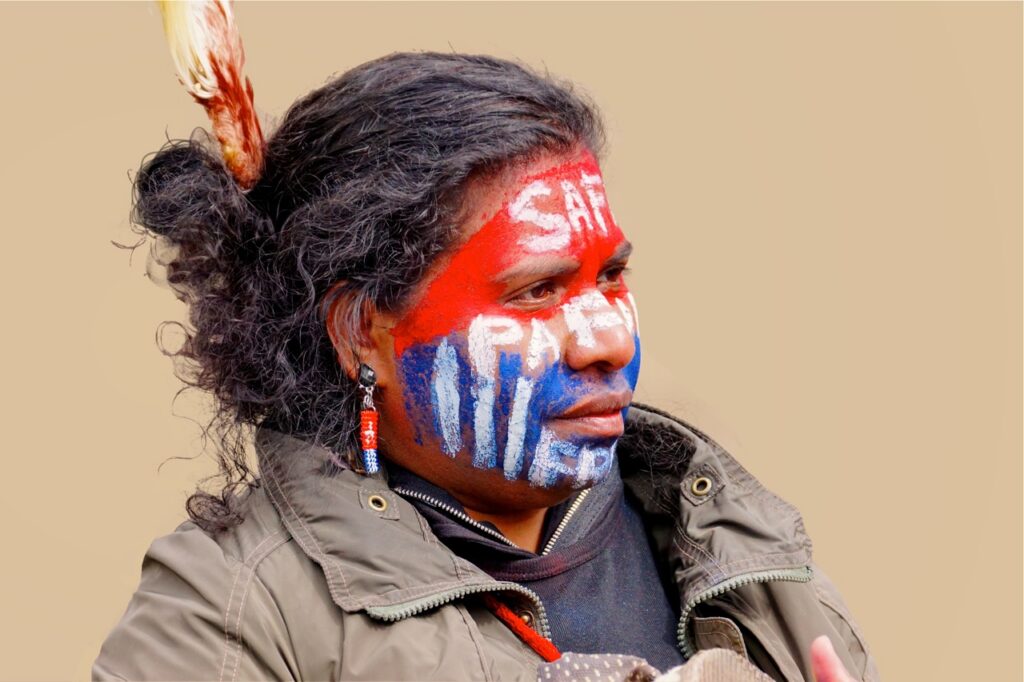
On the periphery of globalisation, media interest and academic attention, the people of West Papua inhabit the western side of the world’s largest tropical island.
As detailed by the early European explorers, Papuan communities have been independent sovereign nations for tens of thousands of years. Adapting to a myriad of habitats, they developed unique languages, cultures and physiologies.
Living with kin in decentralised villages surrounded by customary gardens and forests, Papuan women and men shared equal status, educated their offspring and practiced mutual aid, giving freely without the need of reciprocity. Respecting their ancestors and nature, they lived without government nor state.
Papuans practised agroforestry dating back to their arrival and are the oldest horticulturalists in the world. Bananas, taro, yams, sago and sugar cane were first domesticated in Papua before becoming international staple crops.
Research by Sutarno et al. documents how the Hatam tribe of West Papua utilise at least 55 animal species. No over-harvesting or over-hunting occurs and, like other Melanesian peoples, they do not recognise individual land ownership.
From the Age of Discovery in the 1600s, Papuans rebelled against all attempts at subjugation. Under occupation by the Dutch, the people formed millenarian movements seeking independence.
During World War Two under Japanese occupation, Papuans supported the Allies forming guerrilla liberation units which were instrumental in preventing Australia and New Zealand from falling to Imperial Japanese-styled fascism.
In 1957 the Dutch government, having colonised the western side, and the Australian government on the eastern side, began coordinating towards independence. In 1962 this was derailed when the territory was transferred first to the United Nations and then Indonesia, via a covert programme of malfeasance orchestrated by Washington. Since then the Indonesian military has been conducting systematic, slow-motion genocide according to reports by legal scholars, intelligence agencies and the UN. In the Star Mountains, for example, aerial bombing using helicopters and drones continues to the present day.
Since 1965, the Organisasi Papua Merdeka (OPM) or Free Papua Movement has been waging a low-level war of liberation. Initially establishing a Western-styled system of centralised governance upon the advice of their diaspora in the Netherlands, this led to bitter infighting, killings and an exodus that continued for more than two decades. As detailed by former OPM representative Otto Ondawame, the group abandoned the colonial system of centralised government in 1992, establishing a decentralised system comprising 881 village councils, 116 district councils, 14 regional councils and a national council. Under the OPM’s New Order, village councils are autonomous, reflecting the indigenous fabric of the Papuan tribes that have lived in harmony with nature for tens of thousands of years.
This decentralisation greatly facilitated the creation of new military commands across the Territory. Armed mostly with traditional bows and arrows, old firearms from the colonial period and a few modern weapons captured from the enemy, 36 regional commands now extend across the Territory.
While mostly confined to guerrilla warfare in the jungle, the OPM is increasingly taking on the Indonesian police and military in towns and cities with battles often lasting several days and even weeks whilst preparing for a territory-wide mass uprising.
Upon independence, the OPM plans to maintain this decentralised system, based upon their 1971 Declaration of Independence. It enshrines: Mass participation democracy; a people’s armed forces; equal distribution of national wealth; decentralised power rejecting the imperial, centrally-controlled economic and government political system; equal rights and freedom of expression; programmes to advance people’s natural talents with schools, facilities and cultural institutions; protection of resources and ecology and confiscating lands from imperialists; and world peace by supporting other oppressed and colonised peoples.
Without police, state or government, living in decentralised communities, embracing gender equality, mutual-aid, respecting ancestors and nature, the people live under a political paradigm of indigenous anarchism.
Image: Roel Wijnants on Flickr. This article was originally published in the May 2026 issue of Freedom anarchist journal.
Read the full story at the source
Source: Freedom News (UK)