
World Freedom News (UK)
Dignity walks in the heart
Mexico’s search collectives make alliances with Zapatista army to confront the systematic violence of enforced disappearances and femicides The post Dignity walks in the heart appeared first on Freedo
English (original) ·Read in Deutsch ⇄
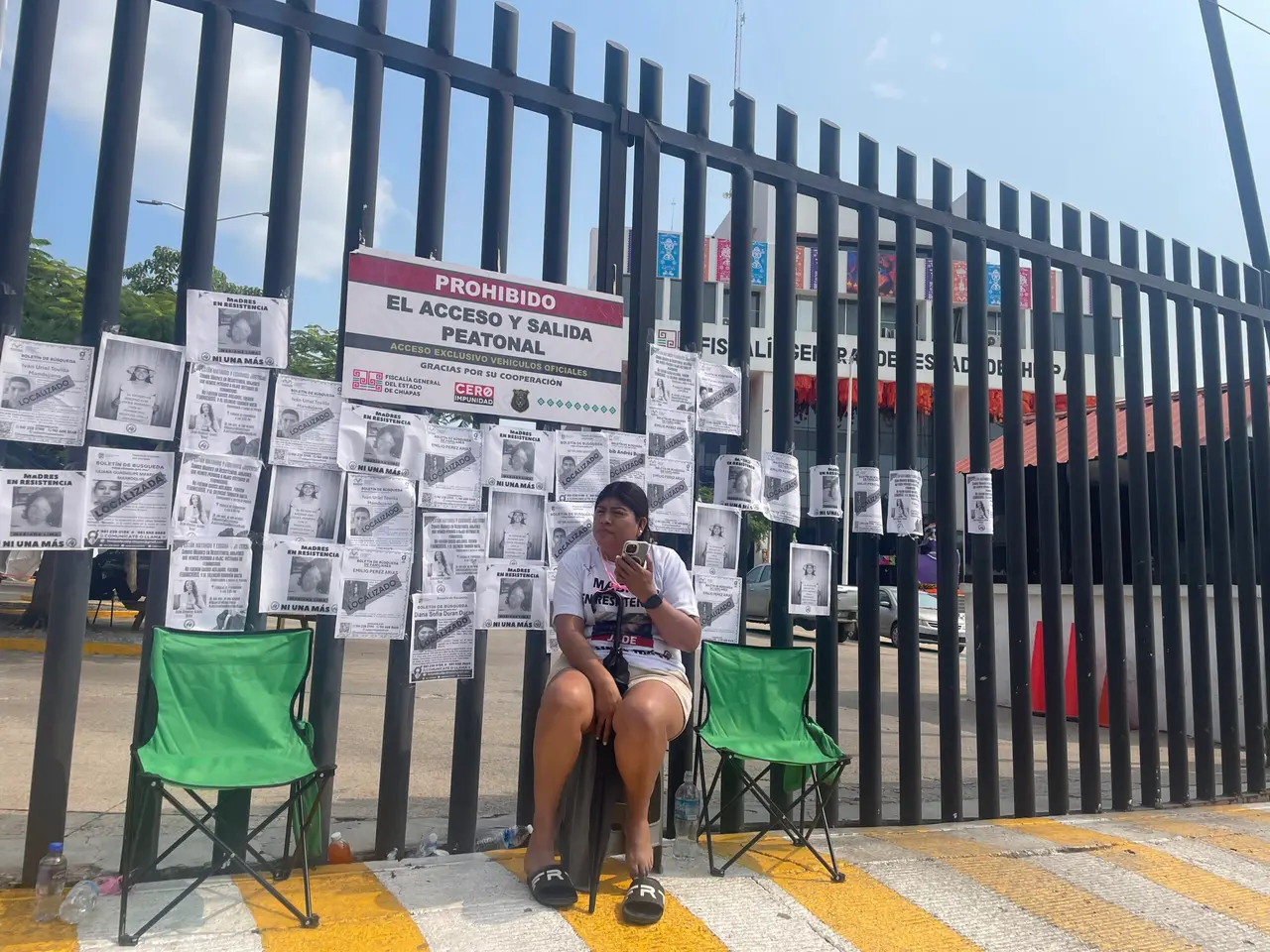
It is dawn again and 12-year-old Ariana is getting ready to leave her home with her grandmother. Together they walk in the mountains of Chiapas to a nearby ranch to care for their family animals. After that? We cannot say, as they both stepped out of this world and disappeared. We only know for sure that they were never seen alive again.
The family and neighbours began the search until two days later, the body of 55-year-old Miriam Cruz Alpuche was discovered on the bank of a local stream. She was wrapped in black bin bags and community rescue units discovered multiple signs of violence. By the end of the week, Ariana Scarlet Velázquez Cruz was found close by.
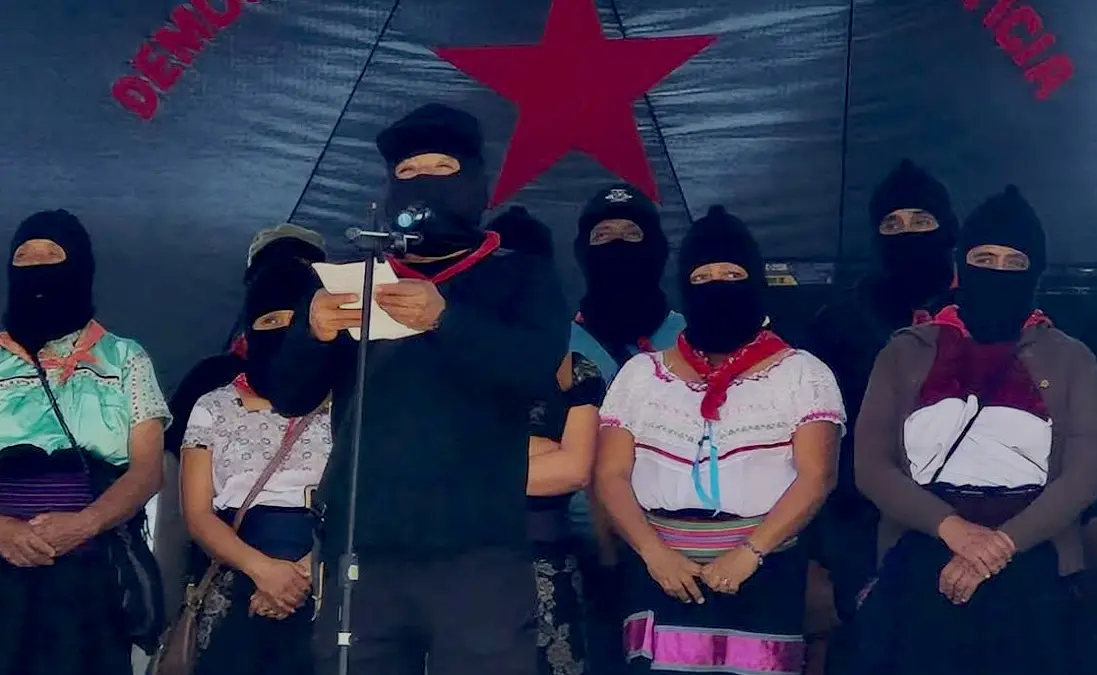
“The demand for truth and justice for disappearances,” said Captain Marcos of the EZLN (Zapatista Army of National Liberation) “enforced disappearances and disappearances by individuals – must be assumed a national responsibility.” Marcos was speaking in San Cristóbal de las Casas (Jovel) in Chiapas after meeting with “mother seekers” in el caracol Jacinto Canel.
In the Zapatista territories, EZLN and colectivos de búsqueda (search collectives) have pledged to form alliances in confronting the Mexican government for it’s role in facilitating disappearances, murders, gender-based violence and wars. They will meet in Ajusco in December, an area that is a high risk for disappearances, as well as a delegation to Mexico City to both expose and find community-based resistance to this crime against humanity.
With more than 130,000 people missing in Mexico, decades of activism and legal battles against systematic violence and enforced disappearances, the United Nations has finally got involved in offering the state of Mexico assistance. Predictably as the families of the disappeared arrived to give their own testimony, the Mexican government denied this pain with their own historical fiction.
Irreparable void
In Chiapas there have been 30 documented cases of femicide and 440 across Mexico in the first half of 2026. These numbers are reflections of the activities of local groups, not the true scale of the problem. Government corruption has hidden the mass killings of women and children, as well as a clear complicity in the enforced disappearances of it’s own citizens. If the body is never recovered, it cannot be known how the person died.
Investigations into femicides in Mexico are impacted by a loss of evidence, an inadequate investigation or when the gender perspective is not applied correctly. Families of the missing are re-victimised by the process of seeking justice while authorities fail to examine crime scenes, secure evidence or carry out acid phosphatase tests. All of this impacts the possibility of justice for the affected and their families.
Femicidal violence “leaves indelible consequences, deep traumas and an irreparable void in their families… in their communities and in the entire social fabric of the state,” said the Observatorio Ciudadano Nacional del Feminicidio (National Citizen Observatory of Femicide) following the murder of Miriam and Ariana. They demand an immediate gender – child perspective investigation.
The inaction of the authorities when a woman or child has gone missing is deadly, with some regional police asking families to wait 72 hours before reporting a missing person. This would have been too late for Miriam, as it would likely be for 12-year-old Ariana. The logic should be to investigate when a person is noticed missing.
In the absence of executing justice, various instruments of the law such as the Attorney General’s Office (FGE) work as a mechanism to prevent the opening of investigations, with “omission… a lack of commitment and responsibility,” observed Guadalupe Isabel Mondoza Pérez, who has been looking for her husband Alfonso since July 30, 2024 after he disappeared in Yajalón.
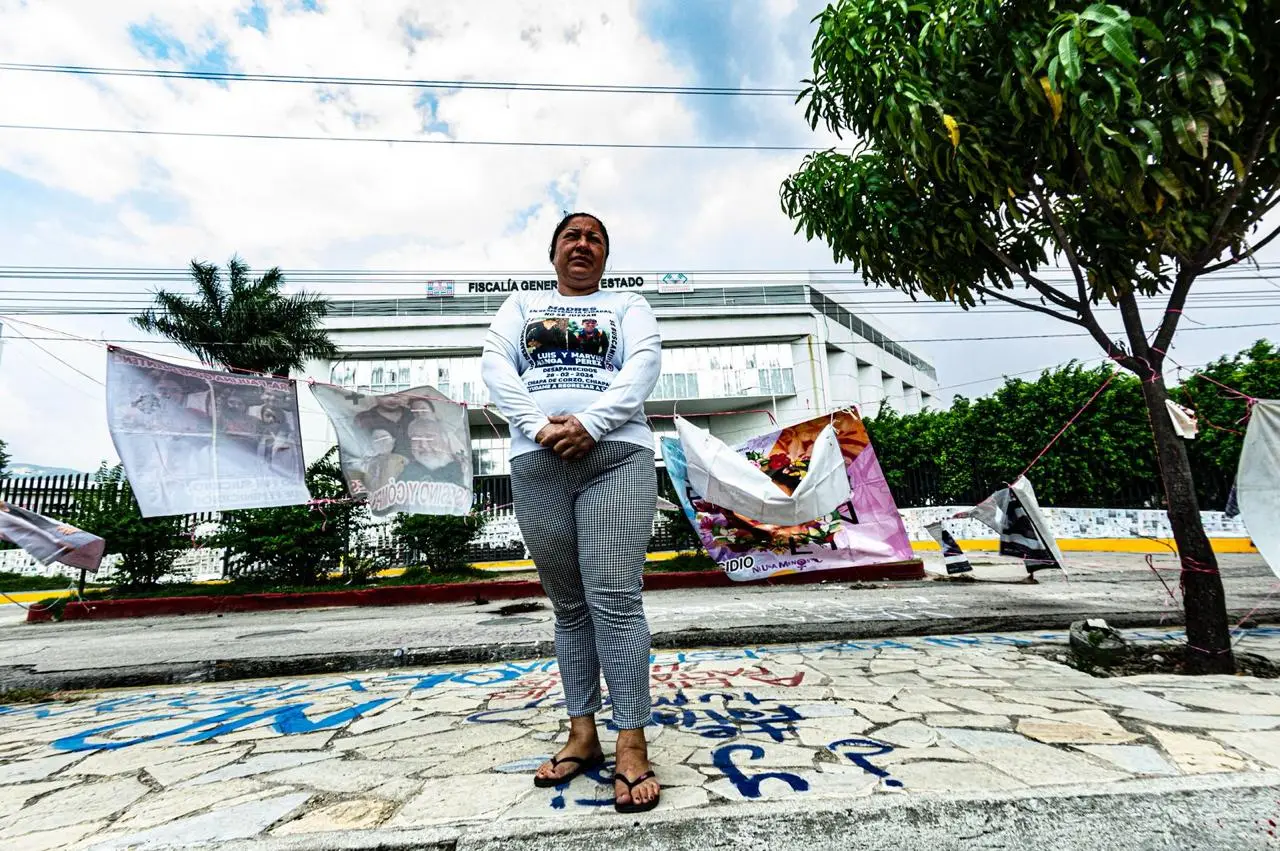
Authorities limit complaints by creating an administrative hole called “registros de attención” (care records) as a way of killing formal investigations. With legal advice from Colectiva Cereza (Cherry Collective), families can see what missing persons reports have been shelved in care records and which are open investigations.
If the aim is to tear the social fabric of our shared relations – it would make sense to weave these communities with shared struggles and resources to resist the stranglehold of the law as systematic violence. It is a rebellion to demand social responsibility from top to bottom and reach out to those who seek justice for their loved ones; dead, alive or caught in between.
Historical truth
What unites all activists in the various regional search collectives is a rejection of the government’s narrative of the decline of disappearances and token offerings of dedicated government departments that seemingly do nothing to combat the 40 disappearances a day or provide effective prevention strategies to address the problem.
María Tequi, founder of the Guerreras Buscadoras de Guaymas collective denounced the government’s strategy of making the disappearances in Chiapas invisible by claiming that the reasons why young men are missing are because they migrated to get a job. This narrative is powerful on both southern and northern borders, claiming that people are missing because they left “to work out of necessity.”
“They keep disappearing, they keep killing us. The missing are not absent” María says, “our disappeared are missing because the were taken away, they are not absent of their own free will.” María continues to search for her son Fernando who disappeared in August 2015.
Speaking to the United Nations, Cristina Bautista explained how she will continue to demand justice for her son Benjamin, who on the night of the September 26, 2014 was disappeared with 43 other students from the Ayotzinapa Rural Teachers’ College by the local, state and federal police, in collusion with criminal organisations and the military.
“If we, as fathers and mothers of the 43 students of Ayotzinapa do not shut up, it is so that it does not continue to happen to the other parents, to the other students, that they do not continue to disappear because it is a very great suffering.” By sunrise on September 27; six people were dead, forty wounded and 43 missing. Most of these enforced disappearances have never been found.
The government investigated itself and the Attorney General’s Office came up with it’s own narrative of events calling it “historical truth.” Yet the findings of Forensic Architecture and local civil society collectives discovered a constructed, fraudulent and inconsistent narrative. This fiction protects the impunity of the Mexican state, as it’s governments play both policeman and murderer in a play where half of the cast are missing from the stage.
Almost three decades ago we remember the 1997 massacre in Acteal, where 100 paramilitary soldiers entered a church and murdered 45 people who had taken refuge there. The victims were mostly woman and children and all were members of Las Abejas (The Bees), a libertarian pacifist group who were politically sympathetic to the EZLN. The local police and military refused to intervene as the massacre went on for hours.
The Mexican government denied involvement but leaked plans for a counter-insurgency in Chiapas disproved this assertion, as does the fact that the old paramilitary structures of the 1990 remain intact, with some of the perpetrators of the massacres continuing raids. When tyranny is law, horizontal solidarity with groups and resources is our only way to challenge this form of systematic violence.
Dignified life
Mexican President Claudia Sheinbaum believes the UN Committee on Enforced Disappearances (CED) is over-reaching it’s mandate because there is ‘progress’ in the search for missing persons and the government is in ‘dialogue’ with the families of the missing. Enforced disappearance is a crime against humanity, even if committed by individuals under consent of state actors.
“We are concerned,” said Elizabeth Uruchurtu at the UN, “that in order to please it’s political allies, an image of a state that imparts justice is presented when it does not correspond to the reality we live. Enforced disappearance not only disappears people, it also tries to disappear truth, destroy evidence, sow fear and guarantee impunity.”
Daniela González has been looking for her 16-year-old son Axel since June 23, 2022 when he disappeared. Like many, Daniela had to organise to get justice for her son and is now a member of the search collective Una Luz en el Camino.
“The truth is that we have long sought this meeting, this dialogue with the Zapatista army,” Daniela said. “Fortunately today it is achieved and not only is dialogue but it is to be able to weave community, be able to knit and embrace to continue looking for our loved ones.”
“We recognize their struggle,” families of the missing wrote before the meeting, “and the exercise of autonomy and resistance to power, as well as the search for ways to a dignified life.”
The post Dignity walks in the heart appeared first on Freedom Press.