
World · Africa Is a Country · · 3h
We are oil to you
English (original) · Read in Deutsch ⇄
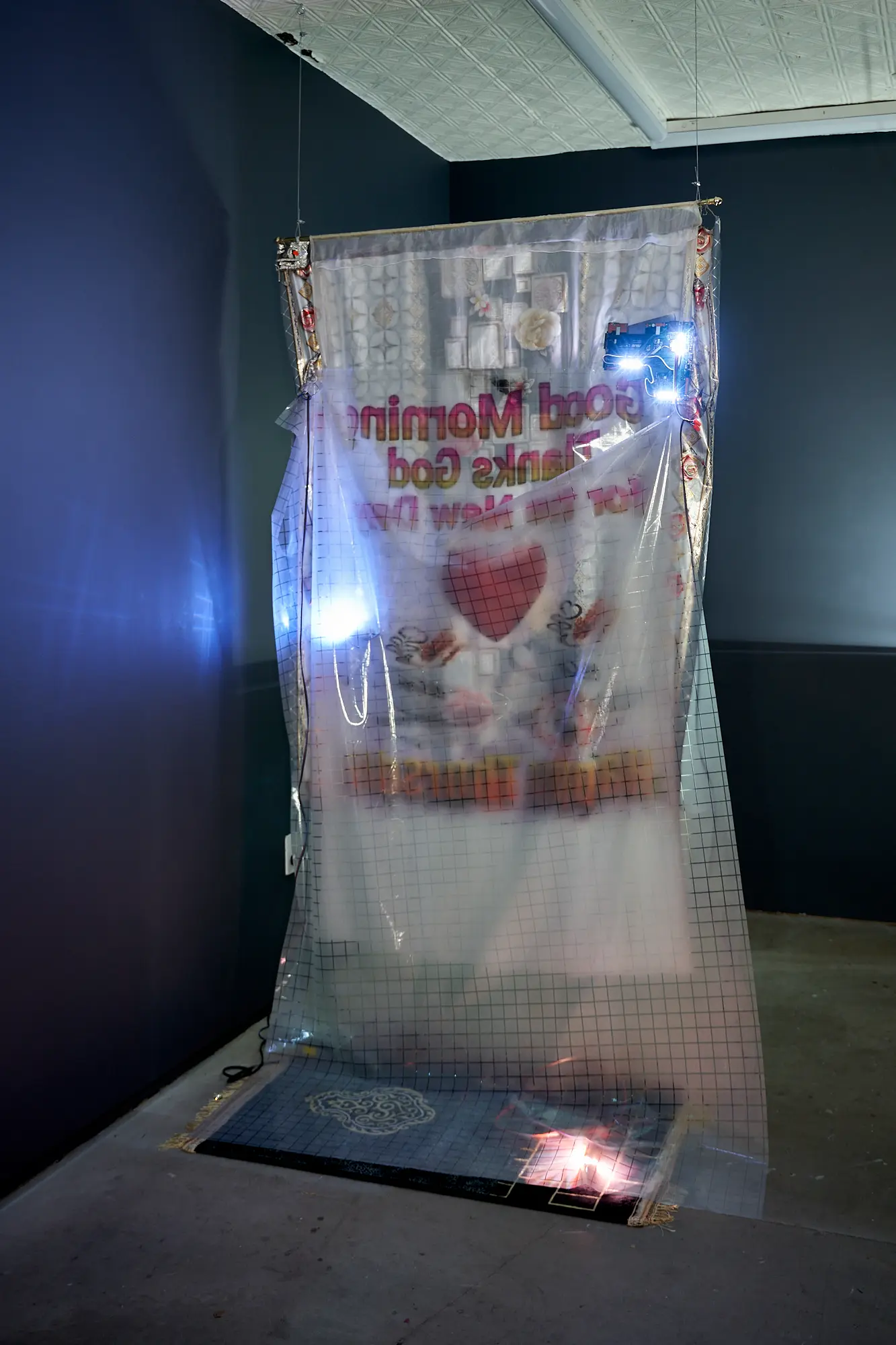
I’m exhausted. As are many of my peers.
When I was in my 20s and more spiritually adventurous, I would obsess over the 27 club.
During this time, I was opening for Sun Ra Arkestra and floating in the tradition of Black spiritual music. Mostly by accident.
I had a theory at the time that the story of Robert Johnson meeting a man at the crossroads and receiving the knowledge of how to play the guitar was actually about Elegba.
And that at 27, musicians had to decide whether to be in collaboration with the devil or choose another way.
A crossroads. A coming of age. A portal.
No wonder we are exhausted.
As musicians, we are in the business of energy.
Performances can be athletic, like a windmill. Poems, singing, and playing an instrument can generate energy as we receive inspiration like solar panels hearing instructions from the sun.
On the other side of things, there is the audience.
Depending on the context, the relationship between performer and audience can be life-giving or extractive. I’ve played festivals in Europe that have made me feel like my soul material is being mined.
I think of singers who have sedated themselves to stay alive but end up dead.
*
As artists who are children of immigrants, some of us have chosen a path different from our parents.
We’ve chosen a path of ideas, sounds, images, and expression. We are in the business of exchanging thought, extrapolating, and expanding worlds. We have the time to express ourselves. I will never take that privilege for granted.
A father in Patricia Engel’s It’s Not Love, It’s Just Paris tells his daughter that every immigrant conjures an entire future out of nothing more than a dream, that “the immigrant’s life is art in its purest form.”
Survival on foreign land demands immense creativity.
And there are places of collective expression: parties with exuberant decoration, lappas that glint in the spinning lights of a wedding reception, and then on the phone, WhatsApp.
WhatsApp is a curatorial space; a place of collective ingenuity. These phones tie together the diaspora and are where expression and collective culture consumption take place.
Last year, I had my first solo exhibition, FATHAGOD.EXE, at Blade Study in the Lower East Side. I was thinking about those phone stores on Fulton Street. I imagined that the vitrines in the show, if turned on their side, just might resemble the glass cases that hold SIM cards, prepaid phones, and calling cards.
I made a grill out of a SIM card. The dental mold became geological and the black line holding it became Ngloei (or “oil” in Mende).
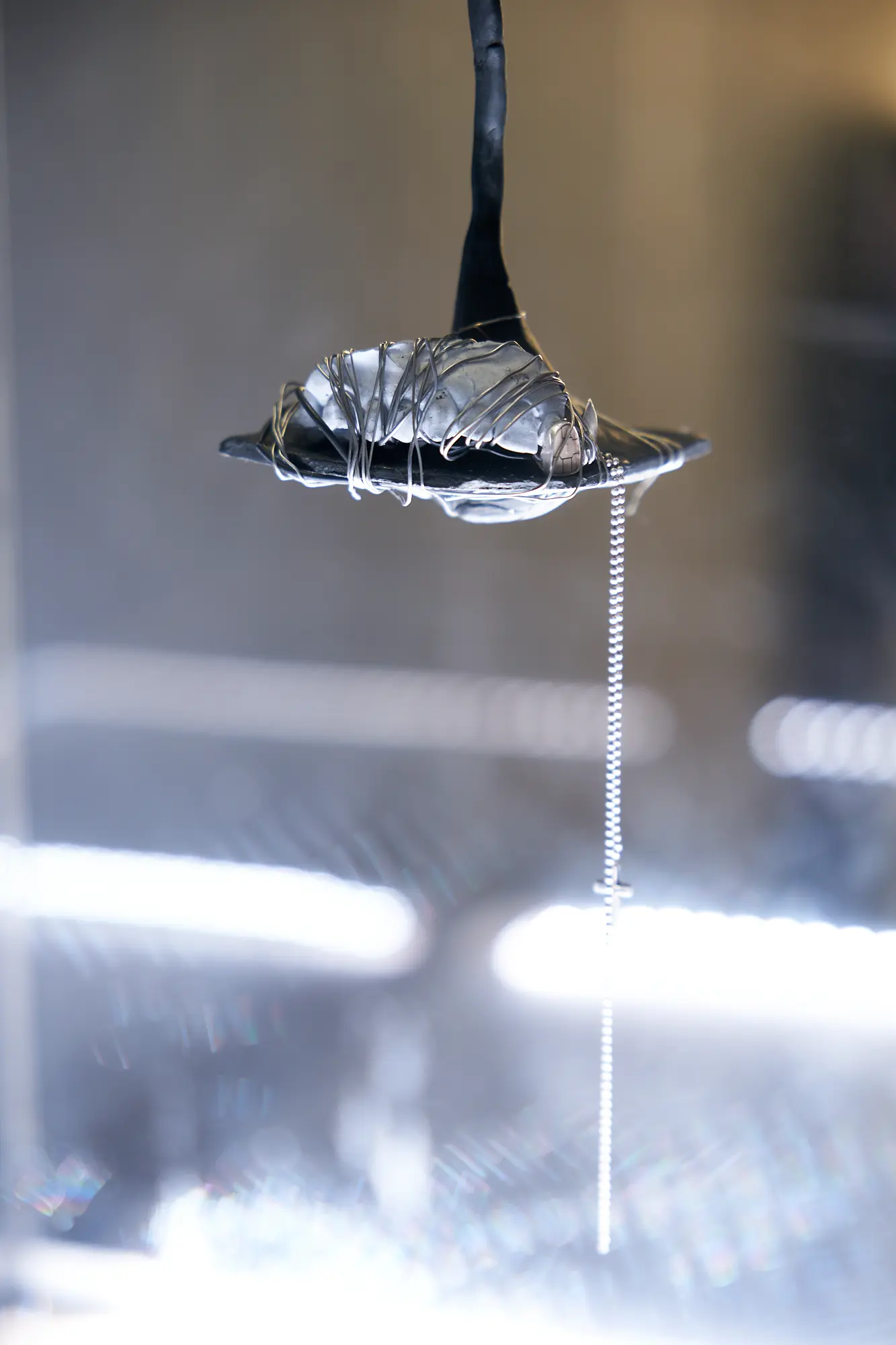
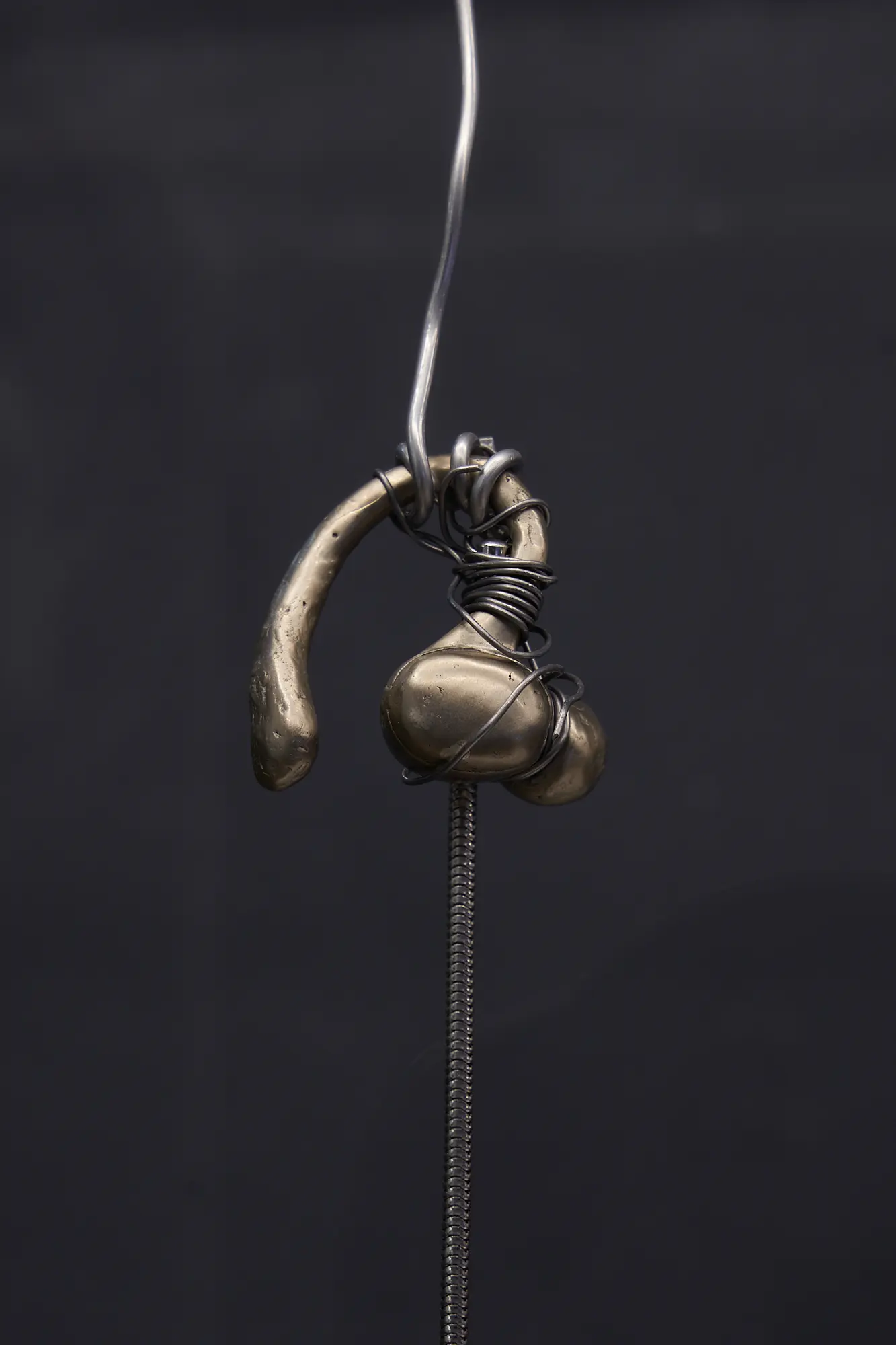
For the show, I was thinking about West African immigrants using Bluetooth wearables and SIM cards to stay connected to family back home. And as I said, coltan. These cell phones are built from materials that could be mined by the relatives of those who use them to stay in touch.
The exhibition asked: What does it cost to stay connected? Who is laboring so that connection is possible?
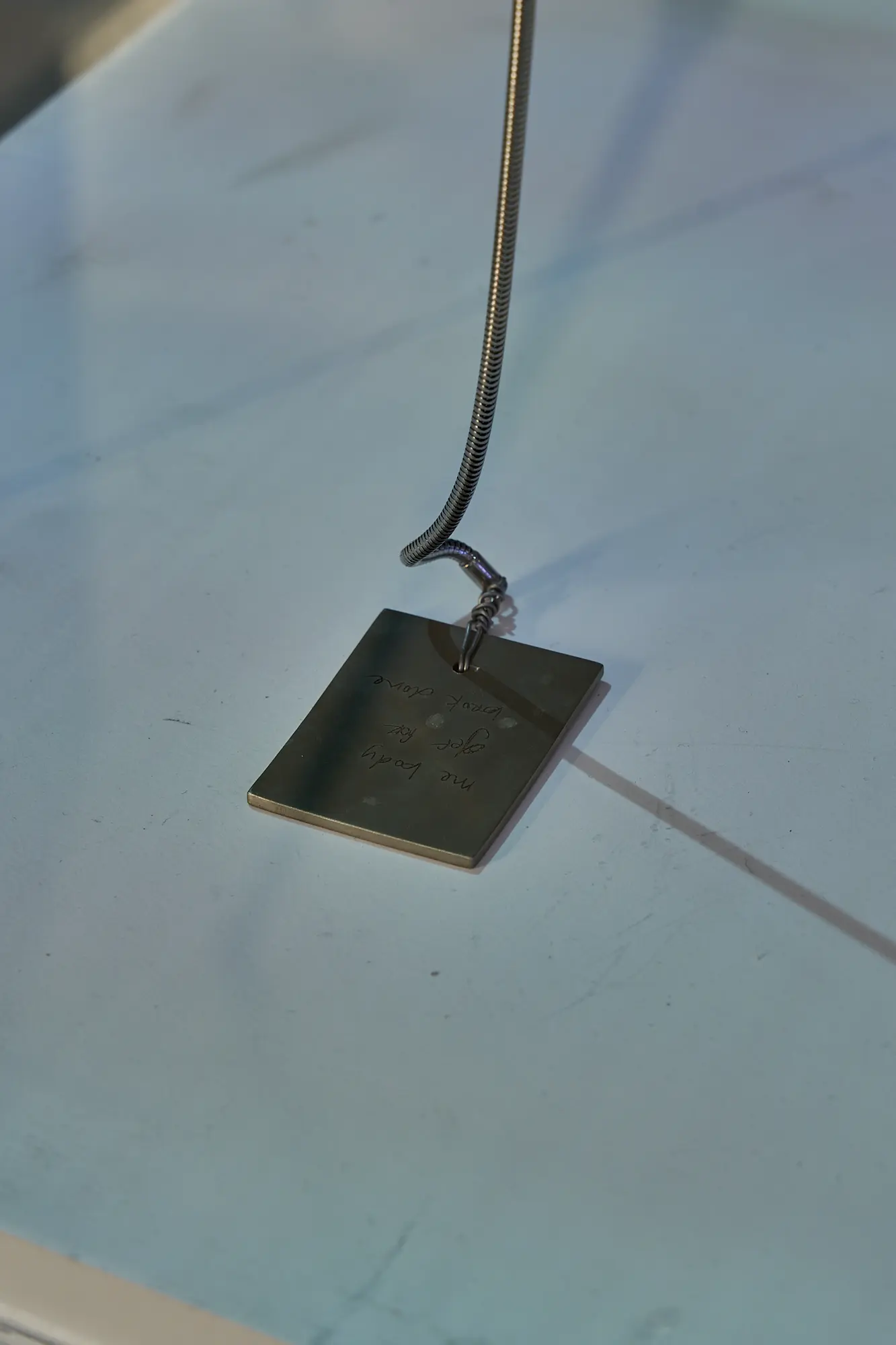
The pendant says, “me body gef fo brok done.” A lyric from my song “Cyborg,” on the album Spirit Said Yes (2016).
Then I think of children in Congo dredging up coltan. Backs bent. iPhones pending.
Bodies of Black people breaking down. Children bent over digging in Congo. Adults bent over picking cotton along the Mississippi.
We Are Oil to You II
At the gas station down the street, the earth tells me that oil is evil alchemy. Extraction, like black goo, drips and compresses to form records that tell me why I was afraid to play them backwards.
Heavy to hear the songs of forlorn laborers
from Motown
to men bent over along the Mississippi
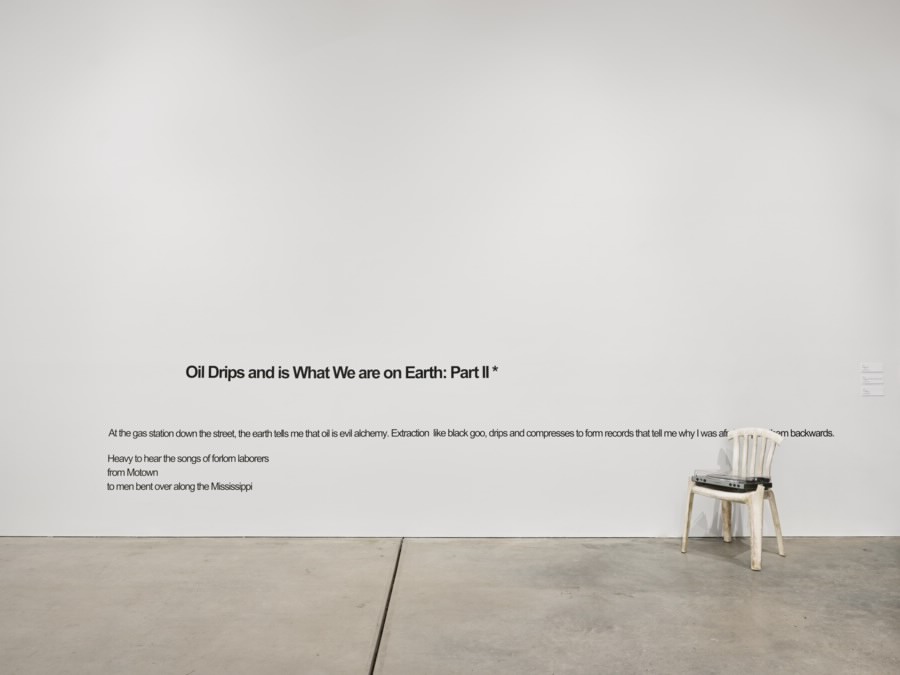
The music industry has long been extractive. And then we do it to each other. Motown music executives owning masters.
My great uncle, a palm wine musician, S. E. Rogie, started his own label called Rogiephone. He protected his legacy.
*
I’m upstairs on the veranda in Freetown, overlooking the yard where cars are being worked on.
The colors have faded on the newspaper plastered on the windshield of my favorite broken-down car.
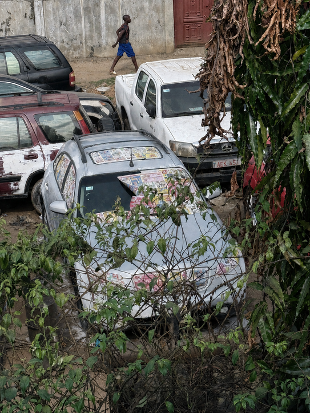
I carry out a soft verbal heist on my parents. I ask my family: “Is there anything we own?”
I want to own a home.
I know that Rogie slept on floors in London and my parents stayed with people for months when they arrived in Atlanta in the ’70s.
I am fortunate.
In the United States, I criticize ownership. In Sierra Leone, I’m yearning for it.
*
*
I remember the film Amistad. As young as six, the VHS is rerunning and rerunning. It’s a film about illegally captured Mende people taking over a ship called La Amistad from the Spanish captors.
When the tape played, it felt like the room turned a dark blue, covered in longing and muck. Thick like oil and heavy memories. The movie exists. Everyone is proud.
Then there is Blood Diamond. Another movie with a VHS steaming. Limbs cut. Cracked earth.
Diamonds stolen. Innocent people bloodied and dragged. Rebels rejoicing.
*
Time Tilts
Between coffee and oil
Between diamonds and limbs
Between Bo and Freetown and Fairo and outdoor showers where water falls
Laughter rings and secrets flow from there to here, directly, through dreams and dancing,
I swear
Here we have boxes, grids, Monday through Friday, containers to make us tick tock right in step with what is required to survive
In Salone, time slides
A tilt of the axis and the western world would join island time
MST, CST, EST, PTSD, DMV, CSA, SSI, DSM
HIPAA
*
What becomes possible when the psychic weight of labor, migration, and extraction is, even briefly, set down? What is the sound of that? I want to make it. I will.
*
So it turns out that we do have land.
We are on a cliff. It overlooks the ocean. The water is gentle and the waves and I are curious about each other.
Could this be where ease is?
Read the full story at the source
Source: Africa Is a Country