
World · Pressenza · · 1h
National Consultation Highlights Skills, Migration and Mobility Priorities for Bangladesh
English (original) · Read in Deutsch ⇄

Dhaka, 28 September: Ovibashi Karmi Unnayan Program (OKUP) organized a national consultation titled “Skills, Migration and Mobility: The Way Forward for Bangladesh” at Hotel InterContinental in Dhaka on Monday to present key findings from research conducted under the GS4S project.
The consultation brought together policymakers, skills-development experts, researchers, international organisations and migration stakeholders to discuss how Bangladesh can better connect skills development with domestic and international labour-market opportunities.
Skills development must respond to labour-market demand
In his welcome remarks, OKUP Chairperson Shakirul Islam emphasised the importance of skills training in preparing workers for employment both at home and abroad.
He said the focus should not simply be on increasing the number of people receiving training, but on ensuring that training provides skills that correspond to actual labour-market demand. He also stressed that linking skills development with employer needs, recognised qualifications and safe migration pathways is essential to turning training into meaningful employment opportunities.
Research highlights persistent skills and employment gaps
Urmi Jahan Tanni, Research Manager at OKUP, presented the key findings of the research, highlighting the persistent gap between skills development and employment opportunities in Bangladesh.
Under the GS4S project, OKUP published three working papers in collaboration with its consortium partners, examining skills, employment and migration from the perspectives of countries of origin, destination countries and individual workers.
According to the research, around 13.8 million workers are affected by underemployment, while 47 percent of TVET graduates face difficulties finding suitable employment. At the same time, approximately 85 percent of jobs in Bangladesh are in the informal sector, pointing to wider structural challenges in translating skills into decent, productive and secure employment.
The research identified several key challenges, including:
-
- Limited demand-driven skills training;
- Insufficient practical and industry-relevant skills;
- Weak graduate employability data;
- Inadequate opportunities for reskilling and upskilling;
- Unequal access to training; and
- Weak recognition of skills and qualifications.
The findings suggest that training alone cannot resolve employment challenges unless it is more closely connected to labour-market demand, employer requirements, decent work and recognised qualifications.
Challenges facing the TVET system
The research also identified a number of weaknesses within Bangladesh’s technical and vocational education and training (TVET) system. These include limited collaboration between training institutions and industry, inadequate infrastructure, outdated curricula and equipment, insufficiently trained instructors, limited integration of digital and green technologies, and weak international recognition of Bangladeshi qualifications.
Researchers also highlighted barriers that limit women’s access to skills development and employment. These include traditional gender norms, household responsibilities, social stigma, occupational stereotypes, discrimination, gender-blind training programmes, limited childcare and flexible-work opportunities, and regional disparities in access to training.
European labour markets offer potential opportunities
The research examined emerging opportunities in European labour markets and Bangladesh’s potential to better prepare workers for international employment.
Europe is experiencing skills shortages across several sectors. According to the research, 74 percent of small and medium-sized enterprises (SMEs) report serious difficulties finding workers with the required skills, while 77 percent of EU companies face similar challenges.
The health and care sector alone is experiencing a shortage of around 1.6 million workers, according to the World Health Organization, while more than 250,000 construction positions remain unfilled. Demand for ICT skills is also significant, with more than 60 percent of firms recruiting ICT specialists reporting difficulties in 2021. Meanwhile, around four in ten adults lack basic digital skills.
The research suggests that these labour-market shortages could create opportunities for Bangladeshi workers if they are equipped with skills that meet the requirements of destination countries.
It recommends stronger alignment between Bangladesh’s training systems and European standards, alongside improved certification systems, greater recognition of Bangladeshi qualifications, stronger employer involvement in training design and recruitment, and the development of regular and predictable migration pathways.
Shakirul Islam also called for closer cooperation among government agencies, training institutions, employers, recruitment actors, destination-country authorities, development partners and migrant organisations to create effective pathways from skills development to safe and sustainable international employment.
Experts discuss skills, migration and mobility
A roundtable discussion featured Prof. Elisa Fornalé of the University of Geneva/University of Bern; Dr Md Nurul Islam, former Director of BMET; Rahnuma Salam Khan, National Programme Manager at the ILO; and Dr Engr Md Sakawat Ali, Principal of Dhaka Technical Teachers Training Institute (DTTTI). The discussion was moderated by Shakirul Islam.
Prof. Tesseltje de Lange, Director of the Centre for Migration Law at Radboud University and Principal Investigator of GS4S, delivered the public lecture.
Recognition of skills certificates remains a concern
The closing session included remarks from Md Saiful Haque Chowdhury, Additional Secretary, Ministry of Expatriates’ Welfare and Overseas Employment; Ms Nazia Haider, Regional Programme Manager – Migration and Protection at the Embassy of Switzerland in Dhaka; and Mr Giuseppe Di Giovanni, Migration Expert at the Embassy of Italy in Dhaka.
Ms Laura Cartanya Llach, First Secretary of the EU Delegation to Bangladesh, attended as the Guest of Honour, while Md Rabiul Islam, ndc, Member (Registration and Certification) and Additional Secretary of the National Skills Development Authority (NSDA), attended as the Chief Guest. The session was moderated by Prof. Tesseltje de Lange.
In his remarks, the chief guest highlighted concerns over the recognition of skills qualifications in Bangladesh. He noted that nearly 700,000 trainees have received certificates from the NSDA, but recognition of those qualifications remains unsatisfactory even within the country.
“If it is not satisfactory domestically, then why will it be satisfactory abroad?” he said, underscoring the need to strengthen the credibility and recognition of national skills certification.
He further said that around 70 percent of NSDA certificate holders had secured employment either in Bangladesh or abroad, while approximately 700 certificate holders were currently working overseas.
The consultation concluded with a focus on strengthening Bangladesh’s skills-development system, improving recognition of qualifications and building stronger links between training, labour-market demand and safe migration pathways.
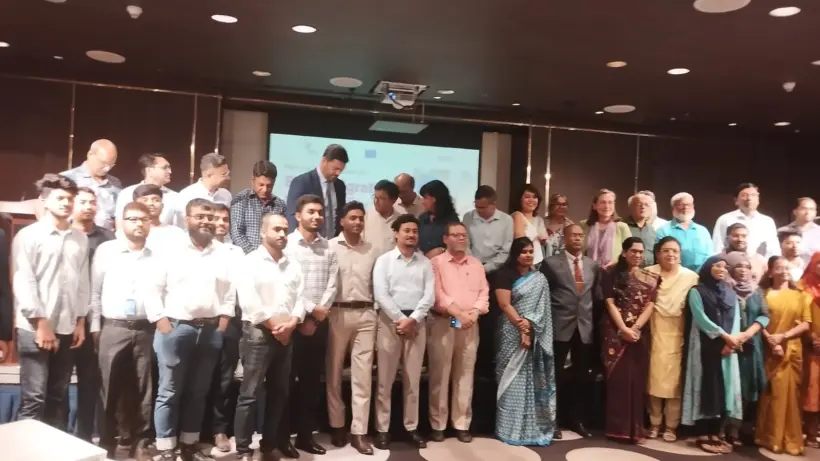
Photo: Rita Bhowmick
Read the full story at the source
Source: Pressenza