
World Tribune
The Dollar: Fragile Hegemony
The US is undermining one of the most important pillars of its power: the global currency.
English (original) ·Read in Deutsch ⇄
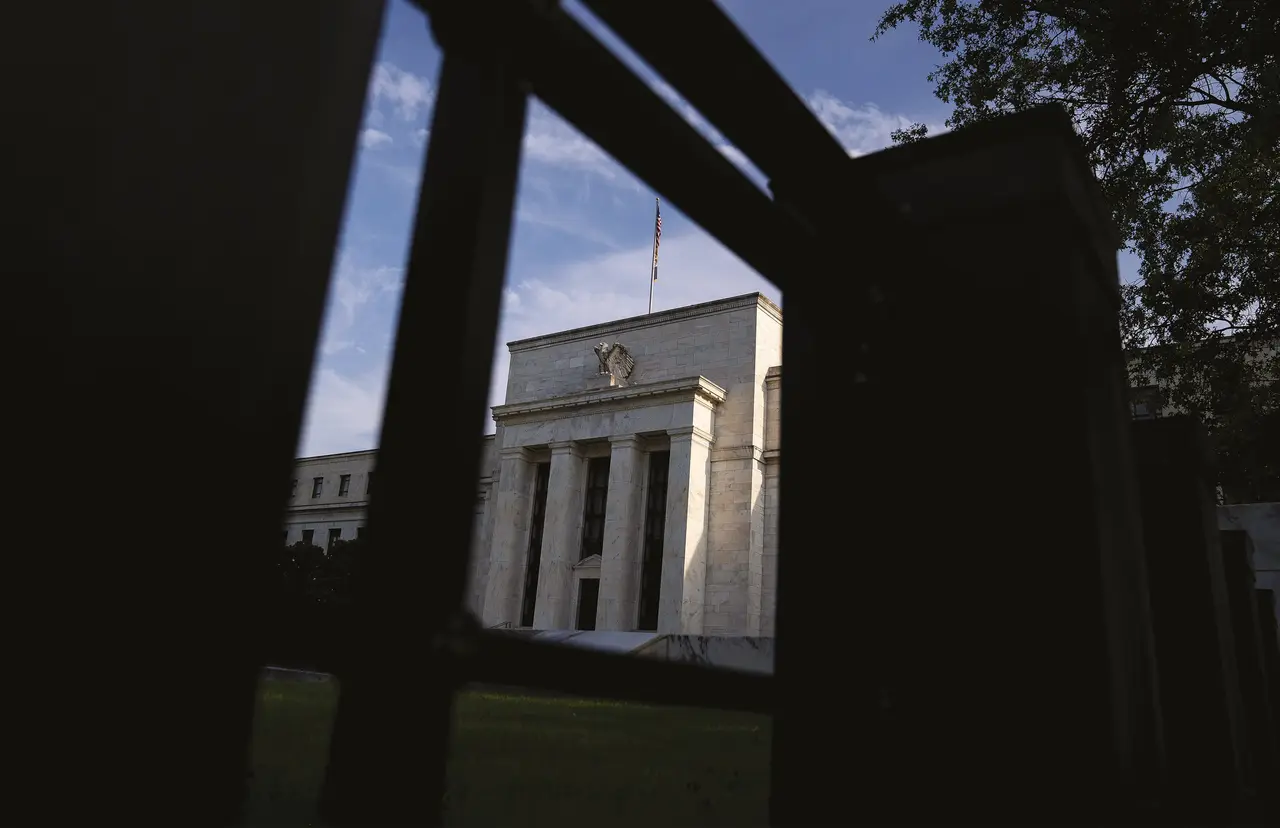
Dollars are the blood flowing through the arteries of the world’s financial system. Most global trade is invoiced and settled in dollars. Many economies use dollars as their default currency. This gives immense power to the institution that creates them: the Federal Reserve. When the Fed decides to raise interest rates, borrowers from across the planet are squeezed, with no recourse and no accountability. The seemingly insatiable demand for dollars is also what guarantees the US’s ‘exorbitant privilege’ — its ability to run a large trade deficit and current account deficit without paying through the nose.
Countries outside the US often rely on dollars to ensure macroeconomic stability. After the 2008 financial crisis, when governments scrambled for dollars to bail out their indebted banks, the Fed stepped up and established ‘swap lines’ with favoured central banks that allowed them to borrow dollars on the cheap to rescue their financial systems. But not every state can count on such friendly treatment. The US’s monetary leverage is a crucial part of its imperial might, wielded to support loyal allies and punish enemies — all while protecting the interests of US capital at home and abroad. If an interest rate hike designed to protect American investors leads to a debt crisis in Zambia, so be it.
Today, US hegemony is no longer unchallenged. Increasingly assertive countries of the Global South are tired of the US abusing its power over global finance and beginning to seek out alternatives. What are the origins of this shift, and could it be eroding the foundations of empire itself?
Since the end of the Second World War, the dollar has been the world’s reserve currency: the majority of central bank reserves are held in dollar-denominated assets, primarily Treasuries (US government debt). Central banks hold foreign exchange reserves to help them manage exchange rates and deal with crises, which is why these reserves need to be safe and liquid — easy to sell — even in a crisis.
Treasuries are uniquely suited for this purpose, as one of the safest and most liquid assets globally. They provide the plumbing for much of the world’s financial system, they’re backed by the world’s most powerful state, and there’s no shortage of them. Countries’ reliance on Treasuries underpins exorbitant privilege: the US can issue debt seemingly without limit, while running a massive current account deficit, and the rest of the world will have to keep hoovering it up.
The US’s relationship with China reflects this dynamic. China has a huge trade surplus with the US, which means billions of dollars are entering its financial system every month. Historically, China’s central bank syphoned up these excess dollars and used them to purchase Treasuries, building up substantial dollar reserves. In 2013, China’s Treasury holdings reached a peak of $1.3 trillion.
These foreign reserves are particularly important for China’s macroeconomic policy because they’re used to manage China’s exchange rate. When the Chinese central bank — the People’s Bank of China (PBOC) — needs to intervene in currency markets, it can sell Treasuries and buy Yuan. Some in the US establishment might be worried about the trade deficit with China, but the flipside is China funding the US budget deficit to the benefit of American capital.
Yet China’s appetite for Treasuries has been falling in recent years. While China stopped disclosing the composition of its reserves back in 2020, estimates from the US Treasury place China’s current Treasury holdings at around $680 billion, the lowest level since 2008. It is estimated that total dollar assets (i.e. not just Treasuries) now make up between 50 and 55 percent of China’s current reserves, down from 79 percent in 2005.
And it’s not just China. In 2000, 72 percent of central bank reserves were held in dollar assets — a figure that’s fallen to about 57 percent today. The declining share of central bank reserves held in dollar-denominated assets has led to much speculation about ‘de-dollarisation’. The move away from dollar reserves could spell disaster for the US. If foreign central banks stop buying up Treasuries and other investors don’t fill the gap, then US borrowing costs would increase significantly, putting exorbitant privilege at risk.
In recent months this speculation has intensified. US Treasury yields rose sharply in the first week of September, pushing up borrowing costs. Though the shock eventually resolved itself, Treasury yields have been heading in this direction for a while, particularly for longer-dated bonds, which suggests that investors are uncertain about the long-term future of the US economy — a potentially ominous sign for its hegemonic status.
There are many immediate factors behind the increasing yields on US debt. The first, and by far the most important, is inflation. Bonds pay a fixed rate of interest, so when prices in the rest of the economy rise, the real value of that interest payment falls. Investors sell in response, which pushes up yields in the secondary market. Governments then have to issue new bonds at higher rates of interest to account for this erosion of value. They have to tempt investors back in with higher interest rates, or they’ll take their money and put it elsewhere.
The second issue is Trump’s policy agenda. The real shift here is not his profligate spending; the US has been wasting money on wars and tax cuts for billionaires for years. It is his attacks on central bank independence — the foundation of neoliberal macroeconomic policy. Trump has frequently attacked the Fed and attempted to influence its policy decisions, generally to try to keep interest rates — and therefore the value of the dollar — low. Foreign holders of dollars don’t like the idea that the value of their reserves could shrink overnight because of politics.
But these factors don’t explain the longer-term fall in central bank reserves held in dollar-denominated assets. To solve this puzzle, we need to return to China. As we’ve seen, China’s holdings of US Treasuries have been on the wane for more than a decade. This is the result of a conscious shift in the strategy of Chinese policymakers. They realised after 2008 that the country had become overexposed to the vicissitudes of the US economy, so they sought to diversify their foreign exchange holdings.
This move away from dollars accelerated after 2022: the year Russia invaded Ukraine and was hit with massive sanctions that effectively cut it off from the rest of the world’s financial system. Fearing it could be next, China attempted to reduce its official dollar holdings to insulate itself from this threat. Many other nations later followed suit. In a historic irony, it seems that the US’s growing use of sanctions has begun to chip away at dollar dominance.
While the US has been imposing economic sanctions on enemy states for years, the economic war on Russia marked a turning point, as Edward Fishman documents in his 2025 book Chokepoints. Sanctions had once been seen as a slap on the wrist for enemy leaders and their inner circles, deployed against their yachts and villas. This started to change with North Korea. Treasury officials realised they could use their power over the international financial system to effectively cut the country’s banks off from the rest of the world. It worked, and it proved that the US could weaponise dollar hegemony against an entire state.
Next came Iran — a much bigger fish. In an attempt to undermine Tehran’s nuclear programme, the US sought to limit the country’s access to dollars. Rather than targeting Iranian banks directly, Treasury officials warned the world’s major private banks that doing business with Iran could jeopardise their access to US financial markets, while at the same time blocking Iran’s access to petrodollars. This dealt a serious blow to its economy and political leadership — which was forced into a negotiating climbdown, offering concessions on its nuclear programme in a major coup for US policymakers.
Then, in 2014, Russia annexed Crimea. Sanctioning North Korea and Iran was one thing, but sanctioning Russia — then the ninth largest economy in the world — was quite another. If its banks collapsed, many European ones would follow. Rather than denying the Russian economy access to dollars altogether, the US built a sanctions regime to ensure it couldn’t access any new ones. Inflation skyrocketed, the ruble tanked and growth stagnated, exacerbated by the simultaneous fall in oil prices.
The US appeared to have won. But the whole affair made many other nations nervous. The hegemon had shown that its control over the dollar was like control over the Suez Canal: it could cut off countries’ ability to trade with each other by exploiting this ‘chokepoint’ — as it demonstrated in spectacular fashion by freezing the funds of the Afghani central bank when the Taliban came to power.
But the very success of the US sanctions regime has motivated various states to defend themselves against the weaponisation of currency. Russia, for example, spent the eight years between its invasion of Crimea and its invasion of Ukraine trying to build up extensive foreign exchange reserves and strengthen its links with countries like China. Trade between the two countries has grown so much that the dollar is no longer used to intermediate; Russia now invoices China for oil exports in RMB.
US enemies, and neutral states wary of imperial overreach, have effectively started to build up a parallel financial network outside Washington’s orbit. The more this network grows, the less effective the sanctions weapon becomes. Perhaps more importantly, the expansion of this parallel financial architecture shows that there are pathways beyond dollar dependence. With US policy increasingly unpredictable, other states are taking steps towards greater economic autonomy.
As yet there is no clear alternative to the dollar as the world’s reserve currency. China’s currency is rigidly controlled by the state, the Eurozone is too fractured to act as a reliable guarantor for the world’s financial system, and countries like the UK and Japan have stagnant economies with bloated financial systems. None can step into the US’s historic role.
But this zero-sum thinking may obscure an important trend towards diversification. Many countries are reducing their holdings of Treasuries and building up their stocks of other assets from gold to Euros. While this doesn’t mean that the empire is about to crumble, it does mean that exorbitant privilege is no longer as assured. The US will not be able to borrow to fund wasteful spending on corporate tax cuts and imperialist wars without creating significant economic challenges at home.
The implications are stark. When politicians are forced to choose between funding the military industrial complex and supporting ordinary Americans, they will naturally tend towards the former. The only way to secure voters’ support for foreign adventures while they struggle to pay their bills is to whip up nationalism and militarism. If this succeeds, it could be a recipe for an even darker form of far-right politics. If it fails, it could see new oppositions emerge in the heart of global capitalism.