
World · Tribune · · 43m
The Care Sector Exploits Migrant Workers. Here's How They Would Fix It.
English (original) · Read in Deutsch ⇄
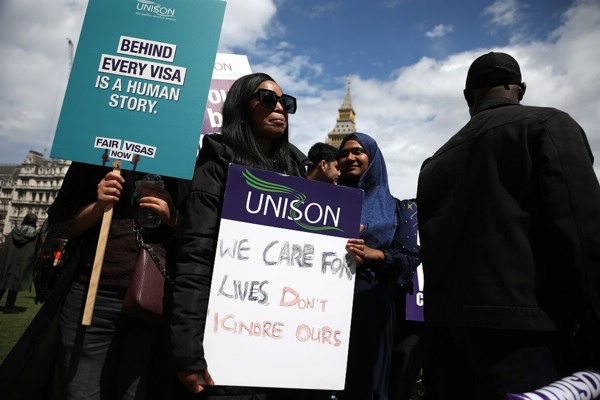
On 29 July, Prime Minister Andy Burnham promised to chart a new path for the UK’s broken social care system. Speaking in front of a Manchester care home, Burnham recognised the ‘many people from other countries’ working in the sector and, citing the example of a homeless carer, acknowledged that the workers themselves are failed just as much as patients and their families.
Burnham’s flagship proposal — the creation of a National Care Service integrated with the NHS, providing new routes for progression, better pay, training and job security — would undoubtedly improve conditions for the social care workforce should it become a reality.
But the prime minister’s ambitious vision will come to nothing if he fails to address the distinct and widespread exploitation of the migrant carers who make up a third of the sector’s workers. This would mean taking on his own home secretary, Shabana Mahmood, who is currently considering whether to make the care worker visa regime even more punitive.
The UK began actively recruiting migrants to fill care worker vacancies in 2022 following the crises of Brexit and Covid. The government estimates that more than 600,000 workers and their dependents arrived in the UK over the following two years.
The terms of the care worker visa have made migrants vulnerable to abuse, exploitation and destitution. Their right to residency is tied to their continuous employment with a care company awarded a Certificate of Sponsorship (COS) by the government, creating a condition of total dependence on their employer. And despite the sector’s notoriously low pay, migrant workers and their dependents are denied access to public funds like Universal Credit, child benefit, and housing benefit, making abject poverty inevitable for hundreds of thousands of people arriving in the UK. Yet for many, the government’s promise of a five year timeline to Indefinite Leave to Remain (ILR) seemed to make the sacrifice worth it.
Since 2024, each government has tried to one-up its predecessor in attacking migrants. First, Rishi Sunak prevented newly approved migrant care workers from bringing their dependents to the UK, then Keir Starmer closed the route entirely in 2025. Last November, Mahmood proposed revoking the one promise that so many workers had counted on through years of deprivation and unfair treatment: the five year timeline to permanent immigration status.
In a government white paper, Mahmood suggested increasing the timeline to fifteen years, retroactively affecting all carers and dependents on the visa as part of new rules on so-called ‘earned settlement’. The proposal has since been through a consultation period and Mahmood is expected to announce a decision sometime this autumn.
Days before his care sector speech, Burnham indicated he would consider an exemption to the ‘earned settlement’ rules for migrant carers, but he has so far made no such commitment, leaving carers and their families in a state of extreme anxiety while they wait for an outcome.
Last month, Tribune spoke to four migrant carers involved with UNISON’s Fair Visa Campaign, which is mobilising against visa-based exploitation. We talked to them about the problems with the sector, why they won’t accept a fifteen year path to settlement, and what kind of reforms they want to see Burnham implement. Their testimonies reveal the extent to which the government’s failure to regulate care, and the consequent crises of racial abuse, sexual exploitation, poverty, and physical and mental health that migrant carers are experiencing. They also reflect the incredible resilience, dignity, and fortitude of these workers, who continue, in these intolerable conditions, to look after the people Britain has left behind.
Favour
Favour is a team leader in a care company that provides home care and supported living. She is based in Cardiff. Her name has been changed due to fears of workplace retaliation.
In your experience, how is the care sector broken?
So much is broken. Even just thinking about what a lot of us have been through is already making me teary. I lived here with my three children before getting into a COS sponsorship. This visa changed my reality. As a carer, I could hardly take care of my kids. Even when you’re sick or the children are sick, you’re forced to work.
A lot of people are suffering. People are depressed and enduring severe mental and physical challenges. Just a few months ago, my colleague was forced to work during her pregnancy. The employers are gods over migrant workers. You have no agency over yourself or your family. People are living in anxiety and in fear. This summer, carers were driving around all day in the heat waves, getting sick. Nobody cared. But we do this job with everything we’ve got. As Africans, we’re full of love, and we go into this work as part of an imbued collective responsibility to take care of parents and elders. It’s something we do back home. But here we’re treated as slaves, and no one wants to hear it. Instead, the government may actually make it worse.
What would be the impact of a fifteen year wait for permanent settlement?
The fifteen year proposal makes my blood boil. There was an agreement between me and this government. No one should treat me or my child like less than others. A lot of us come from very strong backgrounds back home; I originally came to this country on a scholarship for a second master’s degree, and then a PhD. I’ve been to conferences at the United Nations and I know my impact.
But now, I am a migrant worker. When I and others decided to do this route, we told each other, ‘Ah, it’s not five years. Let’s close our eyes. It’s sixty months,’ and we’ve been counting down ever since. Now, someone is telling me fifteen years. Before I came here, I never had any health challenges. Should I begin to tell you what I’ve been through? One time, I had a health emergency coming back to Cardiff from Port Talbot late at night. I blacked out and the next thing I knew, an ambulance arrived. My employer was impatient. ‘When are you coming back to work?’ they asked. I had to scream. Are you mad? I told them that I value my life and I’ll come when I can.
This system has put me into poverty. I still have my own standards, and if I reduce them to the level they want me to go to, I’m going to lose my mind. The bills are always piling up, waiting for you. There have been times when I’ve asked myself if I should just end it all. Then I look at my children. They didn’t ask me to bring them here. If I die, what’s going to happen to them? I think the government is targeting our children with these rule changes. They want to subject more children to no future.
Fifteen years of this? We shouldn’t even be talking about it. There’s no way we’re having that, and we’ll fight.
What kind of change do you want to see in social care?
As part of UNISON’s Fair Visa Campaign, we’ve been able to build a very strong migrant workers’ network. We’ve met with government ministers and the King. At the moment we’re fighting for the five year visa to be maintained and the fifteen-year scheme to be rejected with force. We’re also working on a sector-wide visa.
We’ve had success so far. In Cardiff Council, for example, migrant workers and a UNISON regional organiser were able to secure a migrant workers’ charter. The charter is a document that makes the council protect migrant workers against all this injustice and to adjust the way they give out their contracts. They’ve committed to only commissioning care companies that pay at least a real living wage, cover travel time and training, and give actual payslips. The council will also act against employers that threaten carer’s sponsorship and will help carers find new work if their company falls apart or if it loses its license to offer sponsorship.
We’re also working on getting our employers to recognise UNISON in our workplaces to make life a bit more bearable. We’re building momentum. When you organise, there’s no way you’re not going to win. But it takes all of us working together.
Lydia
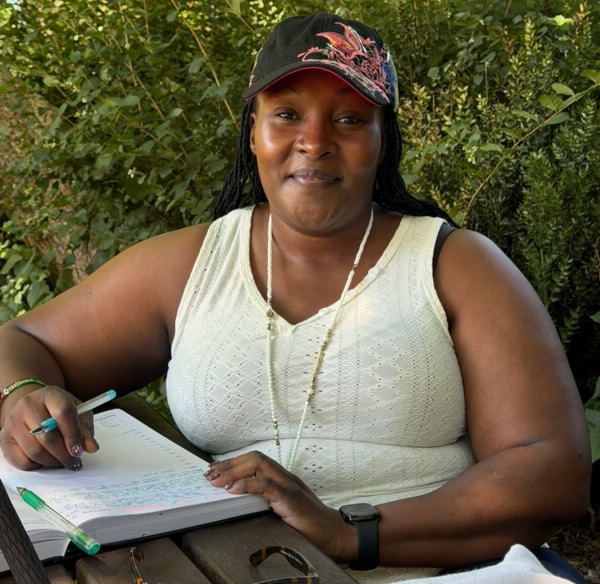
Lydia is a care assistant in a dementia care home. She has previously worked in supported living, domiciliary care, and supported people with disabilities. She is based in Dorset.
In your experience, how is the care sector broken?
The care sector is broken because it’s unregulated. This causes chaos for people who are subjected to sponsorships and skilled worker roles. People are not treated as people, but as immigration statistics and numbers to fuel the economy. There’s nothing human about it.
When I first arrived in this country, I went to my sponsor near Cambridge. Eight of us were put in a two-bedroom house for two weeks without work and without proper privacy. We were quickly moved to another place in Huntingdon, then to another place in Peterborough. I called the sponsor and told him that I had paid nearly £12,000 in order to come and be given work, and now he was doing nothing. He told me to go find work myself, like cleaning dishes and utensils in a hotel, or to try to find a job at care homes in the area. After I threatened to report him I was able to leave and got myself a very small, broken down car. I then went to Hertfordshire and worked for someone else who wanted to sponsor me, but I knew she wasn’t operating properly and wanted me to lie about my experience. I refused to lie, so I eventually left that job and tried to find work in Somerset. After Somerset, I came to Dorset.
I don’t want to be emotional, but it has been a very, very long journey. I’ve had to sleep in that small car during cold winters. I’d be in petrol station car parks and use public facilities to wash. I’d have to ask clients for food. I developed arthritis in my knees. At one point, I contemplated suicide and I thought it was the end. But instead I’ve decided to fight.
As a carer, I’ve experienced employers who have manipulated my wages and refused to pay mileage, forcing me into poverty despite working seven days a week. I’ve worked days and nights, been subjected to inhumane conditions and experienced the true meaning of racism. I’ve been threatened and fired for speaking up, and I’ve resigned when I couldn’t take it anymore. At the moment, I’m halfway through my curtailment period, meaning I only have one more month to find a new job before my visa is cancelled.
There are two other specific ways the sector is broken. First, carers are in debt. We cannot afford council tax or electricity because of the low compensation that we receive. We are low paid, but we are not low skilled.
Second, there’s a major issue with risk assessments. Employers are not keeping carers safe. Just last year, my countrymate Irene Mbugua, a live-in carer, was killed by her service user in Birmingham. She was beaten to death and her body was just left there. There had been indications that the service user was presenting as unstable and wasn’t taking his medication, but it seems that the company didn’t do anything. In the end, there are now four children without their mother.
I love this work. It’s something that I want to do, but I want to do it with safety, fair working conditions, and without coercion.
What would be the impact of a fifteen year wait for permanent settlement?
That would mean fifteen years of not seeing our children. Fifteen years of being treated like dogs. Fifteen years of no career growth, of stagnation, of being taxed for the benefit of others with no access to public funds ourselves. Fifteen years of not being considered part of society. Fifteen years of ungoverned torture. No.
What kind of change do you want to see in social care?
In addition to what my comrades have said, I want to see three things. First, I want a sector where there’s actual monitoring and evaluation. If the Care Quality Commission (CQC), the local authority, or other bodies are not coming to see that what needs to be done is actually done, then it will continue as it is. I also want to see training. A lot of people are not being trained, and it is wrong to throw people into the deep end without proper support. Third, we want our public funds. We’re members of the public and we’re contributing to society, so we should have recourse to public funds.
Princess

Princess is a carer for a community care agency, traveling from home to home to attend to vulnerable individuals. She is based in London.
In your experience, how is the care sector broken?
We’ve all gone through so much that it’s not easy to talk about it. For a long time I broke down in tears when I shared my story. So much is wrong with this system. First, the employers have been given unchecked power. The government didn’t consider the abuse that would result from giving so much power to an employer. When many of us arrived in this country, some of the people that recruited us actually had no work to offer us. All they did was say: ‘Oh, you can find your way.’ You saw people who were living comfortably in their home country now going to food banks and begging for food because they couldn’t work. We were ready to do the work, but we were unfortunate to meet employers that decided to take advantage of many of us.
When people are given work, they are overworked. You see carers working 60, 70 hours in one week. At some points in my life in this country, I’ve had to wake up at 5:00 AM and leave my home at 5:30 to get to my first client at 5:50. I’d drive all day, and not finish until about 10:00 PM. Overall, I’d be on the road for about 18 hours and only get paid for 8 or 10 hours. When you ask an employer for mileage or for travel time, they tell you that they’re doing you a favour by keeping you in the country. That’s too much power given to just one person.
Carers are consistently treated like slaves. Managers will just give you a client without a risk assessment, putting our lives at risk just because we are on COS. Service users’ relatives bully us and talk down to us. I’ve had someone tell me: ‘You Blacks have to come and do this work because an average English person won’t do this.’ That is unacceptable. The same man told me: ‘If I do anything to you, if I say anything to you, your employer won’t do anything, because they value profit over your welfare.’ And he was right. Managers have raped people on COS, and the victims couldn’t speak out. Why? Because they know that saying anything about the injustice meted on them will mean them going back to their home country. Many people have nothing to fall back on, so how do you expect them to speak up and risk going back? An employer could go to sleep, wake up, and decide to send an email to the Home Office to say you’re no longer working with them just because you question whatever abuse they’re inflicting on you.
This has a huge impact on families. For example, a new mum just back from maternity leave can receive staggered shifts. That means she doesn’t even know when she’s supposed to work. She’s trying to figure out how to manage childcare, and keep in mind, as women on COS, we have no recourse to public funds. Those fifteen hours of free childcare? We can’t access it. You have to pay so much to be able to keep your child somewhere, and you’re working from 6:00 AM until about 9:00 or 10:00 PM. What time do I have to show love to my child when I’m doing these hours five, six, seven days a week? I can’t spend time with her. I can’t say, ‘Oh, let’s go on holiday.’ We can’t go on holiday because my employer will tell me that I have no right to go on holiday, that I’m not here to enjoy the British lifestyle. I am here to work. One time I asked my employer, ‘Are we here as slaves or are we here as humans?’ I was told that the employment law of this country does not apply to anybody on COS. That means that the COS is slavery dressed as a visa.
What would be the impact of a fifteen year wait for permanent settlement?
For the government to say, ‘Oh, we’re going to add extra years for you,’ is unacceptable. On what basis will our years be extended? On the grounds that we’ve not paid enough in taxes, or because they fear we would want to access benefits? We are hard-working people. We pay taxes and National Insurance (NI) — NI that we will not benefit from. They don’t see what we’re contributing in the moment, just what they think we’ll want in the future.
Maybe they’re afraid that people will leave care. Oh, really? Is that supposed to be our fault? Is that supposed to be our headache? You created a route and you said after five years you should be able to settle, and now you’re afraid that I’m going to leave that route? What more do they want from migrant workers? You can’t keep people in care without their consent. It’s none of the government’s business what we do after five years.
A change to fifteen years will also mean that children stay on the same status as their parents for ten extra years. The UK government always talks about child poverty, but when it comes to children of migrants, those children are not children enough. They need to be treated differently because the system accepts their parents as slaves.
We have a prime minister who is empathetic towards our plight. We need people to hear us and know what we are going through. We applied for a visa. We paid every dime we were meant to pay. We are contributing as much as we can into the system. So the government is not doing us a favour: we made an agreement and we are providing a service. Fifteen years is unacceptable. We will not take it.
What kind of change do you want to see in social care?
I want a social care service where there’s a sector-wide visa rather than employer sponsorship. I want people to be able to move jobs when they are not treated well in their place of work and to not have to accept abuse, injustice and bullying just because they want to remain in this country. I want a system that will protect mothers and children, and a service that is well-remunerated so migrant workers don’t have to live in abject poverty and depend on debt to live their life, to support their children through school, or pay their bills on a daily basis. I want a well-regulated social care service where individuals are treated with dignity and respect, not as slaves because of the colour of their skin.
Oluwabunmi
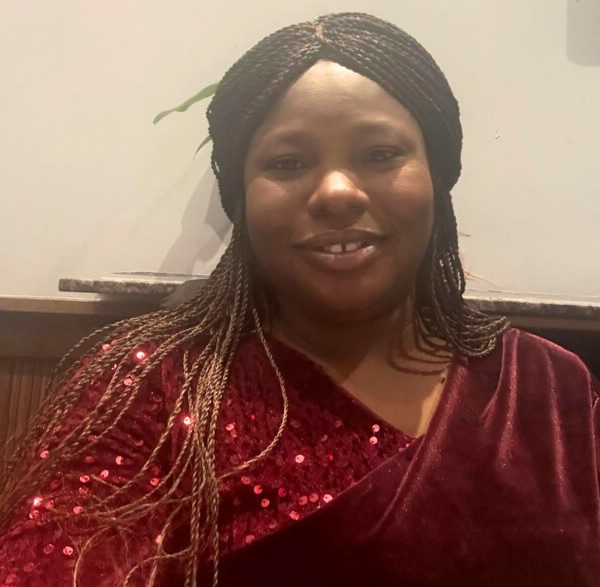
Oluwabunmi has worked as a carer in a nursing home for three years. She is based in Yorkshire.
In your experience, how is the care sector broken?
Abuse, discrimination, intimidation, racism and the false narratives that have been put out there to discredit our efforts as migrant workers in this country. Since COVID 19, the UK government has failed to confront how badly the care sector has been managed by the employers. We have experienced hell from our bosses and we cannot speak out because our immigration status is tied to this employment. Those of us who try to speak out are discredited, suffer abuse, and have lost visa sponsorship. We don’t have a voice. The UK government isn’t listening to our pain or seeing our hard work. We pay taxes, feed our children, take care of ourselves and contribute to the community, all without recourse to public funds. We are not slaves. We are human, and we should be treated as such.
What would be the impact of a fifteen year wait for permanent settlement?
We made the life-changing decision, based on this government’s promise to us, to come to this country and work. The government promised that after five years we would be given ILR. It’s unfair to change the goalpost after you’ve made a promise. This decision would also affect our children because they can no longer be dependents on our carer visas after they turn eighteen, so they will be forced to fend for themselves. A fifteen year wait for status ensures this will happen, and it is unacceptable. We want the government to keep its word, ensure that the sector is regulated, and take power away from the employer. If the government does this, we’ll be able to work with dignity and respect. I’m not afraid of going back home. I’m only afraid of employers and the UK government subjecting me and my children to abject poverty and unstable mental health in this country. We know that we deserve better and by God’s grace we will get better. We have had enough, and we can no longer tolerate this.
What kind of change do you want to see in social care?
I agree with everything my comrades have said. I would only add that we need better record keeping. There needs to be proper data analysis of the migrant workers’ contribution to British society. All we’ve seen are false analyses and false narratives, which don’t tell the reality of what is going on in the care sector or for migrant workers as a whole.
Read the full story at the source
Source: Tribune