
World Tribune
Tech Unionism Against Doomerism
Workers who are developing AI are uniting with those who are under threat from it to enforce regulation and public control.
English (original) ·Read in Deutsch ⇄
For much of this past year, the news cycle has hummed with talk of all things apocalyptic. In the middle of a developing, global discussion over artificial intelligence (AI) and its usage, dystopian claims of murderous, super-intelligent AI bodies with the potential to kill all humans and act for themselves are leaked by ‘whistleblowers’ from across influential AI companies.
To the media, these claims are presented in publications as they are received, with the clear message that the power of AI systems is possibly unfathomable — and must be seriously considered.
Unfortunately, less space is dedicated to explaining what these ‘leaks’ actually are: carefully orchestrated PR stunts by AI firms and lobbyists who don’t yet feel completely in control of the AI agenda. While seemingly independent ‘AI alignment’ organisations report on ‘rogue models’, industry figures descend into disturbing claims that their products may lead to the end of the world, with these ‘warnings’ eaten up by a credulous press.
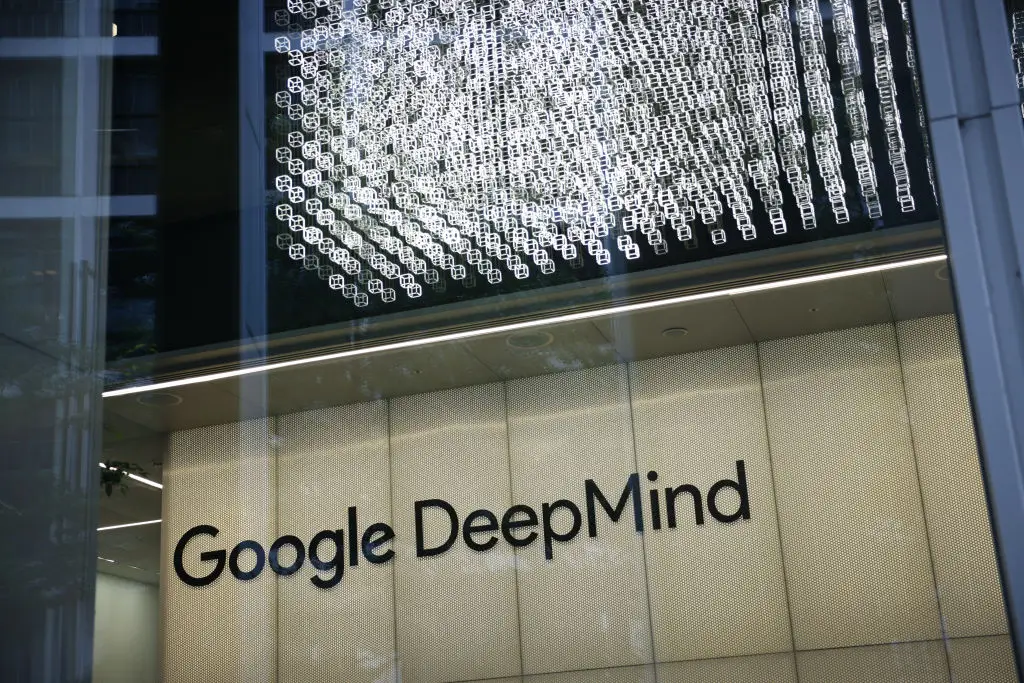
Comparatively little attention are given to long-standing frontier lab workers public resignations, such as the recent resignation of Google DeepMind engineer Sofia Liguori, who left the frontier lab in protest at the real and present harms from military contracts instead of speculative fears of an AI apocalypse. This selective attention only benefits big tech, their lobby, and astroturfing organisations with shady funding desperately to use column inches as collateral to legitimise their attempts to help with regulatory capture, training their sights on the trade union movement in order to bolster their wafer-thin credibilty.
Meanwhile, actual concerns about the damage being done by existing AI models right now are left undiscussed. While the AI hype industry desperately develops the perception that is building total and self-conscious digital power, reality checks debunking these claims from mathematicians or longstanding industry experts like Emily Bender, Timnit Gebru and Alex Hanna are given a fraction of the coverage received by AI spin doctors.
But thankfully, this is another global conversation that is growing. Bender and Hanna’s exposure of ‘the AI con’ gained real traction, Véliz’s ‘Prophecy’ surveyed humanities past relationship with predictive oracles giving us insight into how predictive algorithms are instruments of control instead of liberation, and Gebru’s upcoming memoir of being radicalised in the tech sector will stoke much-needed discussion.
And as workers across all industries are being told to accept profound insecurity, offshoring so that corporate executives can accrue unprecedented profits and power, the workers’ movement is finding its feet over AI as well. In every industry from good and logistics to the university or energy sectors, the mass potential for AI to deskill work, massively intensify workloads, increase workplace surveillance and provide cover for casualisation or offshoring is becoming unambiguously clear.
Far from being a neutral process of economic progression, the current roll-out of AI is an unambiguous project to disempower working people, corrode their standard of life, and transfer astronomical wealth to a new ownership class of billionaires hoping to become trillionaires. This growing recognition was signalled at last month’s 158th annual Trades Union Congress (TUC) where, in a moment of clarity, delegates overwhelmingly backed a motion calling for a national AI strategy, as well as for union consultation over AI deployment and the protection of skills.
At the Labour Party’s annual conference a fortnight later, the Communication Workers Union (CWU) won a vote demanding an independent AI regulator with real enforcement powers, as well as for workers’ control over major strategic AI decisions, and for the right of unions to negotiate over workplace AI introduction. At that conference, the United Tech and Allied Workers (UTAW) section of the CWU launched our AI Workers’ Inquiry.
Written by scores of the AI workers who build, deploy, maintain and evaluate generative AI, the AI Workers’ Inquiry is the first document of its kind. In analysing the real and present harms caused by AI and its supply chain, it hopes to puncture the hype generated by tech’s spin doctors and show another side of AI.
This is the side of profound poor quality outputs, the ‘rationalisation’ of work through redundancies, the self-developed elimination of apprenticeships and junior hiring, the down-skilling and deskilling of AI workers, and the ability of employers to shift the risk for systemic and policy failures on workers themselves.
It also highlights AI’s damage outside of the immediate workplace. Examples are offered over the damage caused by AI to the environment and the mental well-being of millions of users, as well as AI lab workers at Google DeepMind, who are unionising out of anger at their employer’s involvement in developing weapons and surveillance systems to facilitate genocide in Gaza, while Google’s leadership remain silent.
Like the motion these workers developed which won the debates at the great opinion-shaping bodies of the labour movement, our members are clear on what they want. They demand meaningful consultation over deployment, and for AI usage to be non-mandatory. They want safeguards and regulation in defence of people and planet. They want the protection of learning pathways for junior staffers and youth, and for employees to be given collective bargaining rights over AI.
After a long year of AI hype, this document is a most important intervention. In the best of labour movement traditions, these suggestions of resistance, transition and change are coming from the workers themselves. Far from having no voice and acting as neutral agents in the development of AI, tech workers are trying to warn other workers and the wider public of what might be on the way, what political solutions they could be considering — and what they should be thinking about when they hear politicians or journalists speak about AI in either good or bad terms.
If we don’t want to live in a society where a broligarchy of trillionaires — many of whom are sympathetic to right-wing, eugenicist and transhumanist agendas — don’t get the final say, it’s clear that these workers deserve a hearing.