
World Tribune
Syria: The New Regime
Damascus wants to manage domestic tensions by winning favour with Washington.
English (original) ·Read in Deutsch ⇄
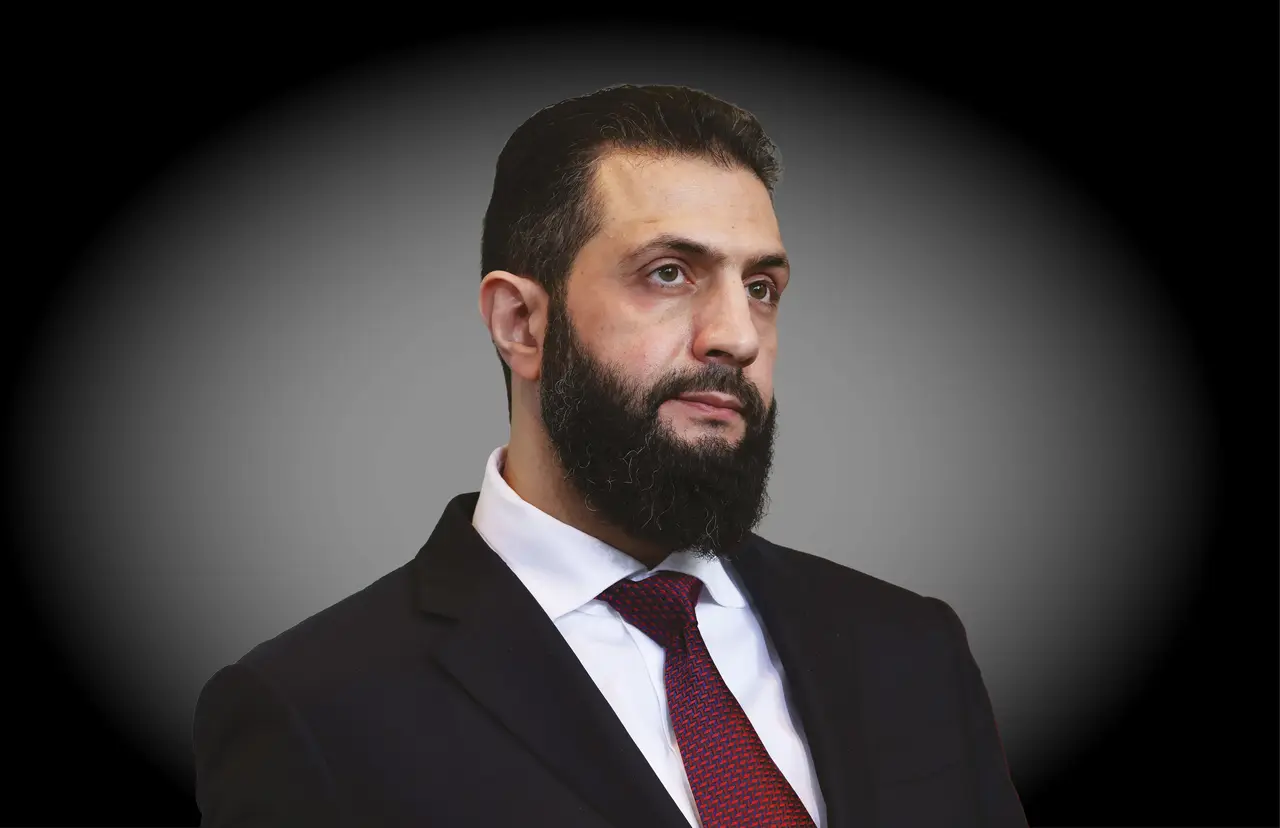
When Ahmed al-Sharaa entered Damascus in December 2024, he had already taken the world by surprise twice. Weeks earlier, most analysts thought Syria’s civil war was frozen and Bashar al-Assad was going nowhere. By launching a lightning advance from its Idlib stronghold, then overthrowing the regime and dissolving its military in one fell swoop, the forces of Sharaa’s Hay’at Tahrir al-Sham (HTS) eliminated their primary opponent in Syria’s long war. But the country they inherited was a broken one.
As HTS claimed military victory, it was supported by a popular Sunni base — primarily composed of Syrians from smaller cities like Homs and Idlib, as well as some of the more working-class neighbourhoods and rural outskirts of Damascus and Aleppo. These groups had paid perhaps the steepest price during the war. Their neighbourhoods sheltered the rebellion and so were met with the heaviest bombardment by the Assad regime. They tend to be more religiously conservative, and they see in Sharaa a successful and decisive leader from their own ranks.
More cautious support came from the liberal urbanites of Syria’s professional and middle classes. They welcomed an end to war and international isolation, which had caused so many to leave the country. But would HTS impose an Islamic regime? Sharaa insisted he would not. After officially disaffiliating his group from Al-Qaeda in 2016, he had taken control of the entirety of Idlib province by 2019. From then on he sought to recast HTS as more of a local government than an insurgency. But to many among Syria’s religious minorities, the sectarian massacres of 2025 — against Alawites in the Syrian coastal mountains in March, and against Druze in the southern city of Suwayda in July — reveal the true nature of the new, Sunni-dominated Syria. Meanwhile in the northeast, the Kurdish-led Syrian Democratic Forces initially indicated their willingness to work with the new government but wanted some form of autonomous rule to endure. A tense standoff was eventually ended by a ceasefire agreement in January 2026, effectively terminating Kurdish autonomy in exchange for the integration of the SDF into state institutions.
The Syrian Transitional Government (STG) has tried to deal with such domestic pressures by appealing to the outside. A sense that the new rulers were here to stay would take root, they gambled, if they could reintegrate Syria into the global economy. In the weeks after they came to power, Sharaa and his foreign minister Asaad al-Shaibani went on a diplomatic spree. Alongside the expected support of Turkey, which had tacitly backed HTS throughout their rule in Idlib, the new government soon won over the Gulf Arab states, particularly Saudi Arabia. With these guarantors, Sharaa met Trump, who made the surprise announcement of his intention to lift sanctions on Syria. The US Congress followed his lead and repealed the Caesar Act sanctions seven months later, ending Syria’s economic isolation. Even Russia, Assad’s erstwhile backer, has established cordial diplomatic relations with the new government, while Iran and Hezbollah have also indicated their willingness to make contact.
With the support of foreign powers secured, the STG has turned to Syria’s reconstruction and recovery. A reported one-third of the country’s housing stock is damaged or destroyed, and 7 million people remain internally displaced, with 1.5 million living in makeshift housing or tents. STG officials have tried to frame reconstruction not as a matter of humanitarian urgency, but as a business opportunity for international investors. Eschewing international loans or aid, the government aims to finance reconstruction primarily through direct investments from foreign capital, presenting this as the best way to safeguard Syrian sovereignty.
In practice, this investment-led strategy has had the opposite effect. Gulf-based investors are the main beneficiaries of the new deals, which include promised funding for Syria’s ports, airports and power plants (often on opaque terms). Chevron and ConocoPhilips have signed agreements to develop Syria’s oil and gas fields in the northeast and to search for offshore fields along the coast. Chevron is even partnering with Qatari investors to explore the possibility of exporting oil from Iraq with a pipeline to the Syrian coast, bypassing the Strait of Hormuz.
There are large projects in property and tourism, mimicking the aesthetics of the Trump business world and Gulf petro-states: luxury high-rises, vast shopping centres and resorts. There is seemingly little appetite for investments in affordable housing, not to mention agriculture or industry: the sectors that have historically employed most Syrians. Residents of destroyed neighborhoods like Jobar, a completely leveled suburb of Damascus, have been left in limbo pending a government-approved plan to rebuild their homes.
In return for lifting sanctions, Trump hopes to include Syria in his regional security strategy: a state that will safeguard US interests without the need for excessive US involvement. To this end, Syria formally joined the Washington-led coalition against ISIL in November 2025. Trump also recently agreed to rescind Syria’s designation as a state sponsor of terrorism, opening the door to further military and economic cooperation. But this plan is complicated by Israel, which has taken a consistently aggressive stance toward the new Syrian government. In the days after the Assad regime fell, Israel unleashed a torrent of airstrikes on military hardware and installations across Syria, ensuring that none of this technology fell into the hands of the HTS-led coalition. It also took the opportunity to expand its occupation of Syrian territory beyond the Golan Heights by invading the UN buffer zone. Since then, it has continued to encroach and terrorise locals with military operations in the area and persisted in conducting airstrikes on government targets.
Trump and Tom Barrack — the California billionaire who is a key architect of US Syria policy — have made no secret of their wish for Syria to normalise relations with Israel. The STG has avoided committing to this but has remained open to negotiating a ‘security agreement’ similar to the previous disengagement agreement that Israel tore up after December 2024. Trump has also casually suggested that Sharaa might assist with disarming Hezbollah in Lebanon.
Here the STG’s strategy of deferring domestic considerations by shoring up foreign support reaches clear limits, as both normalisation with Israel and adventurism in Lebanon would be drastically unpopular with Syrians. Barrack has frequently opined that the form of government best suited to the region is a ‘benevolent monarchy’. Unfortunately for him, Syria is not an absolutist state, and the new government’s control is not so firm that it can easily defy the will of its people to please Trump.