
World · Tribune · · 8h
Protect the Triple Lock
English (original) · Read in Deutsch ⇄
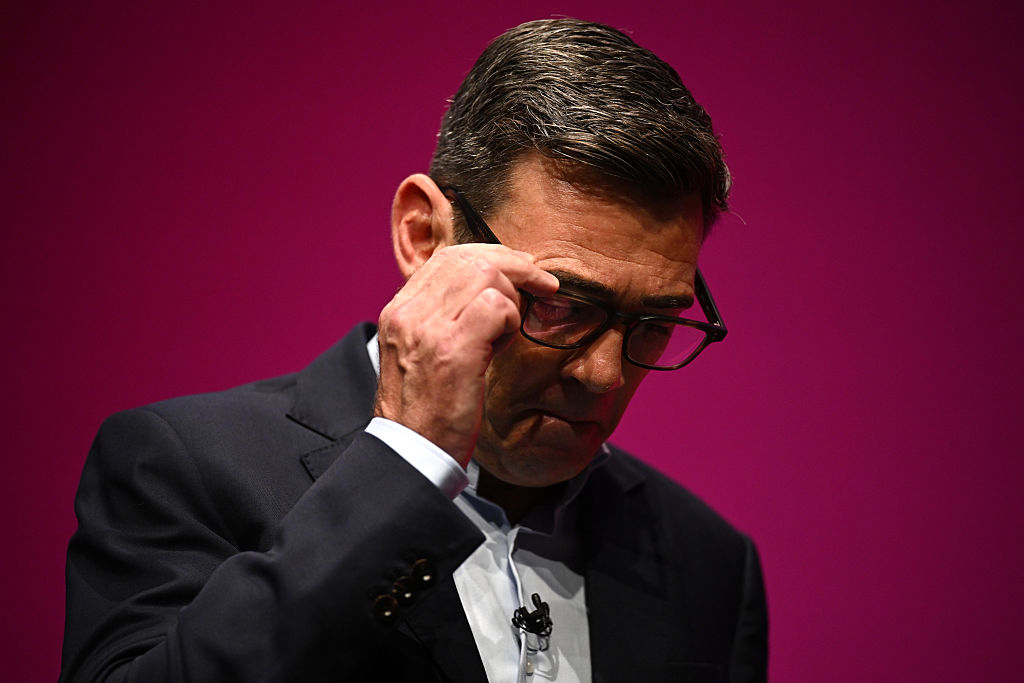
Andy Burnham is right to say that Britain needs a serious conversation about how we support people in old age. His proposal for a National Care Service, to provide free personal care, is welcome. But changing the Triple Lock to help pay for it risks creating a false choice between two essential pillars of a decent society.
The Triple Lock was introduced in 2011 after decades in which the State Pension had fallen badly behind average earnings. Under the system, pensions rise each year by whichever is highest: inflation, average earnings growth, or 2.5 percent. This has provided important protection against both rising prices and the long-term erosion of pensioners’ living standards.
That protection still matters. Age UK estimates that 1.7 to 2.1 million older people are living in poverty, while more than 3.4 million — 28 percent — report that they are struggling financially. Nearly half of those struggling have been doing so for three years or more.
Nor is Britain unusually generous by European standards. The OECD estimates a net pension replacement rate of 44.7 percent for an average UK earner, compared with 54.5 percent across the EU27. The figures are substantially higher in countries including Spain, Portugal and Sweden. Pension systems differ, of course, but Britain hardly has an extravagant state pension by any standard.
This is fundamentally a debate about inequality, although you wouldn’t know it from the headlines. In England, healthy life expectancy in the most deprived areas is just 49.8 years for men and 48.2 years for women, compared with 69.2 and 68.5 years in the least deprived areas. Since 2019–21, healthy life expectancy has fallen in the most deprived areas.
Behind those statistics are people who have spent their lives in low-paid and physically demanding work, often in poorer housing and with worse health. They are not simply dying sooner; many are also reaching later life with greater needs and fewer resources.
These are the generations who lived through the war and helped rebuild Britain in its wake. They contributed to the society from which all of us have benefited. To treat them as a convenient source of savings, as the government is now proposing, is to deny them the dignity and security they deserve.
There is much to agree with in the proposed National Care Service. The principle is a straightforward social democratic one: if someone becomes frail or needs help in their daily life, access to care should not depend on their savings or whether they own their home. Britain is one of the richest countries in the world. We can afford this without a raid on the elderly.
The current £84 billion tax relief on pension payments is heavily skewed towards those with higher incomes. The more you earn, the more relief you receive, and so the bigger your pension. Even more striking is that the rich can shelter assets in their pension funds which can grow substantially over a working lifetime, with no need to pay capital gains tax on them. The pensions setup in the UK is nothing less than a scam by the rich. Why not help pay for the National Care Service by correcting this grossly unfair distribution?
The NHS does not tell cancer patients that they must first spend their life savings before receiving treatment. It pools risk and provides care according to need. So let’s do the same with care, making it a right rather than a commodity. We don’t have to set the young against the old or taxpayers against pensioners. These zero-sum decisions are the stuff of the neoliberal economics that Burnham claims to oppose. A decent pension and free personal care are both possible with a progressive tax system. The left must push the government to build one.
Read the full story at the source
Source: Tribune