
World · Tribune · · 3h
Higher Education Workers Take A Stand Against Militarism
English (original) · Read in Deutsch ⇄
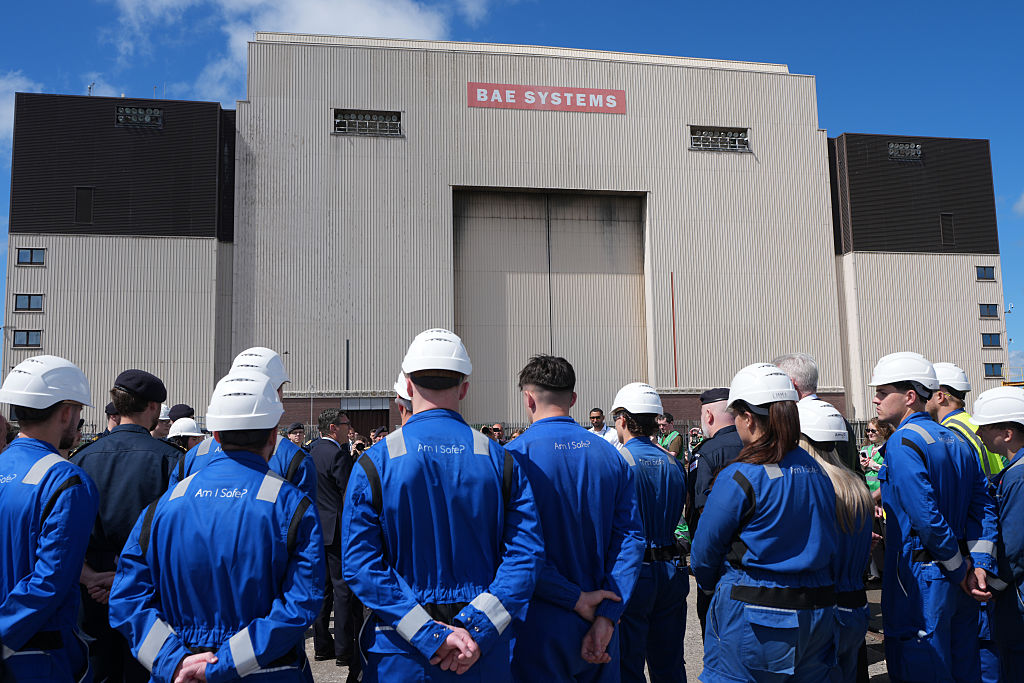
Prime Minister Andy Burnham’s assertion last week that ‘national security can’t come at the expense of social security’ sent the right-wing press into a frenzy. The spectacle served to reaffirm the boundaries of our political debate: spending on that which kills people is sensible; spending on that which enables the most vulnerable to live safe, dignified lives is wasteful.
Across the world, militarism is on the rise. US President Donald Trump is leaning on NATO allies to increase defence budgets and throw billions more at American arms manufacturers. Together, NATO’s European members and Canada dutifully increased defence spending by nearly twenty percent for the second year in a row.
Investment in the warfare state has been paired with attacks on living standards, provoking widespread industrial militancy. Earlier this week, a nationwide twenty-four-hour transport strike against welfare cuts brought Dutch cities to a standstill. In France, energy workers, civil servants and teachers are set to walk out later this month in opposition to austerity budgets.
In Britain, the University and College Union (UCU) is making the connection between wages and weapons explicit at this year’s Trades Union Congress (TUC) conference with a motion that opposes war and advances a vision of security based on ‘decent jobs, quality public services, equality, climate action, democracy, and peace’. In advance of debate on the motion, UCU General Secretary Jo Grady spoke to Tribune about her union’s effort to turn the labour movement into an effective force against militarism.
Sean Waters
Tell me about the motion your union is bringing to the TUC Congress and what you hope to achieve.
Jo Grady
Last year, UCU played a pivotal role in reversing the TUC’s position of unquestioning support for defence spending, which it had justified on the grounds that it’s supposedly good for employment.
Over the last twelve months, the clamour for increased defence spending has only intensified, so we’re continuing make the case against war and for internationalism.
It’s important to say this isn’t solely coming from UCU. UNISON’s taken a leading role in deepening coordination with multiple unions in the run-up to this TUC Congress, including a recent letter from ten different general secretaries opposing Trump’s war in Iran. We’re saying that our priority is investment in people, jobs, services, health, infrastructure and education — not in the war machine. This TUC Congress offers a real opportunity for our movement to speak with one voice about what we demand from the Burnham government.
Sean Waters
How does rising militarism impact the higher education sector?
Jo Grady
Over the last few decades, investment in universities has been cut. At the same time, we’ve also seen universities corporatise, treating students as a site of value extraction and trying to open overseas campuses to attract even more investment in overseas students.
The government is increasingly integrating education and defence across the post-16 sectors. It announced £80mn of funding for colleges and universities to provide additional student places, but that funding was tied to strengthening links to the defence pipeline.
It’s disappointing to UCU members who are facing redundancies up and down the UK that any announcement of extra funding is often tied explicitly to the defence industry.
If Burnham is serious in some of the announcements that he’s made about pushing for more vocational and technical skills alongside scholarly pathways in post-16 education, there have to be questions about whether or not people can access education without it being tied to a defence apprenticeship, particularly in the deindustrialised, left-behind areas Burnham’s spoken so much about.
We want to see investment in our colleges. If you think about somewhere like Barrow-in-Furness, an area severely impacted by a lack of investment, the young people growing up there should have as many options as everyone else. It shouldn’t be the defence industry or nothing.
Sean Waters
How do you see your motion sitting within that perennial debate in the labour movement between the sectional defence of jobs in defence industries and the internationalist values you’ve mentioned?
Jo Grady
I’m from a mining community; I fundamentally understand what happens when you shut down the economy of a town or region without a plan for workers. If we’re going to move away from a particular type of sectoral investment, this must come with the creation of skilled jobs.
We also have to challenge the idea that increasing defence spending automatically creates jobs, because it just doesn’t. Research from the Transition Security Project shows that if cuts to other departments are used to plug the gap in additional spending in Britain’s Defence Investment Plan, we could actually see around 10,000 net jobs lost in the UK.
At the same time, billions of pounds of public money are being pumped into the US arms industry. NATO defence spending, including taxpayers’ money here in the UK, is financing nearly 200,000 American jobs from the $300bn worth of orders that Canda and European countries have lodged with US arms manufacturers.
Sean Waters
Can we have a secure country if our public services are broken and we face another decade of working families getting poorer?
Jo Grady
There’s a discussion for union leaders and workers, including those in defence, about what security really looks like for people. It means being able to afford a home that you can heat and furnish. It means having schools and hospitals. It means knowing that if your community floods, there’s money for repairs. It means democratic rights for trade unions and freedom of expression.
Again, I would use the example of a declining mining industry in the north. You think of all the jobs and all the skills that all the different people who worked down the pits had, and they were just made unemployed. They could have been put to work building underground systems in every major city in the UK, but they weren’t because Margaret Thatcher’s agenda was to crush the miners. There are so many skilled roles in research and production that could be put to work in the transition to net zero, building homes, improving workplaces and public spaces.
That’s the argument we make to our comrades in those unions. I know from conversations with UCU members, often on low pay, and from going back home to Wakefield, that people would feel more secure if we invested in a maternity unit rather than munitions. The idea that rearmament makes people feel more secure just doesn’t ring true to me.
Read the full story at the source
Source: Tribune