
World Tribune
Dissident Britpop
The year is 1992. The four members of a band called Cornershop are standing outside the offices of Morrissey’s record company in central London, setting fire to images of the former Smiths frontman. I
English (original) ·Read in Deutsch ⇄
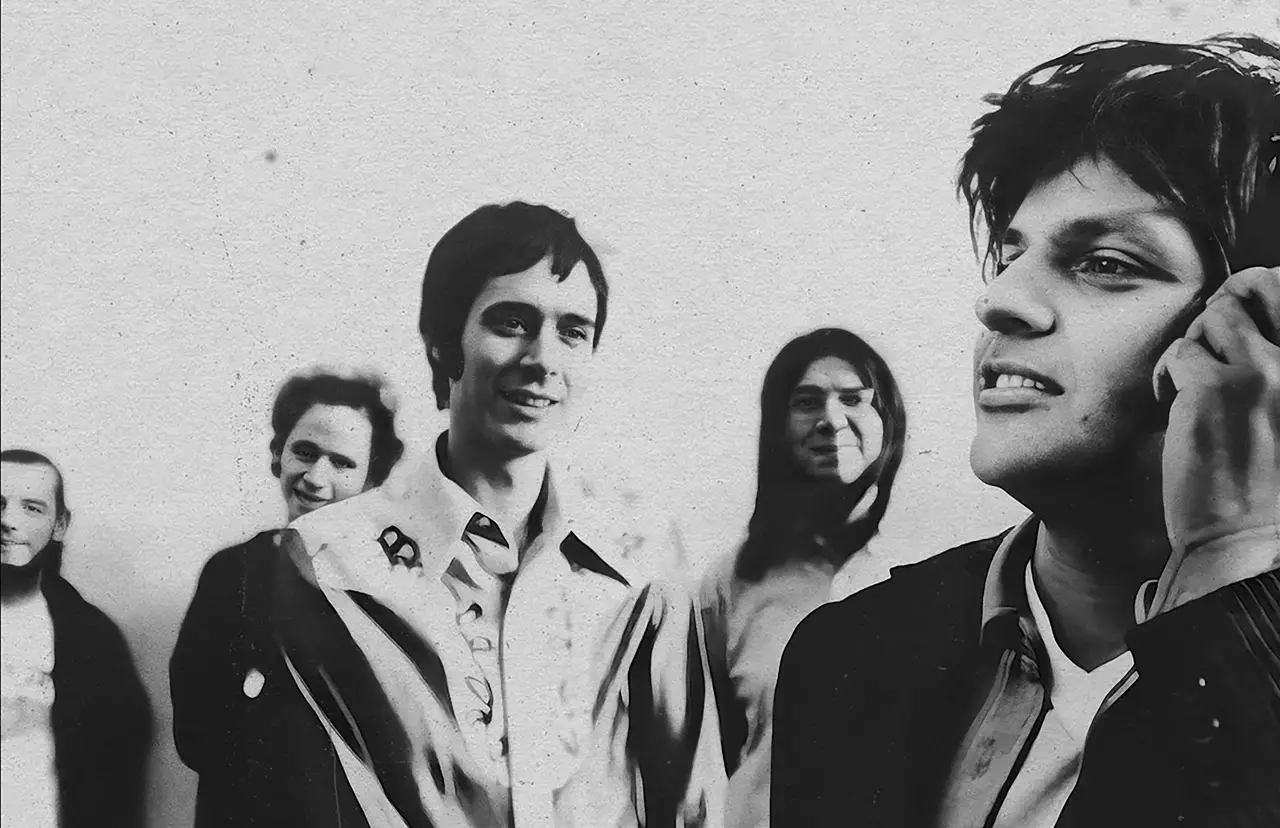
The year is 1992. The four members of a band called Cornershop are standing outside the offices of Morrissey’s record company in central London, setting fire to images of the former Smiths frontman.
It’s a few years before their kaleidoscopic ‘Brimful of Asha’ goes global by way of a Fatboy Slim remix. Cornershop are a fledgling group made up of two South Asian brothers from the Black Country and two white men who grew up in Preston, one of whom is wearing a t-shirt that reads ‘Token Honky’. Many will call this protest a publicity stunt; it will certainly get them some column inches in Melody Maker. But for the siblings Tjinder and Avtar Singh — British-born children of Indian immigrants, raised in Wolverhampton where Enoch Powell was their MP — this is a crucial break with an artist who had once been a hero. Against a backdrop of racist attacks and murders across the UK, Morrissey’s songs like ‘National Front Disco’ and ‘Bengali in Platforms’, and his decision to drape himself in the flag on-stage, had a clear political resonance. They demanded a response.
In 1993 Cornershop released a handful of scrappy, riot grrrl-adjacent EPs, one of which, Lock Stock & Double-Barrel, features the song ‘England’s Dreaming’, a frantic collagist number in which they upcycle a Smiths lyric as a treatise on turning misery into action: ‘I was happy in the haze of a drunken hour / Fight the power!’ This was the band’s statement of intent.
Now, 35 years since Cornershop formed, the nineties have come to represent a particular vision of Britishness. The age of ‘Cool Britannia’ was announced, somehow, in a press release by John Major in 1996. But it was the rise of media-savvy Blairism along with the emergence of Britpop — bands like Blur, Suede and Oasis — and the hedonistic Young British Artists and London fashion ingenues Bella Freud and Kate Moss which had coalesced in a cultural moment that seemed to reject seventeen long years of Conservative rule. This was boozy, coke-fuelled aspiration and optimism, all wrapped in red, white and blue.
The flag-waving was all a little tongue-in-cheek, we’re now told. Geri Halliwell in the Union Jack at the 1997 Brit Awards definitely feels camp; the uneasy skinhead undertones of Blur’s 1993 press photo ‘British Image 1’ were hastily followed by ‘British Image 2’, where the four-piece pose at an aristocratic tea party. Still, you can see why this feel-good variation on an imperial slogan might have seemed disquieting to Britons with origins in the former colonies, coming as it did in the same decade as the racist murders of Stephen Lawrence, Michael Menson and Ricky Reel.
The Singh siblings’ parents had arrived in the UK from Punjab after the bloody partition of 1947. Though the British Nationality Act of 1948 had created the category of ‘Citizen of the United Kingdom and Colonies’, giving hundreds of millions across the Commonwealth the legal right to live and work in the UK, the reality — first felt by the Windrush generation — was that these workers were not treated as citizens at all. Their professional qualifications deemed useless, the Singhs’ mother worked in metal factories while their father got a job as a bus conductor while retraining as a teacher. Tjinder Singh, who would become one of the band’s only constant members alongside Ben Ayres, grew up around the routine abuse and casual xenophobia directed at Britain’s former ‘subjects’.
The image of a cool youth-led Britain crafted in magazines like Vanity Fair (‘London Swings Again!’) was one that largely excluded its ethnic minorities, even though they were the source of some of the most exciting, innovative British cultural production at the time. In music alone there was Goldie, Skunk Anansie, Massive Attack, Asian Dub Foundation — but the ‘Britpop’ label was largely reserved for white bands. Cornershop was sidelined within it as a novelty, despite ‘Brimful of Asha’ becoming the fifth best-selling Britpop single of all time and touring with Oasis in 1998 (Noel Gallagher would feature on their song ‘Spectral Mornings’ four years later).
For most artists associated with either Britpop or the vast, miscellaneous scene known as ‘Asian Underground’, these were genres in name only: umbrella terms coined by the music press which had little bearing on the records themselves. Yet there was also an aspirational quality to this post-Thatcher discourse which wanted to be cool, even multicultural, without confronting the murkier realities of contemporary Britain: its deep tensions and dark legacies. Britpop itself felt like an incoherent branding exercise (are ‘Girls & Boys’ and ‘Supersonic’ really the same genre?), while Asian Underground — though a genuinely pivotal moment in this country’s cultural history — seemed to lump together any South Asian artists who weren’t making Bhangra, whether they were creating hip-hop, indie, ambient electronic, jazz or ragga-punk.
At any rate, Cornershop understood how they were perceived; their name was a reference to how, as Singh put it in an interview with Westword Magazine in 1996, ‘In England, Asians are expected to run corner shops, and it’s said that that’s all they add to society.’ They were consistently outspoken and unapologetic about race, with Singh taking his cue from his father’s warning that ‘they’ll not always want you here in this country’. Their first EP, 1993’s In the Days of Ford Cortina, was released on ‘curry-coloured’ vinyl, and in the years that followed they put out songs with titles like ‘Kawasaki (More Heat than Chapati)’ and ‘Wog’. ‘First I was a foreigner’, Singh sings on the latter track, ‘then suddenly everything was cool forever / This Western Oriental’s going full circle.’
It’s a shame that Cornershop is mainly known for ‘Brimful of Asha’. Much as it’s a euphoric celebration of Bollywood playback singer Asha Bhosle and the escapism that art can offer, it is just one song in a catalogue that places them among the country’s great cult groups. Their music marries frenetic turntablism, fluttering tabla, the drone of tanpura, wonky guitars, swathes of harmonium and dubby basslines, offering a kind of fusion that speaks to the diasporic doubling of identity.
It would be a mistake to think of Cornershop as reflecting any kind of consensus about what British Asians were listening to at the time; in the days of pre-internet tribalism, this kind of guitar music was predominantly seen as the preserve of white people. Songs like ‘6am Jullander Shere’, which opens their phenomenal second album, Woman’s Gotta Have It (1995), finds Singh intoning in untethered Punjabi over scuzzy, colourful sonics that sound conversant with a Velvet Underground cut; on the same album there’s the French, German and English mélange of ‘My Dancing Days Are Done’. Cornershop have never been interested in being boxed in.
More recently, though, the band have been embraced by a younger South Asian cohort, not least thanks to their sugary, reggae-tinged collaborations with the singer Bubbley Kaur. Their ninth album, 2020’s England Is A Garden, was a critically-acclaimed glam and psych-infused set which interrogated Brexit Britain — its colonial nostalgia, its ubiquitous racial profiling — with songs like ‘Everywhere That Wog Army Roam’ and ‘St Marie Under Canon’.
Still, it’s 1997’s When I Was Born for the 7th Time, which remains their most beloved full-length, with a sonic patchwork that makes for a remarkably prescient genre-agnostic album, woven through with stray lines about labour strikes and Gurkhas, plus a collaboration with Allen Ginsberg, recorded in his kitchen shortly before his death, where he reads his poem ‘When the Light Appears Boy’ over harmonium textures and a sample of Indian street sounds. Even ‘Brimful’, which appears on this album, was much more political than the happy-go-lucky Fatboy Slim remix would have you believe: listen closely and you’ll hear a reference to the controversial Narmada dam in Gujarat, a hydraulic project built in spite of a massive protest movement led by the indigenous adivasi. For all their upbeat progressivism, it’s hard to imagine any other Britpop band believing in music enough to write an environmental protest song about a struggle taking place on the other side of the world.
Cornershop captured both the nineties’ sense of open possibility and the experience of communities that never quite fit with it. One of the most interesting songs in their catalogue comes at the end of When I Was Born, in the form of a Beatles cover. In 1965, Lennon and McCartney’s ‘Norwegian Wood (This Bird Has Flown)’ marked the first recording of the sitar on a Western pop song. More than thirty years later, Singh and co took the song back, singing the lyrics in Punjabi. Here was a band led by a Brown man reinventing a classic track from the sixties during a period in which Britain was striving to reassert cultural relevance by harking back to that decade. Yet this cover has none of the empty bombast of Cool Britannia. It isn’t saturated with colour or loud politics. Instead, it’s a quiet, reflective moment which seems to remind the listener: we’re here because you were there.