
World Tribune
Cuba: Maximum Pressure
The dawn breaks in Cuba with a worry: when will we next have electricity? At their worst, the blackouts in Havana can last for more than twenty hours a day — longer in the interior. What does this mea
English (original) ·Read in Deutsch ⇄
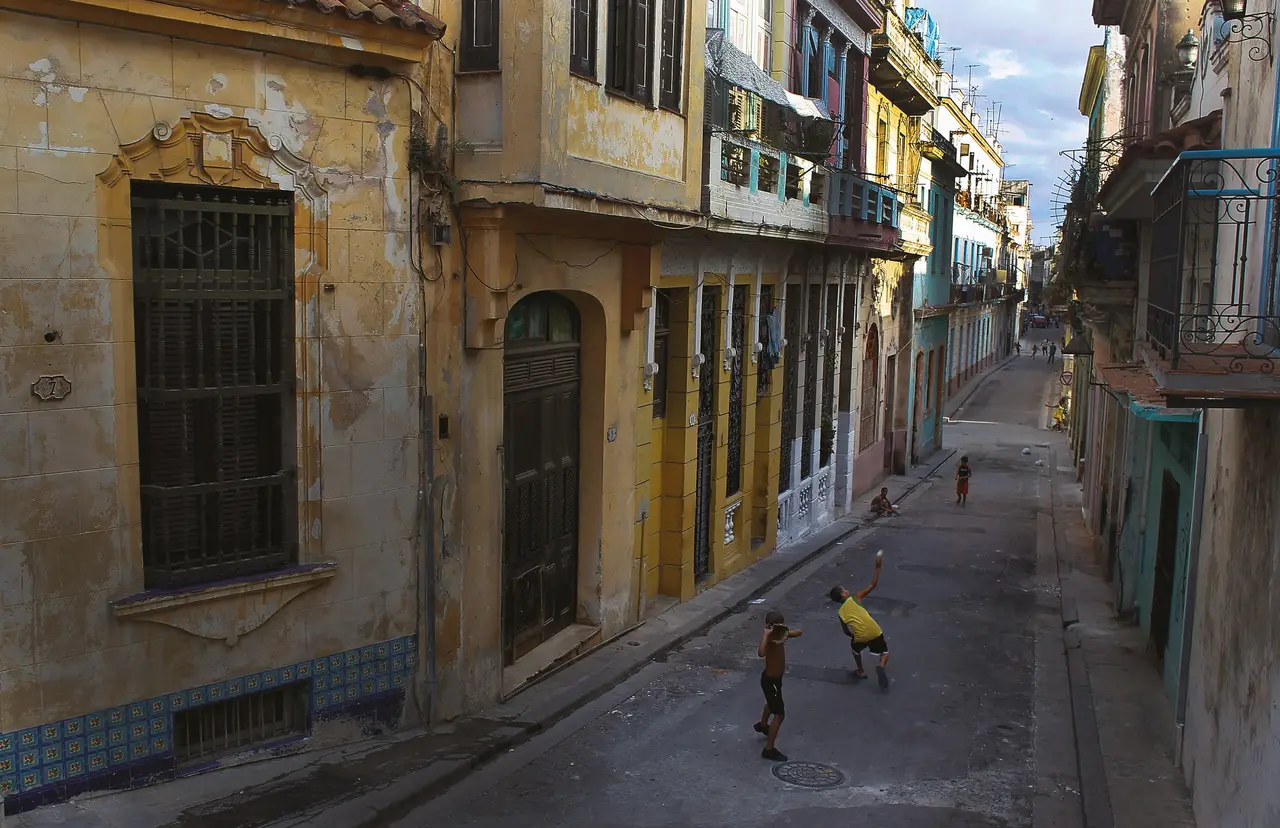
The dawn breaks in Cuba with a worry: when will we next have electricity? At their worst, the blackouts in Havana can last for more than twenty hours a day — longer in the interior. What does this mean for a family? For a country?
It means that with prices rising dramatically, a household cannot preserve food from one day to the next; that children have to study by torch or candlelight while adults sacrifice sleep to cook, wash and do other basic tasks; that stored water must be made to last for a week or more because of the lack of fuel to pump it.
These are not side-effects of US policy toward Cuba. The central aim is to make living conditions deteriorate enough to force regime change. Though the US blockade dates back more than sixty years, the asphyxiation has never been worse than under the second Trump administration. When he was first in the White House, Trump reversed much of Obama’s late-term rapprochement and made aggressive moves to block outside investment, while absurdly designating the country a ‘state sponsor of terrorism’. A total of 243 measures were adopted between 2017 and 2020 which put foreign companies, banks and investors at risk of sanctions if they engaged with Cuba.
It wasn’t enough. On his return to office, Trump launched a violent intervention against Venezuela, Cuba’s main oil supplier and recipient of its services, followed by an executive order designating Cuba an ‘unusual and extraordinary threat’ to US national security. Washington then imposed an energy siege on the island, threatening additional tariffs on any country sending or trading fuel. Since December 2025, Cuba has received only one oil tanker, from Russia. Mexico’s president says a diplomatic route is being explored to resume oil shipments, but this has not yet been worked out.
Even that was not enough. The US has also tried to cut off every source of foreign currency income: tourism, medical cooperation and investment in every sector. Secondary sanctions make the blockade extraterritorial, with Washington announcing new penalties almost every week on Cuban companies, officials and those that interact with them. The threat of military assault continues to loom over the island.
‘What we’re trying to teach them’, says Marco Rubio, ‘is there are no escape valves.’ Dialogue with the US seems likely to remain stalled as long as the Secretary of State maintains his grip on Cuba policy. Despite Cuba’s repeated calls for dialogue, so far Washington has been unwilling to reach a deal that would benefit American capital. For hardliners, only one outcome is acceptable: total capitulation.
The crisis cuts across every aspect of national life. There are fewer flights and airlines leaving Cuba. Central American and Caribbean countries have closed medical cooperation agreements because of US pressure. The national energy system collapses regularly. Around 7,000 containers are stranded in Caribbean ports because non-American shipping lines refuse to operate with Cuba. The cargo includes humanitarian aid, food, medicines, parts to repair the country’s obsolete thermoelectric plants, solar panels and photovoltaic components, and even private-sector goods.
Between March 2025 and February 2026, the costs of the blockade are estimated to have reached a record figure of more than $8 billion. The oil siege alone caused the amount of oil flowing into Cuba to drop by 2.6 million tonnes below projected levels. Behind each of these figures is an immense amount of suffering. More than 100,000 patients — 12,000 of them children — are awaiting surgery; people with life threatening illnesses are not receiving proper treatment; 32,000 pregnant women are at risk for lack of prenatal care.
Infant mortality has risen from 4 per 1,000 live births to 9.9, while the cancer survival rate for children and adolescents has fallen from 85 percent to 65 percent. Surgeons sometimes have to work by the light of mobile phones. Difficulties with refrigerated transport are jeopardising vaccination campaigns for 30,000 Cuban children. We have now witnessed the largest wave of migration in Cuba’s history, even with the US border closed and restrictions on remittances.
This, like any deep economic crisis, is multicausal: there are problems with the Cuban economic model and with its management, including heavy bureaucracy, economic inefficiency and rising inequality. Yet the main factor is clearly the blockade — which also constricts any attempt to chart a course back to stability.
Private fuel imports were authorised when the US said they would be permitted for non-state actors, but they remain inadequate and expensive. The government has accelerated renewable generation and electric transportation — Havana’s streets are full of electric tricycles — and allowed greater oil exploration and extraction, with Cuban scientists looking for new ways to refine the country’s extra-heavy crude.
The most significant measures, though, are the 176 reforms recently approved by the National Assembly. No other package of economic and social reform over the last thirty years has been as far-reaching. The programme seeks to enhance the role of the private sector and foreign investment, for instance in banking; give local governments greater economic autonomy in realms like foreign trade; and cut state bureaucracy. The essence of the political system is unchanged: it preserves free and universal access to education, health and other services, as well as sovereignty over national security and strategic sectors. But this is a clear expansion of the market’s presence.
The reforms are not motivated solely by external conditions. They are part of long-running and frequently interrupted attempts to pivot away from a highly centralised economy which have been in process since the 1990s. The government wants to make this transformation on its own terms rather than allow the terms to be dictated from outside, building the kind of structures that can better handle sanctions-induced crises without sacrificing national sovereignty. The question being debated in Cuba today is whether this is possible in conditions of siege, and whether those who support the Revolution can summon the resources needed to sustain it.