
World · Tribune · · 46m
Britain’s Unions Won’t Back Down
English (original) · Read in Deutsch ⇄
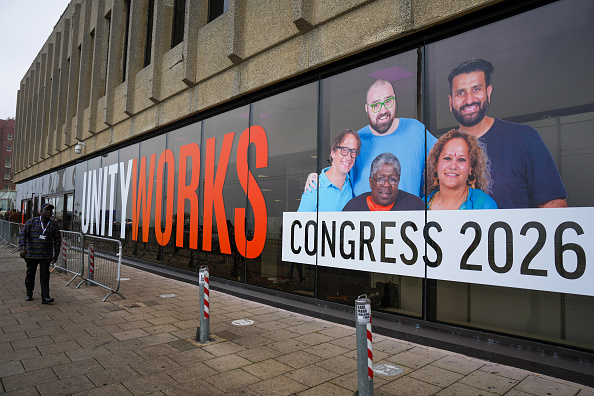
The message was blunt and simple. ‘The most important thing that Andy Burnham can do’, said the TUC general secretary Paul Nowak, ‘is deliver the change that people voted for in July 2024’. He was addressing Brighton’s annual gathering of trade unions representing 5.3 million workers throughout the UK. It was among the most optimistic Congresses in decades. Yet many in the ranks of delegates were hoping the new Prime Minister would go a lot further than that. The mood was leavened by a layer of scepticism.
The first TUC Congress since the change of Labour leadership was all about expectation: what could the new regime in Downing Street mean for working people, mostly in the public sector, holding the social fabric of society together?
Burnham had pulled out of a scheduled speech and private meeting with union leaders after the passing of his father earlier this week: a missed opportunity to boost confidence, and to provide some insight into how the government will address the major demands being aired on the conference floor, from a windfall tax on banks to lower energy bills, the rolling back of anti-union legislation, an end to outsourcing public contracts to private profiteers, opposition to tightening restrictions on migrant workers and transgender rights, and a halt to the supply of military aid to Israel.
Above all, there is the cost of living and the challenge of the far-right, with support for Nigel Farage’s Reform notably present among union members. Nowak again: ‘If people feel that the government is taking the stuff that matters to them seriously and is delivering on it, I think it cuts the legs from underneath that right-wing populism.’
Burnham has kicked off his premiership with what many see as a promising start, cutting bus fares and electricity bills, dropping the undemocratic attack on jury trials, and taking the strongest action by a British government yet on Israel’s genocidal persecution of Palestinians in the West Bank. He has insisted that ‘national security cannot come at the cost of social security’, although his plans to dramatically raise the former would appear to endanger the latter unless spending rules are radically rewritten.
But the higher the rhetoric, the more Burnham will struggle to live up to it. The unions know this. One senior union official told Tribune, ‘There’s a lot less hostility towards government now. Criticism of Labour is muted and talk of disaffiliation has moved away. We know Andy’s on our side, but it’s a question of how strong he is to see it through.’
Seeing it through means navigating the economic headwinds of rising inflation, especially for food, the undemocratic blackmail of government by the ‘markets’, the calls to war preparedness and the obeisance to absurd fiscal limits set by the previous chancellor. On the final day of the conference, the rate of inflation was announced to have risen from 2.9 percent to 3.1 percent, and that’s just the start of what economists believe will see food inflation reach 10 percent by the new year.
Reality punched through the feel-good atmosphere when unions formally backed plans for united strikes for better public sector pay, above the expected norm of 3.5 percent for the coming year. Congress passed a motion urging ‘all public-sector unions to join a united campaign on pay and, if needed, to plan for co-ordinated industrial action to secure real gains for workers’ in the NHS, schools and local government.
Delegates warned Burnham that his leadership ‘means nothing’ if those workers serving their communities will still struggle to get by financially. The critical test will come in the Budget, to be delivered by the military spending hawk Chancellor John Healey next month. Will it expose the gap between promise and delivery? If so, it will be the task of the labour movement and the wider left to fill it in.
Read the full story at the source
Source: Tribune