
World Tribune
Britain Needs More Than ‘Breathing Space’
Andy Burnham’s charisma has helped to obscure the flaws in his first Budget. But the goodwill could soon run out.
English (original) ·Read in Deutsch ⇄
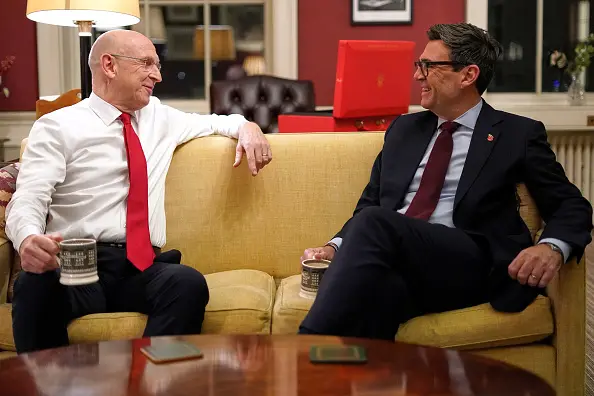
The framing of Andy Burnham’s ‘Breathing Space’ Budget captured the political moment: after several relentless years of a cost-of-living crisis, millions of people are gasping for air. Yet the substance of the programme was less compelling. The relief offered will be outstripped by sharper price rises, pushing household disposable incomes down in the near term and leaving them stagnant in the long run.
Chancellor John Healey clung to Andy Burnham’s ‘everyday fixes’ strategy, offering a sort of Martin Lewis money savings expert approach to economics. A £100 energy bill rebate here, an extended VAT exemption and gas standing charge removal there. Measures that are wide-reaching and benefit millions but fundamentally shallow and nothing like the sort of flagship interventions needed to translate Burnham’s call to ‘end 40 years of neoliberalism’ into action.
The political conundrum is whether the Budget will be judged on its insufficiency, or if boxing clever on the everyday essentials will create the impression that Burnham’s ‘on your side’. It’s more a question of perception than policy. Is this an out-of-touch establishment doling out peanuts with one hand while picking working people’s pockets with the other? Or is an affable new Prime Minister, under siege just like the rest of us, doing what he can in the white heat of impossible problems not of his making? Initial polling implies that much of the public think the latter.
This is the most well-received Budget since 2021, admittedly in a fairly dismal field. Half of Green voters found Healey’s offering fair and the number of people who believe the government is handling the economy well has doubled since last November. This may come as a surprise to parts of the left, whose response is understandably shaped more by what was missing from the Budget than what was in it.
In this sense there are parallels between Burnham and former Prime Minister Boris Johnson, whose imitative Churchillian bluster built a persona that connected with a big chunk of the electorate. Johnson bulldozed through much of the pandemic despite a catalogue of fatal blunders. Progressives looked on in frustration as his popularity surged during some of the darkest days of the crisis. Now, more than half a decade later, we are again reminded that the public don’t always take the positions might expect them to. Burnham is something of a mirror of the qualities often valued across the aisle: laddish, passionate, with a talent for speaking to traditional Labour values. Such charismatic leaders are afforded a degree of generosity, at least for a time, that the likes of Starmer could never attain.
The bookies have shortened the odds on an early election, fuelled by fervent speculation that the Prime Minister will capitalise on the ‘Burnham Bounce’ in the polls. The calculation would be that having demonstrated that his instincts are in the right place, Burnham would seek a mandate for deeper change. If Burnham sticks to his word and doesn’t take the country to the polls, the clock is ticking on the cost-of-living bomb projected to hit from Trump’s war in the Middle East. In the New Year, energy bills could leap by as much as 30 percent to rip £400 straight out of household budgets. Against that backdrop, the goodwill Burnham has built could quickly evaporate. What’s initially seen as welcome relief could easily come to feel like a derisory handout.
The tightrope for the Labour left is recognising that Burnham remains close to hegemonic among party members — nine in ten approved of the Budget — while laying the groundwork for bolder reforms. The decision to fund energy bill support for millions of people through an increase in the bankers’ levy has created a political opening we can enter. As prices rise further, there is a clear case for extending the precedent Burnham has set of using progressive redistribution to shield households from rising costs. The obvious demand is to extend and increase the modest, temporary levy on bankers, alongside a form of wealth taxation to fund an Essential Energy Guarantee that pegs the cost of basic energy needs at an affordable rate.
Burnham’s core analysis that Britain’s economic decline is rooted in the 1980s sell-off of public assets and the corresponding growth in the power of profit-seeking actors, demands far deeper intervention than even this more radical cost-of-living measure. In fairness, this was never going to happen overnight. The upcoming Spending Review, alongside forthcoming legislation on water, energy and social housing, offers ample opportunities for a genuine break with the status quo. These are Burnham’s chances to prove he isn’t just another Prime Minister content with padding the gloves while corporate profiteering hits families in the face, and to finally take back democratic control over the essentials people need to live decent lives.