
World Tribune
Break the Union, Break the Empire
Westminster’s global power is based on its domination of Scotland, Wales and the North of Ireland. Time to dismantle this imperial state.
English (original) ·Read in Deutsch ⇄
Shortly after the 2016 Brexit referendum, liberal Remainers acquired an article of faith: the Leave vote, they believed, was at least in part the result of Russian interference. As this narrative gained momentum, some of its advocates grew increasingly fixated on a single document that would supposedly prove them right.
What became known as the ‘Russia Report’ was an inquiry by parliament’s Intelligence and Security Committee (ISC), the body responsible for overseeing Britain’s intelligence agencies. Delays in its release fuelled speculation that it would link the Kremlin to the Conservatives and even implicate Boris Johnson personally. But when it finally appeared in July 2020, it did not conclude that Russia had tried to sway the Brexit vote. As it turned out, the security state wasn’t particularly concerned with this question; MI5 had provided the committee with only six lines of material on it.
Instead, the ISC zeroed in on an earlier ballot: the Scottish independence referendum of 2014, in which it claimed, citing ‘credible open source commentary’, that Russia had mounted ‘influence campaigns’ — ‘potentially the first post-Soviet Russian interference in a Western democratic process’.
In truth, there was little evidence of Kremlin connivance in either case. Readers of the Report were mostly expected to take the security services’ claims at face value, despite their scant empirical findings and their long history of public misinformation. The Committee’s focus on Scotland over Brexit, however, was revealing. Why did it choose to emphasise one and downplay the other?
Here the charge of Russian subterfuge had a clear propaganda value: it helped create a political frame through which any future challenge to the Union could be seen. The independence campaign was not merely a domestic constitutional movement, so the security establishment told us, but a project abetted, encouraged and contaminated by a hostile foreign power. The break-up of Britain became associated with the strategic objectives of one of the country’s principal rivals.
Mainstream journalists relayed the story as expected. ‘Russia tried to influence Scottish independence vote’, blared Sky. ‘Kremlin “tried to meddle in Scottish independence vote” — but no evidence that it targeted Brexit’, announced the Telegraph. The Sun went with ‘VLAD ALL OVER’. Scottish independence must be presented as an urgent national security threat for one main reason. Its impact on Britain’s position in the world could be momentous, tearing a hole in the imperial system that the UK preserved after the official end of empire.
This system was rebranded and embedded in Washington’s global infrastructure during the age of ‘decolonisation’, yet many of its crucial vectors remained intact. Britain still controls fourteen overseas territories, stretching from the Falklands in the South Atlantic to the Chagos in the Indian Ocean, while maintaining a network of military bases from Kenya and Cyprus to Brunei. The dissolution of the Union would put this architecture at risk. It would cost Britain a sixth of its people and almost half its territory, stripping away much of its North Atlantic coastline, offshore resources and strategically important military geography, and reducing it to a Greece-sized country with an Italy-sized population.
As of May 2026, this scenario looks increasingly plausible. Plaid Cymru is the largest force in the Senedd, the Scottish National Party still dominates at Holyrood, and Sinn Féin has become the biggest Northern Irish party both at Stormont and in Westminster. This autumn, the three parties pledged to work together to break up Britain. This is by far the most serious threat to the country’s elites today — and they are working behind the scenes to see it off.
Scotland: The Strategic Heart
Since the Act of Union, Scottish elites have been active participants in Britain’s global project. Scotland’s merchants gained access to English colonial markets, its politicians a place in imperial administration, and its soldiers a vital role in Britain’s wars abroad. The Clyde became one of the great workshops of British naval power. Eight Type 26 frigates, an advanced anti-submarine warfare warship, are now being built by BAE Systems in Glasgow, while five Type 31 frigates are constructed at Babcock’s Rosyth yard. Scottish shipyards remain central to the Royal Navy’s future fleet.
More important still is Britain’s nuclear arsenal. HMNB Clyde at Faslane is home to the submarines that carry Britain’s ballistic nuclear missiles, while nearby RNAD Coulport is a strategic weapons facility and storage site supporting the Trident system. Britain’s continuous at-sea nuclear weapons have operated from the Clyde since 1969. Remove Scotland from the UK, and this major pillar of British power would sit in a foreign country. London would face enormous problems in trying to relocate the infrastructure on which its nuclear posture depends.
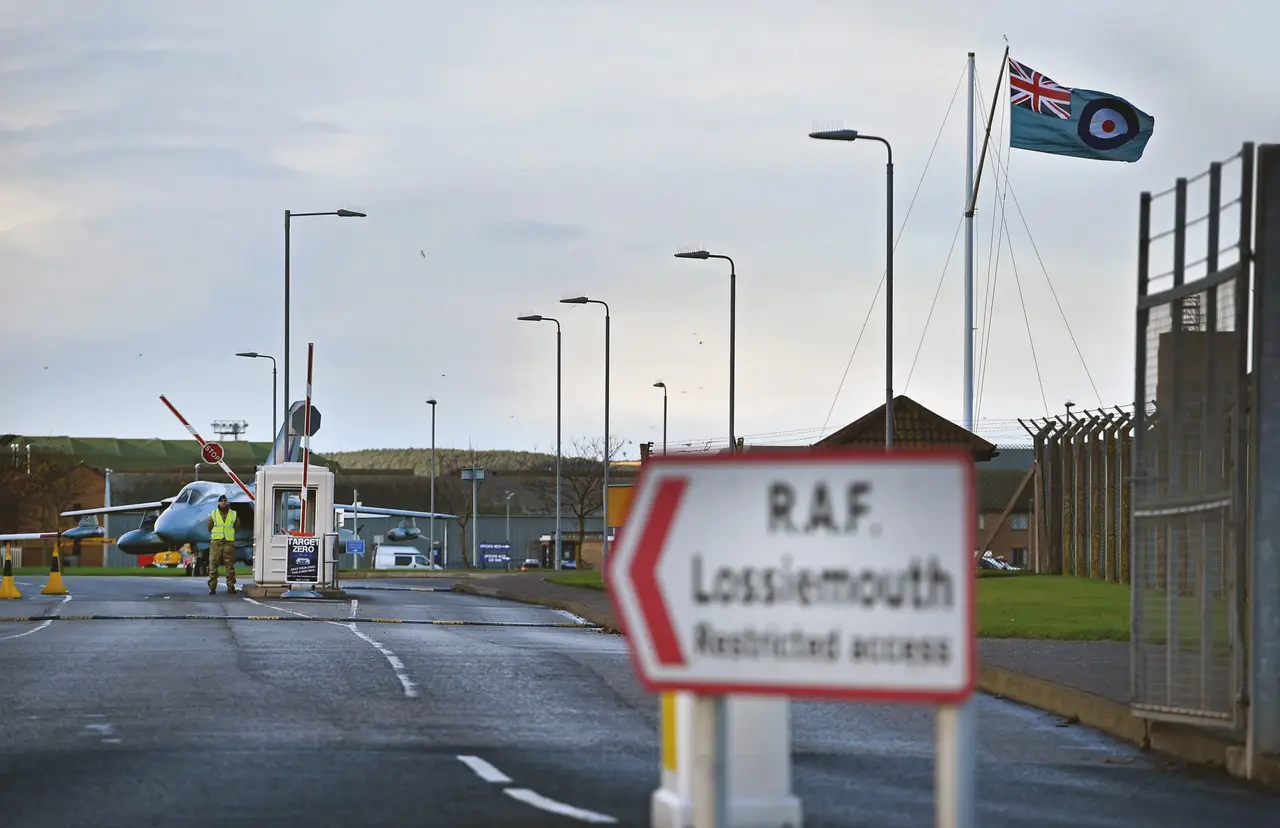
Scotland also gives the British military a strategic position facing the Norwegian Sea and the wider High North. RAF Lossiemouth at Moray, north-east Scotland, hosts Britain’s nine P-8 Poseidon maritime patrol aircraft, used to hunt submarines and support Nato operations. As Nato has increased its focus on the Arctic and North Atlantic, this geography has become even more valuable.
Then there is energy, with Scotland accounting for almost 90 percent of UK North Sea revenues: £4.1bn out of a UK total of £4.6bn. The precise division of offshore resources after independence would depend on the maritime boundary eventually agreed, but it’s clear that much of the oil and gas lies in waters that would likely fall within an independent Scotland’s jurisdiction.
Rather than simply taking one nation out of the UK like a jigsaw piece, Scottish independence would tear away territory and military infrastructure on which the British state depends, depleting its arsenal and weakening its strategic position, while removing a major share of the natural resources that underwrite the economy.
In June 2013, a year before the independence referendum, independent MSP Margo MacDonald wrote directly to MI5 director general Andrew Parker asking for a clear statement that the agency would not interfere in the campaign. MacDonald believed undercover agents were already operating inside the SNP and warned that the security services should be restricted to dealing with genuine criminal or terrorist threats. ‘I will be obliged if you can give me an assurance that UK Security Services will not be used in any respect in the lead-up to the Scottish referendum on sovereignty’, she wrote.
Her suspicion was not unfounded. During WWII, police targeted prominent nationalists including future SNP leader Arthur Donaldson, who was accused of activities prejudicial to national security and detained under wartime laws. In the 1950s, agents from MI5 and the Special Branch infiltrated the party as part of a systematic campaign to undermine independentism. Over the following years they investigated alleged links between forces in Scotland and nationalists elsewhere in the world. MI5’s ‘counter-subversion branch’ remained active in Scotland amid the labour upheavals of the 1970s and 80s, with state repression disproportionately targeting workers there. The security services also monitored major figures in Scottish cultural nationalism; the poet Hugh MacDiarmid was watched for decades, his movements followed and communications intercepted. Declassified files also document the monitoring of nationalist writers like J. F. Hendry and Compton Mackenzie.
In 2015, it emerged that GCHQ had secretly revised its rules so that the restrictions on spying on parliamentarians did not apply to devolved legislatures, meaning there was no barrier to British intelligence agencies monitoring Scottish elected representatives. Nicola Sturgeon repeatedly asked for reassurances that the agencies would treat MSPs no differently to MPs. She received none.
While calls for transparency have been rebuffed, a series of leading SNP politicians have alleged security service interference, with former deputy leader Jim Sillars telling the Independent he was aware of an undercover agent who had arrived in Glasgow during the referendum campaign. More recently, the SNP has been destabilised by charges of fundraising fraud. The Sunday Mail reports that the Operation Branchform, the police probe into the accusations, ‘stepped up dramatically’ after Gordon Brown — perhaps the UK’s most prominent Unionist — raised the issue with his close friend Iain Livingstone, the Chief Constable overseeing the investigation.
Wales: Training Ground
Wales was incorporated into the English state through a more straightforward process of military conquest — its institutions, laws and ruling structures progressively absorbed. It is now important as both a source and host of British military personnel. The UK military notes that ‘There are over 50 military bases and Defence establishments across Wales. There is also an extensive network of Reserves, Cadet and training sites’. This amounts to 1,880 regular service personnel, overwhelmingly part of the Army, alongside 920 civilian Ministry of Defence staff. The British Army’s specialist electronic warfare unit — the 14th Signal Regiment — is based at Cawdor Barracks in Pembrokeshire. Cawdor could soon become even more critical to UK defence strategy given the government’s plans to place part of the Deep Space Advanced Radar Capability there: a system being developed with the US and Australia to track objects in orbit and protect military satellites.
On top of this there are the Welsh Guards, a senior infantry regiment, the 104th Regiment Royal Artillery (known as the Welsh & Borderer Gunners) and engineers, logistics and medical formations. This infrastructure allows Wales to act as a major training ground for British warfare. RAF Valley on Anglesey trains fast-jet pilots for the airforce and Royal Navy before they progress to aircraft including the Typhoon and F-35. At Brecon, the Infantry Battle School trains the officers and soldiers who command British infantry units. Wales hosts Exercise Cambrian Patrol, an annual training operation which in 2025 brought together military teams from 32 countries. Sennybridge, Castlemartin and other ranges allow British forces to rehearse artillery fire and armoured warfare before deployment overseas.
The annual Ministry of Defence expenditure with industry in Wales was £1.1 billion in 2024–25, supporting around 3,900 jobs directly. Each of the MoD’s five largest suppliers has a presence in the country. Weapons themselves are also increasingly produced, maintained or tested there. At MoD Aberporth on Cardigan Bay in West Wales, the UK military operates one of Britain’s principal missile and drone-testing facilities, with a vast danger area extending over the sea. It is managed by Farnborough-based British arms company QinetiQ.
With the government ramping up defence spending, these investment links are set to deepen. This year, London and the Welsh government announced a £50m Wales Defence Growth Deal aimed partly at expanding work on military drones and autonomous systems. In Merthyr Tydfil, the US arms company General Dynamics manufactures and integrates the British Army’s Ajax reconnaissance vehicles. BAE Systems’ Glascoed plant near Usk produces munitions and is being expanded as Britain rebuilds its artillery-ammunition capacity. At MoD Sealand in Flintshire, components for the US-led F-35 programme are repaired and maintained, giving Wales a direct role in one of the most important military-industrial relationships between Britain and Washington. Around Newport, Airbus and the semiconductor industry provide another layer of strategic infrastructure, including cyber-security systems used by the British state and Nato.
Yet Wales’s strategic importance extends beyond the military. Milford Haven is one of Britain’s principal gateways for imported energy, with the South Hook and Dragon LNG terminals handling a huge proportion of the liquefied natural gas entering UK ports. That makes the Welsh coast important not only to Britain’s energy security but to the wider economic base on which its military power depends. The country is no longer merely a peripheral territory governed from London. Welsh land supports the British military, while Welsh industry supplies the systems that make its deployment possible.
The security state has also repeatedly treated Welsh nationalism as an intelligence problem. MI5 had a wartime agent codenamed ‘WW’ operating inside Plaid Cymru. In 1968, as the movement grew, Scotland Yard sent a Special Branch team to the country. Arrests of members of the Free Wales Army followed in February 1969, months before Prince Charles’s formal installation as Prince of Wales at Caernarfon Castle. In March 1980 the police initiated Operation Tân, arresting scores of known Welsh nationalists as part of the investigation of the Meibion Glyndŵr arson campaign. A subsequent Welsh civil-liberties inquiry heard allegations of phone tapping, bugging and other surveillance directed at lawful political activists, including Plaid Cymru figures such as MP Dafydd Wigley.
Other methods have been more blatant. A 2021 Wales Office delivery plan stated that one of the department’s three explicit priorities was to ‘strengthen and sustain the Union and Wales’s role within it’. It noted that economic projects should demonstrate the UK government’s ‘relevance and benefit’ to people in Wales, with success measured partly through ‘publicly available indicators of support for the Union’. The Wales Office even had a dedicated Union Team with annual staff costs of £490,000, while the Cabinet Office had its own Union Directorate ‘leading the design and delivery of the Union strategy’ which would ‘drive delivery of government’s priorities to strengthen the Union.’ The department was given an annual public budget of £41.5m and 258 staff to ‘ensure the benefits of the Union are clear, visible and understood by all citizens.’ The British taxpayer picks up the bill for state propaganda whose explicitly stated purpose is to undermine self-determination.
Northern Ireland: Intelligence and Weapons
The act of partition that created Northern Ireland in 1921 left a large nationalist population inside a state that was supposed to remain Unionist by design. This was always a precarious situation for the British state given the strategic value of the territory, which sits on the UK’s western approaches, facing the North Atlantic and the sea routes linking the country to North America. During WWII Derry became one of the principal Allied bases for convoy escorts in the Battle of the Atlantic, while flying boats operating from Lough Erne hunted German submarines. At the height of the campaign, around 140 Allied warships were based on the River Foyle. The enormous wartime naval presence has gone, but the geography remains the same. Northern Ireland is close to the approaches to the GIUK gap, the North Atlantic corridor through which Russian submarines must pass to move between their northern bases and the open ocean. Britain continues to regard surveillance and freedom of operation across this region as a central part of its responsibilities to Nato.
Northern Ireland’s main contemporary significance to British power lies in intelligence and military industry. MI5 has held responsibility for national-security intelligence in Northern Ireland since 2007 and operates from a purpose-built headquarters at Palace Barracks outside Belfast. It is an unusual permanent outpost of the Security Service beyond London, which works closely with the NI police and other agencies. Nearby, Thiepval Barracks in Lisburn serves as the headquarters of 38 (Irish) Brigade, while Northern Ireland also hosts a base for 6 Military Intelligence Battalion.
Belfast is becoming increasingly central to Britain’s ability to wage and sustain wars overseas. Thales manufactures missiles there for British forces and allied militaries, including the Lightweight Multirole Missile, while the city’s shipyards are essential to construction of the Royal Fleet Auxiliary’s new Fleet Solid Support ships. Those vessels are intended to keep British carrier strike groups supplied while operating far from home. Northern Ireland has developed a growing cyber and defence-technology sector, supported by hundreds of millions of pounds in annual MoD spending. Irish reunification would therefore mean removing from British sovereignty an MI5 headquarters, Army infrastructure and a significant part of the defence-industrial base.
In Northern Ireland, as elsewhere in the Union, the constitutional question is inseparable from the material foundations of British power. Yet the defence of these strategic interests has involved a different level of covert activity. British agencies not only monitored Irish republicanism from outside and dispatched death squads with a ‘shoot-to-kill’ policy in the 1980s; they also spent decades recruiting agents at senior levels within the movement, on a scale that far outstrips their operations in Scotland and Wales. The most extraordinary publicly confirmed example is Denis Donaldson, a senior Sinn Féin official who shaped the party’s approach to the peace process and ran its Stormont administration. In 2002, police alleged that an IRA intelligence-gathering operation was being run out of Sinn Féin’s offices and Donaldson and other key figures were arrested. The accusations, which turned out to be entirely fictitious, prompted Donaldson to admit that he had spent twenty years as a paid agent for British intelligence, working secretly on behalf of the Ulster Unionist Party. Stormontgate succeeded in engulfing Sinn Féin in scandal and collapsing the devolved institutions for five years, in what Gerry Adams described as a transparent attempt by the British state to derail the peace process and discredit Irish nationalism.
Since then, UK intelligence has amped up the threat of ‘dissident republicanism’ as a pretext for enhancing the security state in Northern Ireland. In 2010, MI5 sounded the alarm that republicans might soon strike targets on the British mainland. This was an outlandish suggestion given the weak and diminished state of the armed movement, but it was seized on by Unionist politicians to demand more funding from Westminster for policing and security services, strengthening the forces of the continued occupation.
Now that the full scale of British activities in Northern Ireland is coming to light — murder, torture, psy ops, sectarian attacks — the establishment is mounting a cover-up. MI5 has withheld hundreds of documents from official state inquiries into the Troubles. Police have obstructed requests for declassified documents and heavily censored those that have been released. Files on a senior military official who blew the whistle on British abuses in Northern Ireland have been mysteriously ‘lost or destroyed’. Attempts to hold agents accountable have been repeatedly undermined by Westminster legislation.
This history of covert intervention sits alongside Whitehall’s overtly antidemocratic role in managing the constitutional conditions under which Irish reunification could take place. The Good Friday Agreement states that a poll on reunification must be held if a majority is in favour, but this is a deliberately vague criterion. The decision to call a vote lies with the British Secretary of State. The Northern Ireland Office now admits that ‘no fixed criteria’ have ever been drawn up for deciding when a referendum should be held, that election results are not determinative, and that successive Secretaries of State have deliberately retained broad discretion over what evidence to consider. This August, Andy Burnham arrived in Belfast to tell the people of Northern Ireland that a border poll is ‘off the table’. A veto from Westminster overrides the democratic will.
Break the State
The forces pushing the Union towards rupture are clear. The collapse of Labour as the natural party of government in much of Wales and Scotland has weakened one of the main institutions that once bound those nations to Westminster, while Brexit shattered the settlement that had helped keep a lid on constitutional tensions. With the old party system fracturing, and the Union’s legitimacy eroding, independentism is no longer a marginal cause.
Many anti-imperialists have held out hope that a central government might one day voluntarily dismantle what remains of the British empire. Jeremy Corbyn came close. But the British state has proved remarkably adept at seeing off serious electoral challenges while protecting the institutions that project its influence abroad. It would surely be wiser to take aim at the structure that sustains this influence. Scottish and Welsh independence alongside Irish reunification would do what Westminster politics cannot: strip the British state of the territory, resources and infrastructure that enables its violent role in the world.
For centuries, Britain used partition, fragmentation and the manipulation of national and sectarian divisions to weaken rival powers and make overseas territories easier to dominate. What Britain did abroad must now happen at home. The dissolution of the United Kingdom would turn one of empire’s oldest techniques back on the metropole itself.