
War & Militarism Tribune
As I Please: Burnham, the Workers, and the War Machine
Will imperial conflict prevent the new Prime Minister from resetting relations with the trade unions?
English (original) ·Read in Deutsch ⇄
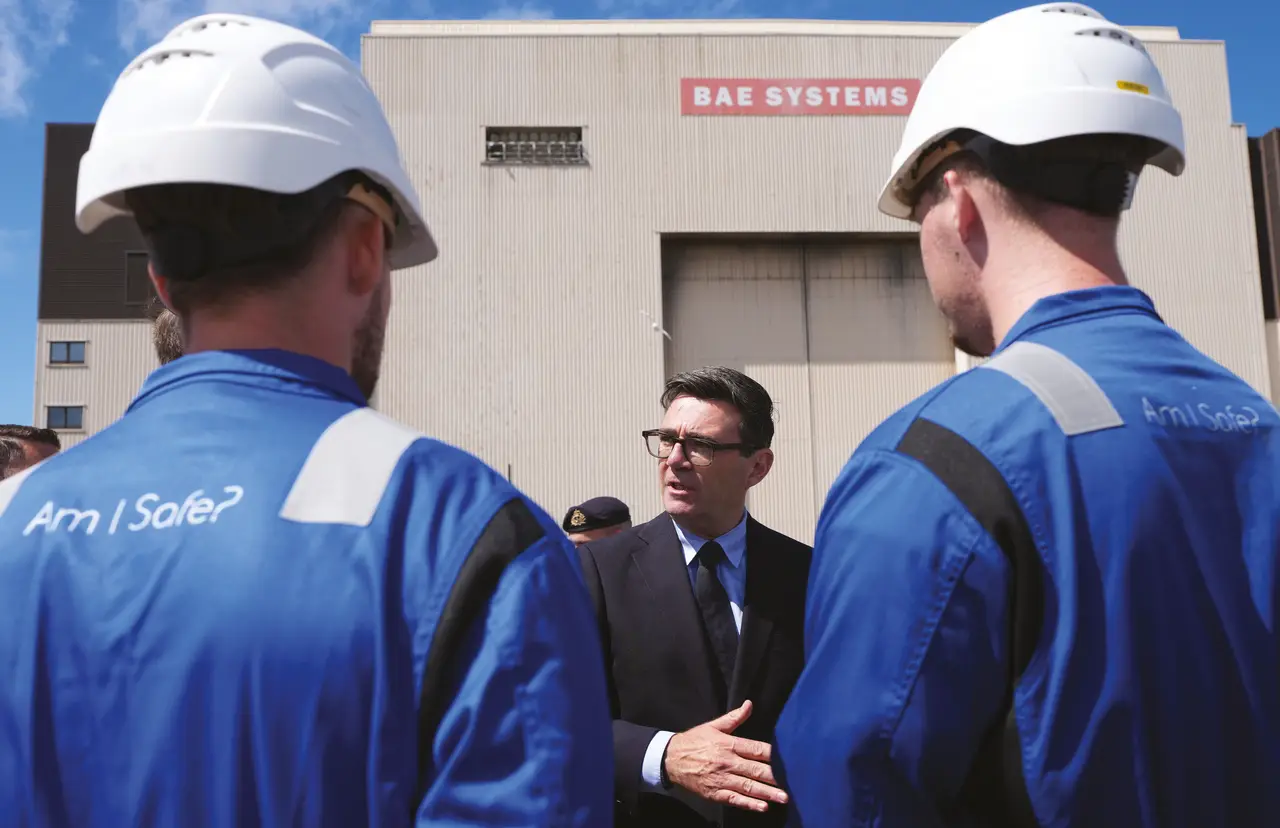
Never in the history of the Labour Party has a prime minister entered Number 10 with such general goodwill, and such high expectations, from the trade unions. Andy Burnham was endorsed by every union affiliated to the party before his coronation in June. As Mayor of Manchester he was praised for putting union recognition and worker engagement at the heart of the regional economy. Now, after years of hostilities under the previous Downing Street regime, is he about to transform the relationship between the government and organised labour?
Burnham has already made a concerted effort to improve channels of communication. Warm words to the TUC’s annual congress, one-to-one calls with general secretaries, collective meetings with union leaders and more. He has changed the mood to one of qualified optimism. A senior official tells Tribune: ‘There’s now constant dialogue at multiple levels up to the general secretary . . . We’ll just have to see how long it lasts and what comes of it.’
There is nothing cynical in this final sentence. Given the gap that’s opening up between Burnham’s promises and his delivery, as well as the strength of the political headwinds threatening to drive him off course, it’s entirely possible the honeymoon won’t last. There have been some incremental policies on the cost of living: cutting VAT on energy bills, maintaining the cap on bus fares, reducing business rates on pubs. But most of these will be wiped out by inflation. And tackling the structural causes of high prices will be impossible as long as the ‘productive state’ remains a distant prospect rather than a concrete programme. The clear pledge to reassert control over the ‘essentials of life’ has now slammed up against the miasma of company law and financial complexities.
Burnham meanwhile appears to have U-turned on several substantial issues (‘appears to’ because his commitments were vague to begin with). Rent controls, and by implication other price controls, were ruled out after the first gust of opposition from the rentier class. Having previously warned against being ‘in hock to the bond markets’, the PM has now pledged to stick to Rachel Reeves’s disastrous fiscal rules. US planes can still use British bases to bomb Iranian targets and civilians in Trump’s illegal war. New sanctions have been placed on Israeli settlers, but the government still won’t call Israel’s ongoing genocide what it is, let alone take bold action to stop it.
These foreign policy issues directly affect the pockets and principles of union members. They should be top of the agenda for the leaderships that gave Burnham their blessing, which is why ten unions, representing more than 2.3 workers, wrote to him in August to demand that he forcefully oppose the assault on Iran. War-driven inflation will have a major impact on living standards and on the government’s ability to raise public spending, compromising both the ‘new political model and new economic model’ which we’re told are on the horizon.
The main factor in whether the unions support any Labour leader is their ability to influence the government’s intentions and make gains for their members. Starmer’s failure to heed this principle resulted in Unite, the second largest union, cutting its annual affiliation to the party by 40 percent, or £580,000. Its general secretary Sharon Graham insisted there would be ‘no more blank cheques’ for a party that had lost its purpose. She has since welcomed Burnham’s regional reindustrialisation policy as a ‘first step’ and agreed to give him ‘breathing space’ until the details emerge. A ballot of Unite members on whether to continue the affiliation is scheduled for next year.
Potential influence over government policy was the reason the Fire Brigades Union leadership was able to win a conference vote last May on remaining affiliated. The FBU had disaffiliated under Blair and then rejoined under Corbyn. Since 2010 it has lost 12,000 firefighting posts; like many public services it is under-equipped and in desperate need of investment. Andrea Egan, the new general secretary of Unison, the country’s largest union which represents health and care workers, has been resolute about her priorities — promising to hold the government’s ‘feet to the fire’ and refuse unconditional financial backing for the party unless members’ interests are protected.
The fact is that even if the will is there to bring the labour movement closer to government, there are powerful interests that push in the other direction: the war lobby promoting endless militarism, the Labour right demanding migration policies to divide the working class, the money markets whose every blackmailing manoeuvre aims to undermine progressive public spending. Taking on these forces requires a more radical transformation than what Burnham has offered so far.