
Politics taz
Subsidies for power grids: billions for operators
The Bundestag releases 16.5 billion euros for the power grids. Meanwhile, experts are calling for the socialization of the energy infrastructure. more...
Deutsch (original) ·Auto-translated to English
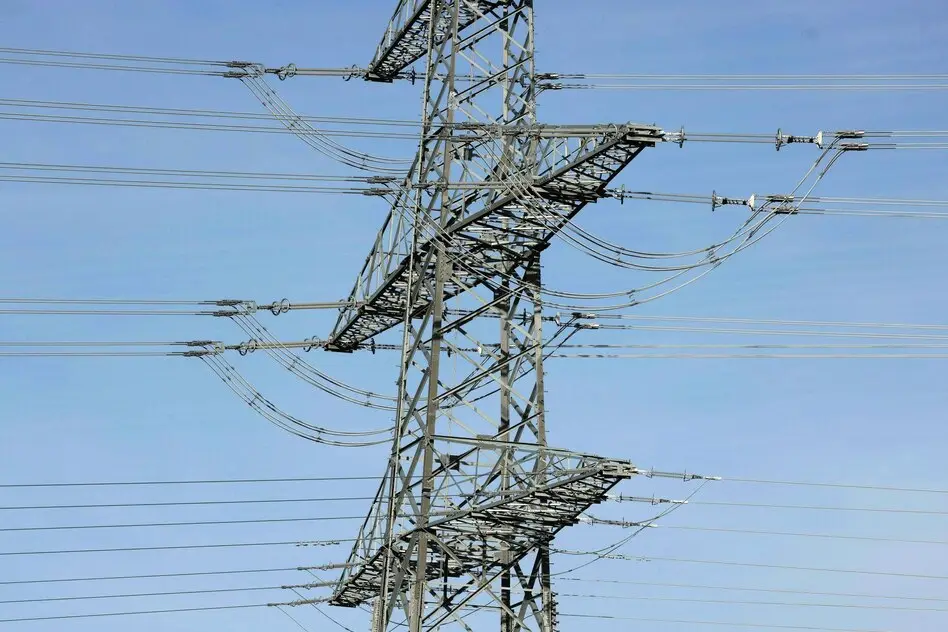
The federal government will transfer 16.5 billion euros to the transmission system operators over the next three years. The money is intended to make a “contribution to reducing electricity procurement costs,” as stated in the corresponding draft law, which the Bundestag wanted to pass in the evening after the editorial deadline. The four transmission system operators Tennet, 50Hertz, Amprion and TransnetBW have already received 6.5 billion euros from the state treasury this year. The billions come from the climate and transformation fund.
“For the energy transition, the networks have to be expanded and that costs money,” says Volker Quaschning, professor of renewable energy systems at the University of Technology and Economics in Berlin. However, the transfer does not guarantee that the network operators will make the most of the money. “There is no incentive for them to develop intelligent solutions, there is no competition in the respective network area - and therefore no competition,” Quaschning tells taz.
They are also legally restricted. “Batteries could, for example, help to relieve the strain on the networks,” says Quaschning. Whenever there is too much electricity entering the system, they could step in and store it for those times when demand is high. “However, according to the current legal situation, network operators are not allowed to operate batteries themselves,” said the expert. The unbundling of production and sales puts a stop to this. “With such a solution we could save a lot of money,” says Quaschning.
“The state borrows money at 3.5 percent, but the network operators receive a state-guaranteed return of 8 percent,” said the expert. Their owners are energy companies such as RWE or institutional investors such as pension funds or investment companies. Quaschning calls for their expropriation and socialization of the networks: “Critical infrastructure belongs in state hands.”
He is not alone in this. Economists like Tom Krebs are also calling for the socialization of the energy infrastructure. In fact, the government of Olaf Scholz (SPD) had considered buying the network operator Tennet, but failed due to limited budget resources. This spring, the government of Friedrich Merz (CDU) showed that this works: it bought 21.1 percent of Tennet. The state is now already a shareholder in three of the four network operators: 20 percent of 50Hertz and 24.95 percent of TransnetBW are held via the state development bank KfW.