
World taz
Train accident in Spain: First a technical problem, then human error
After a computer failure on the train route from Madrid to Seville, the railway control center made fatal errors. more...
Deutsch (original) ·Auto-translated to English
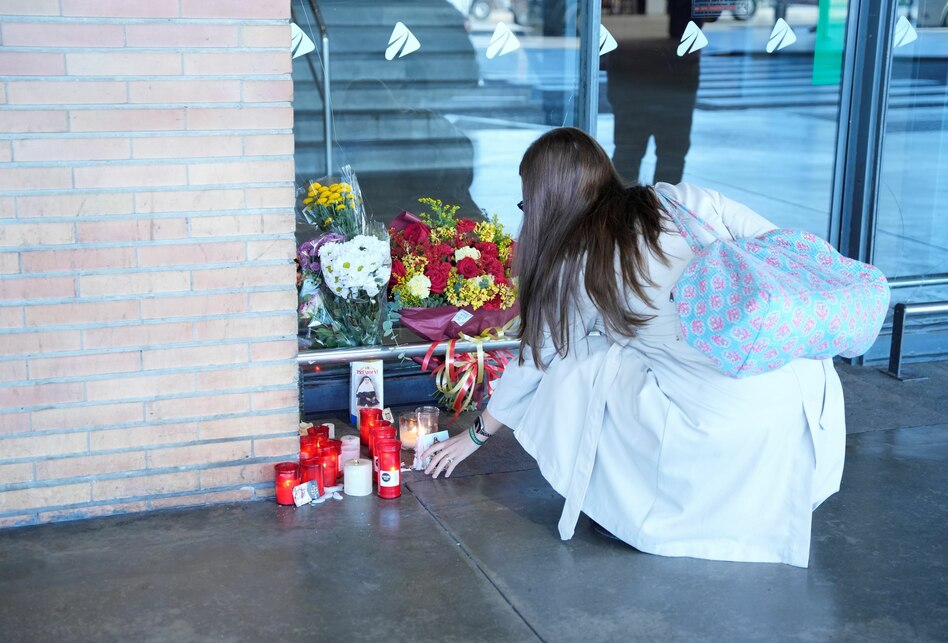
The first investigation results into Wednesday's serious train accident show: It all started with a technical error and, after a series of human errors, ended with the worst train accident that Spain has experienced in recent years.
After several extensive interrogations by the Guardia Civil and the Commission for the Investigation of Railway Accidents (Ciaf), this course of events emerged: On Wednesday at 8:30 a.m., several computers and with them the automatic control system of part of the railway line from Madrid to Seville in southern Spain failed. Six trains were automatically stopped. The control center in Madrid took control by radio - and it failed.
A high-speed train from the Spanish state railway Renfe ran into another train from the private operator Iryo that was standing on the tracks near the town of Urda, 118 kilometers south of Madrid, on Wednesday morning at around 200 km/h. At least 69 people lost their lives. Dozens were injured, some seriously.
After the IT failure, a control center controller - as recorded conversations showed - instructed the locomotive driver of a Renfe high-speed train to resume travel "in normal operation", i.e. at high speed. According to experts, this is in complete contradiction to the current regulations.
Accordingly, without a safety system, the train would only have been allowed to travel at 40 km/h and in line with the signals. What the train driver didn't know and what, for some inexplicable reason, neither the controller nor a second man at the post nor the supervisor was aware of - 25 kilometers in front of the Renfe train there was a train from the private provider Iryo on the tracks.
This one had problems when starting off. 17 minutes later, the Renfe train crashed into the Iryo train - with such force that three carriages were thrown off the tracks. Two wagons overturned and remained at the bottom of the railway embankment.
The failed computers are part of the LZB train control system, which has been in service since the line opened in 1992. It is currently being gradually replaced by the newer European system ERTMS. If at least one of the two systems had been active, a rear-end collision would not have occurred. The systems divide the route into sections in which only one train can be located at a time. That's exactly why the instructions should have been to drive slowly and on sight.
But that's not all: the Iryo's locomotive driver also reported to the control center, just five minutes after the Renfe train was ordered to operate normally. She reported that she too had been stopped by the IT error. “Continue the journey (…). Normal operation,” was the instruction given to them.
A little later the train driver called again and said that her train was having problems getting off the ground. The answer from the control center: “Well, just keep driving as soon as you can; and if you have any problems, call us.” Everything indicates that the controllers were not aware that both trains - Renfe and Iryo - were on the same section. As of press time on Thursday, rescue teams were still searching for victims in the rubble.
The serious train accident shocked Spain. Prime Minister Pedro Sánchez, opposition politicians and the royal couple traveled to the scene of the accident on Thursday and to one of the hospitals where the injured are being treated.
Sánchez took part in a meeting of the crisis team on site on Thursday morning. He promised to do everything to ensure that “everything is clarified down to the last detail”. Opposition leader Alberto Núñez Feijóo from the Partido Popular also appeared before the press not far from the scene of the accident. It shows “recklessness” for the government to “blame” an employee and it is “imperative” for the government to take “political responsibility,” he said.
Spain will elect a new parliament in just a month. The train accident will certainly have a decisive influence on the election campaign. Especially since it is the second serious accident on the Madrid-Seville route this year. In January, a broken rail caused a train to derail, striking another train that then tumbled down the embankment. At that time there were 46 deaths.