
Germany · taz · · 4h
Central bank raises interest rates: ECB slows growth to lower inflation
Deutsch (original) · Auto-translated to English
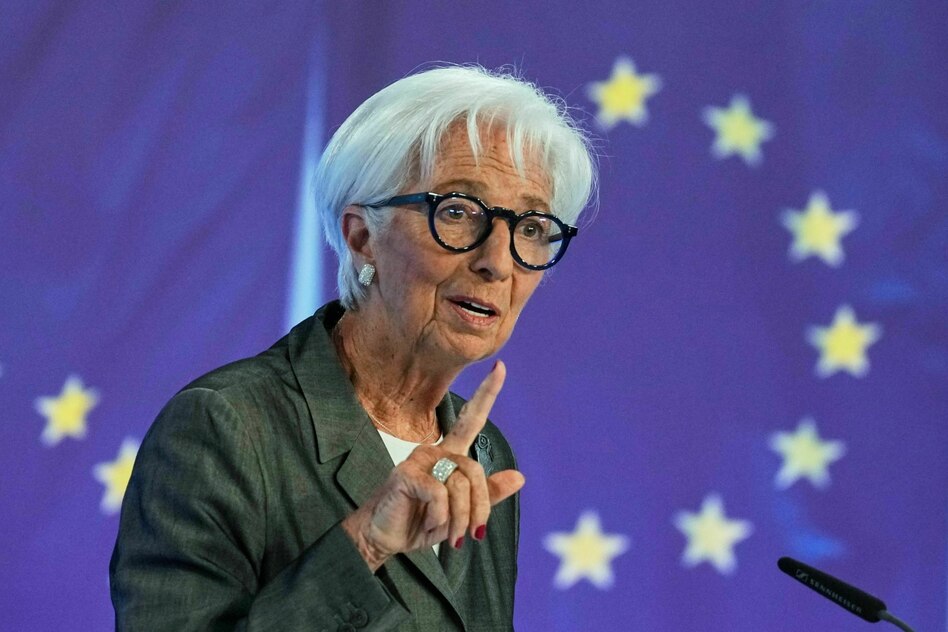
The European Central Bank (ECB) is raising key interest rates for the second time since the start of the Iran war. The ECB Council decided this on Thursday after its meeting in Berlin. “The conflict in the Middle East continues to generate inflationary pressures, and inflation is expected to remain well above our target for an extended period,” the central bank said. This means that the three interest rates with which commercial banks can park or borrow money from the ECB will rise by 0.25 percentage points to 2.50, 2.65 and 2.90 percent, respectively.
Economists expected this step. Nevertheless, it is controversial. The ECB is trying to curb inflation by raising interest rates. Ensuring price stability is their top priority; creating jobs or economic growth are secondary. By raising interest rates, the central bank is accepting a slowdown in the economy. Because with higher key interest rates, the interest rates for companies and consumers also rise, which limits investments and consumption, i.e. their demand. And that not only dampens demand, but also economic growth.
The ECB last raised interest rates in June. At that time, the three most important interest rates also rose by 0.25 percentage points. It was the first interest rate move by the European central bank in response to the Iran war, during which prices at gas stations in particular rose due to the blockade of the Strait of Hormuz. Nevertheless, inflation has not yet fallen. It has even increased. While it was 2.8 percent in June, it was probably 3.3 percent in August, according to the EU statistics office Eurostat.
However, without the price increases for energy, inflation would be just 2.2 percent and much closer to the ECB's target of 2 percent, at which the central bank sees price stability guaranteed. But fuel & Co prices rose by an average of 14.3 percent in the Eurozone in August compared to the same month last year.
In Germany, consumers did not feel the effects of the Iran War quite as clearly. The inflation rate in the Federal Republic was 2.9 percent in August, as the Federal Statistical Office announced on Thursday. Nevertheless, drivers in this country also had to spend significantly more money at the pumps than a year before. Gas stations charged 27.7 percent more for fuel this August than in the same month last year.
However, there have been significantly higher inflation rates in the past. In the wake of the Russian attack on Ukraine, inflation rose to around 9 percent. That's why there are certainly critical voices regarding the interest rate decision.
“The European Central Bank cannot effectively combat the current drivers of inflation by raising interest rates, but it has nevertheless once again increased the financing costs for the already heavily burdened economy,” said Silke Tober from the Institute for Macroeconomics and Economic Research (IMK). And the German Chamber of Commerce and Industry (DIHK) isn't exactly euphoric about the ECB's decision either: "The ECB's interest rate increase is understandable given the ongoing price pressure, but it will only be painful for many companies to digest," said DIHK chief analyst Volker Treier.
Meanwhile, it's not just companies and consumers who will feel the effects of rising interest rates. Finance Minister Lars Klingbeil (SPD) will also not be happy about the ECB's decision. He must already budget almost 42 billion euros for debt service in next year's budget. By 2030, this expenditure item will probably almost double to 80.7 billion euros. And this is not just due to the additional debt that the federal government has taken on for investments in infrastructure and the military. The increased interest that the public sector already has to pay for new loans is also causing expenses for debt service to rise. And higher key interest rates mean that the state also has to pay higher interest rates for new loans.
Read the full story at the source →
Source: taz