
Germany taz
World Nature Conservation Conference in Yerevan: Money for destruction or money for nature
Renaturation needs money, but that continues to flow into environmentally harmful subsidies, a UN report shows. There are still small rays of hope. more...
Deutsch (original) ·Auto-translated to English
Shortly before the planned end of the World Nature Conservation Conference, it's all about money again: "The sticking point, as always, is finances," Freya Duncker told taz on Thursday. She has followed the negotiations of the member countries of the Convention on Biological Diversity in the Armenian capital Yerevan over the last two weeks. It is also about subsidies that destroy nature: an estimated 500 billion US dollars are invested by states every year in such a way that they directly destroy biotopes. The conference actually wants to put an end to this.
“Yesterday there was wording about reducing subsidies in the contract text, today it was suddenly deleted again,” said Duncker. Currently, for every euro invested in protecting nature, around 30 euros go towards its destruction.
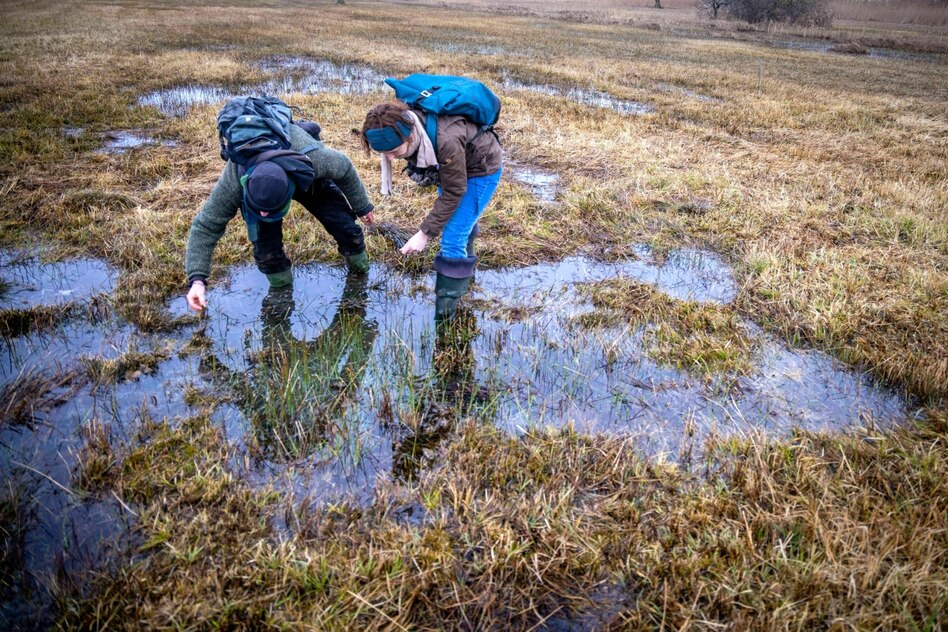
On the same day, the United Nations Environment Program (Unep) was able to report a ray of hope: an area of land or sea the size of Kazakhstan is currently being renatured. For its “Progress Report on Restoring Nature,” UNEP examined activities in 149 countries and found restoration projects on 2.52 million square kilometers. The projects have also created more than 1 million “green” jobs.
In 2019, the United Nations General Assembly declared a “UN Decade for Ecosystem Restoration”. To this end, the member states had made commitments to renaturate at least 1 billion hectares of degraded land areas by 2030 - i.e. to detoxify soils, rehydrate peatlands or plant forests.
The report is the mid-term review of this decade - and the ray of hope becomes less bright: only a quarter of the commitments have been made. And although the condition of maritime ecosystems is deteriorating more quickly, more than 90 percent of the measures taken so far have been implemented on land. Work is currently underway on just 2 percent of the marine and coastal ecosystems.
So that the goal can still be achieved, UNEP is demanding more money. Annual investments would have to grow from the current $64 billion to almost $300 billion by 2030. In addition, 32 million new nature-friendly jobs could be created worldwide.
Actually, intact nature itself is a bubbling source of money, as the World Economic Forum has long since calculated: According to this, more than half of the global gross domestic product depends on the services of nature - which corresponds to around 44 trillion dollars. However, the number of intact ecosystems is decreasing rapidly, the World Biodiversity Council IPBES - the counterpart to the Intergovernmental Panel on Climate Change IPCC for the protection of biodiversity - warned before the conference in Yerevan: Up to 1 million species of animals and plants could become extinct this century if nothing changes, one in eight species. The main driver is land use.
“Subsidies that are destructive to nature exist, for example, in the extraction of fossil fuels or in industrial agriculture,” explains Duncker. “If they could be redirected, it would be very easy to raise the necessary funds for renaturation projects.” But that would now have to be written back into the negotiating text. “And then all contracting states would have to agree to this,” said the WWF expert. As with climate conferences, the following applies here: If even one state rejects the text of the treaty, it will not be valid.
Duncker is therefore prepared for a long night this Friday. “What is certain is that the Armenian presidency wants to conclude the COP with a result.” In plain English: Negotiations continue until the delegates can no longer do so.