
Climate taz
World Climate Conference in Antalya: No cake for Merz
The Chancellor continues to receive criticism because he is staying away from the climate conference. And a new study also shows that Germany is weak when it comes to climate protection. more...
Deutsch (original) ·Auto-translated to English
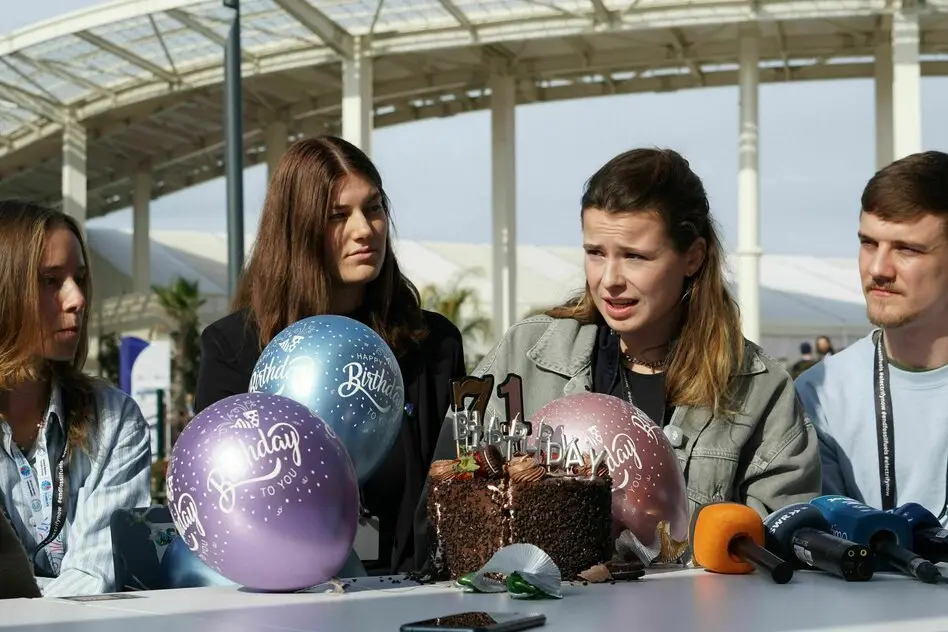
Friedrich Merz should have received the piece of cake that is on the table in front of Luisa Neubauer. “It’s a shame, chocolate,” says the climate activist – because Merz isn’t there to pick up his piece.
Ten other climate activists are sitting with Neubauer on the congress grounds in Antalya, Turkey, where states and associations have been meeting for the 31st time since Monday for the World Climate Conference (COP31). Chancellor Friedrich Merz (CDU) had announced a few days earlier that he would not be traveling to Antalya: he had to chair the cabinet meeting in Berlin - and wanted to go to an Italian restaurant with his wife and daughter on Wednesday, his 71st birthday.
In protest, the climate activists wish Merz “Happy Birthday without a Happy Future” from a distance. They would also like to be able to celebrate their 71st birthdays at some point, “in stable planetary conditions,” says Neubauer. The Chancellor disappointed the entire global community with his decision not to appear at the UN climate conference.
From November 9th, governments from all over the world will meet to negotiate the climate crisis and climate protection - and about who pays. The taz reports from on site.
Merz had already received the fossil of the day on Tuesday evening - a shameful prize from the Climate Action Network. The heads of government from France, the Netherlands, Italy, Denmark, Sweden, Ireland, Canada and Japan also received it. They are all skipping the world climate conference.
A new study by the environmental organizations Germanwatch and NewClimate Institute also shows that Germany is currently not one of the countries that can boast of an ambitious climate policy. In the annual climate protection index, the Federal Republic slipped for the third year in a row and is now in 25th place. The organizations rate the federal government's climate policy as "moderate" and even as "weak" at the national level.
The slump is “primarily the result of Economics Minister Katherina Reiche’s policies,” says Jan Burck, climate expert at Germanwatch. Rich was hindering the expansion of renewables and wanted to use more natural gas instead.
As in previous years, places 1 to 3 in the country ranking remain vacant because, according to the index authors, none of the countries examined are doing enough to achieve the goals set out in the Paris Climate Agreement. The quasi-frontrunners from fourth place are Denmark, Lithuania and Luxembourg. The biggest climber is Hungary. The new government under Péter Magyar overturned ex-Prime Minister Viktor Orbán's climate-damaging laws and announced new climate goals. Portugal, Spain and Morocco, in turn, offer stable framework conditions for climate protection that survive even changes in government.
Overall, despite the political pressure that climate policy is exposed to in many parts of the world, there are opportunities for more climate protection. Renewables, electric cars and less deforestation offer opportunities for rapid change. Even oil and gas states such as Saudi Arabia and Uzbekistan have expanded renewable energies. “Governments must act now to turn this into sustainable emissions reductions,” demanded Niklas Höhne from the NewClimate Institute.