
Germany · taz · · 45m
World trade: EU wants to learn to counter China
Deutsch (original) · Auto-translated to English
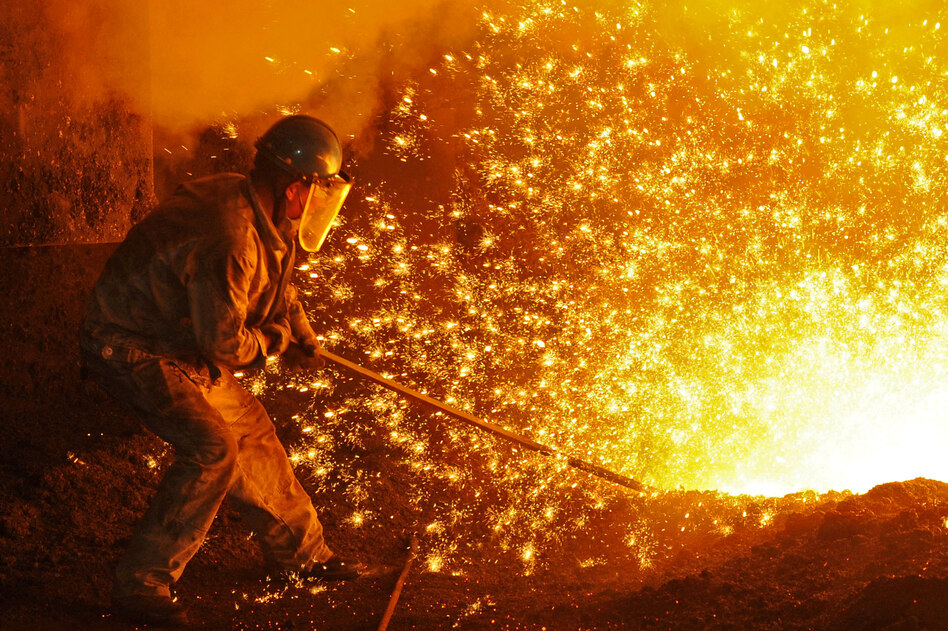
The European Union is losing patience with China. In view of the rapid decline of German and European industry, which is being assessed as “China Shock 2.0” due to trade deficits, the EU Commission is preparing several initiatives to protect Europe. Some ideas are likely to be presented during Commission President Ursula von der Leyen's State of the Union speech in Strasbourg on Wednesday. Von der Leyen must take a stand against unfair practices from Beijing, it is said in Brussels.
Further countermeasures are expected at the end of October, when ongoing negotiations over possible Chinese trade concessions end. Import restrictions on chemicals and plastics are being discussed. The EU could also emulate US President Donald Trump and resort to protective tariffs.
The Industrial Accelerator Act (IAA) is also on the agenda. When the EU law was presented in March, it was still about strengthening the competitiveness of European industry and making production more climate-friendly. Decarbonization should be accelerated – hence the “Accelerator”.
Six months later, it's all about China. “We are suffering from a massive China shock,” says the head of the Internal Market Committee in the European Parliament, Anna Cavazzini. China is giving the EU unfair competition, says the Green politician, who is significantly involved in the negotiations.
High subsidies for Chinese industry and an undervalued currency would have definitely damaged European competitiveness more than the controversial EU climate laws, believes Cavazzini. With the IAA, Europe must take countermeasures and specifically promote certain sectors with a “Made in EUrope” quota.
This should not only include the steel industry, aluminum and cement, but also battery and plastic production. In addition, the proportion of CO2-free production methods should be increased in order to create new, climate-friendly, “green” lead markets in Europe. Because they shouldn't be left to China, says Cavazzini.
At the same time, Parliament wants to tighten the conditions for Chinese investments. In this way, “cherry picking” can be prevented and battery production in the EU can be protected, says Cavazzini. The discussions in parliament should be completed by December so that the law can come into force in the new year.
Is the EU now moving towards a trade war with China? The Green MP rejects this, saying it is only about fairness in trade. But other EU politicians no longer want to rule this out. In France in particular, calls for protectionist measures are becoming louder and louder. But Germany also seems to be rethinking.
The European trade deficit with China is “highly political,” admitted EU Trade Commissioner Maroš Šefčovič. If there are no concrete solutions with Beijing to reduce Chinese export pressure by October, Brussels will have to take “tougher measures”.
Šefčovič did not want to reveal what these could be. But his boss von der Leyen's speech could show where the journey is headed.
But Šefčovič received a return carriage from Beijing just a few hours later. The EU should “refrain from slipping further into the quagmire of protectionism,” said a spokesman for the Chinese Ministry of Commerce: “Protectionism leads nowhere: cooperation for mutual benefit is the right path.”
The fact that the Chinese government of all people is warning against protectionism is not without a certain irony. After all, head of state Xi Jinping has been working systematically since at least 2015 to make the domestic economy as self-sufficient as possible, while making foreign countries dependent on their own supply chains in key sectors. The plan has worked in many areas - especially in the processing of rare earths, over which China still has a de facto monopoly.
Beijing has already exploited this dominance several times: When US President Donald Trump massively increased punitive tariffs on Chinese products in the spring of 2025, the People's Republic immediately introduced export controls on rare earths - including for European companies. Since then, they have always had to apply for licenses before they can purchase raw materials from China.
At the IAA, too, the question is not whether Beijing will respond with countermeasures - but rather how strong they will be. “But the answer cannot be that we allow ourselves to be influenced or deterred from our plans,” says MEP Cavazzini.
However, Beijing's intimidation tactics have worked comparatively well in the past. German carmakers have repeatedly lobbied against EU countervailing tariffs for fear of Chinese retaliation before changing their position in recent months.
And among all European governments, Germany stood out for years of putting on the brakes when the EU wanted to take measures against China's unfair competition. However, a major rethink has now taken place, says Cavazzini: "It's not the case that everyone likes the proposal. But a large, important part of the business community is definitely in favor of tougher measures."
And Brussels also has a few aces up its sleeve for future negotiations with Beijing. The dependencies in the European-Chinese relationship are by no means one-sided. China's economy has been struggling with significant internal problems for at least two years: high youth unemployment, ongoing real estate crisis, extremely weak consumption. This makes China's booming exports the most important growth engine - and a vital anchor for the economy. And the EU is still the second most important sales market for the Middle Kingdom after the Southeast Asian Asean states.
Read the full story at the source
Source: taz