
Politics taz
Election in Israel: “We cannot waste a single vote”
Many Israelis living abroad are returning home to vote. Nathan from Berlin does the same: a left-wing exception in an ultra-conservative family. more...
Deutsch (original) ·Auto-translated to English
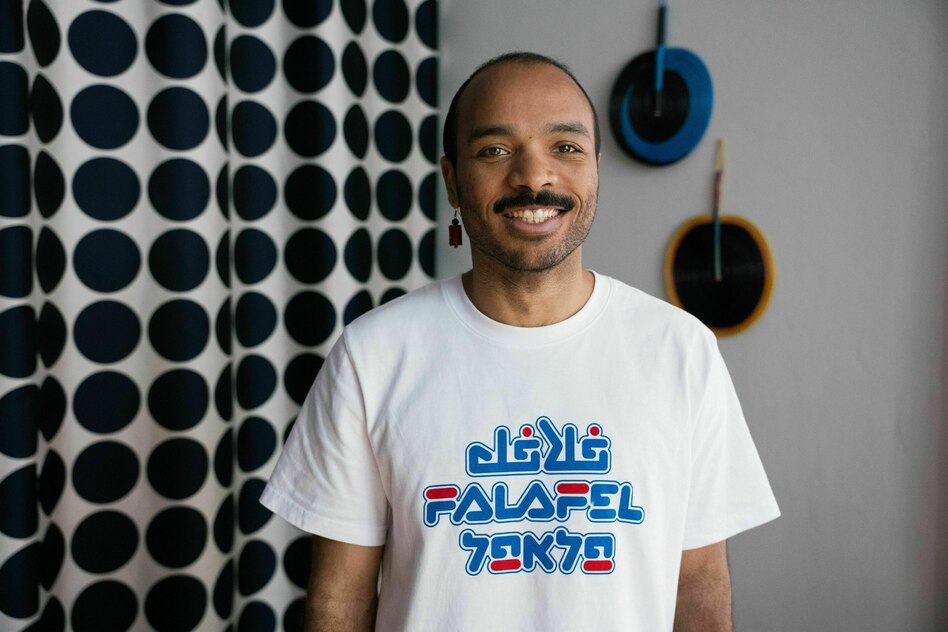
“Love is stronger than ideology,” says Nathan Dawidowicz. Nathan has just seen his own mother in Jerusalem for the first time in seven years. Nathan traveled to Israel for the upcoming general election. The last time Nathan voted in Israel was 17 years ago, when he was 18. Since the last visit in 2019, not only has the attack on October 7, 2023 happened, which has further deepened the political rifts in the country. A political dispute had also escalated within his own family, which led to radio silence for several years.
“As soon as I was on the plane, I noticed how many secular Israelis appear to be coming to the country to vote in order to support the opposition,” says Nathan about the outbound flight. Every seat was occupied. When the mother picks Nathan up at the airport, she says that three planes from different airlines from Berlin had just landed at the same time. The Israeli diaspora is coming to use their voice.
A vote for or against current Prime Minister Benjamin Netanyahu and his government – that is the decision on which Israel appears to be divided, says Nathan. “It’s not about a split between left and right at all, it’s about for or against the current government.”
This divide also runs through Nathan's own family. His mother is an ultra-Orthodox Jew and raised Nathan in the ultra-conservative Chabad movement since moving from Milan to Jerusalem at the age of six. Nathan has now lived in Berlin for ten years, is non-binary and uses the English pronouns they/them.
"My mother agrees with things that I find appalling. She's Ashkenazi Jewish, I'm black, and the people she votes for are actively fomenting racism against people of my color in Israel," says Nathan, 35. Nathan had to learn to live with this contradiction in order to be able to reestablish contact with her after his father's death a few years ago.
Election posters line the streets in central Jerusalem. Nathan finds the election campaign to be more aggressive than before. The Netanyahu camp is fighting hard and is setting the tone so that the opposition is constantly on the defensive. On a public city bus, Nathan reads a Bible verse as a campaign slogan that translates to: “If someone comes to kill you, kill him first.”
“I have never seen such aggressiveness in public spaces before,” says Nathan. There have been anti-Arab hate slogans before, but mostly on the outer fringes. “Not so visible in public spaces,” says Nathan. “I don’t think we can afford to waste a single vote.” On Tuesday, Nathan plans to vote for Yair Golan's Democratic Party.
For Nathan, the Jewish and Palestinian questions are inseparable, and this is also what determines the election decision: "It is important to me that the first steps towards a peaceful solution with the Palestinians are taken. There will probably not be a separate Palestinian state or reconciliation in the next legislative period, I don't believe that in such a short time. But there must be enough forces in the future government to pave the way to a just peace want to level.”
The hostility between the various groups in Israel is now immense. A split of the country into separate communities for Orthodox and secular people would be “heartbroken” for Nathan.
The Democratic Party is anything but perfect, but Nathan has been observing its development for years and sees people there who really want to change something and think long-term. “It is particularly important to me that the Democrats would also be open to working with Arab parties in a potential government constellation.” The party also unites Jewish and Arab, religious and secular people on a social democratic basis. Nathan wants Israeli society to come together again: “The more united we are, the easier peace becomes possible.”
In August 2026, Nathan told the taz about his experiences with anti-Semitism in Berlin. It was already clear back then that Nathan would travel to Israel for the upcoming election. When planning the trip, Nathan also considered the question of whether Israel could be a safe “refuge” in case of doubt: “Which do I prefer – physical danger in Israel due to constant military escalation in the region or the psychological stress caused by anti-Semitism in Berlin?”
After the Berlin election, Nathan criticized the fact that part of the voters were apparently prepared to ignore the security concerns of Jews in favor of the vague promise of low rents in view of recurring anti-Semitic attacks within the Left Party. Nathan is also worried about the political polarization in Germany. There is an oppressive feeling of being caught between two populist waves - from the right with the AfD and from the left with the Left. “I therefore wonder whether the current wave of anti-Semitism is not just beginning.”
For Nathan, whether a move to Israel could offer protection in an emergency also depends on the local political future: “Another term in office for Netanyahu could lead Israel to moral bankruptcy, a further dismantling of democracy and a civil war.” In the long term, the country cannot survive in its geopolitical situation if it is internationally isolated and only partially democratic.
In the Old City of Jerusalem, Nathan feels as if the atmosphere is about to boil over. Monks walk through the streets, groups of Catholic tourists from Italy push past each other, “someone is always trying to sell you something.”
“I had forgotten what it was like to see all these people as real people with real stories,” Nathan says. In recent years, Nathan has had a lot of contact with people abroad who only talk about Israel and its society in abstract terms. Here they suddenly stand before Nathan in the flesh and in all their diversity.
“I now understand better where certain attitudes come from, including my mother’s – even if I don’t support her indefensible views,” says Nathan. Nathan can recognize the trauma behind some of these feelings and feels more compassion as a result. At the same time, it is not easy coming from Berlin to suddenly be surrounded by so much nationalism and ultranationalist imagery. “It’s a bit of a culture shock that I can’t get used to straight away.”
Nathan looks at the election with hope, but also disillusionment. And fears that there will be several rounds of elections, like there was between 2019 and 2022: elections had to be held four times because the coalition negotiations repeatedly failed. “Unfortunately, this will wear people down at some point.”
Nathan would also not be satisfied with a government that would simply come into being without Benjamin Netanyahu. But one concern is currently at the forefront for Nathan: the violence perpetrated by radical settlers in the West Bank. Nathan believes that a government without Netanyahu would take more decisive action against “settler terror”. In an election campaign that, on the one hand, makes the division in Israeli society clear and, on the other hand, further promotes it, that would already be progress for Nathan.