
Politics taz
Election of the DOSB leadership: Not my president
The German Olympic Sports Confederation is looking for a new president. Hardly anyone cares about that. The election has nothing to do with democracy anyway. more...
Deutsch (original) ·Auto-translated to English
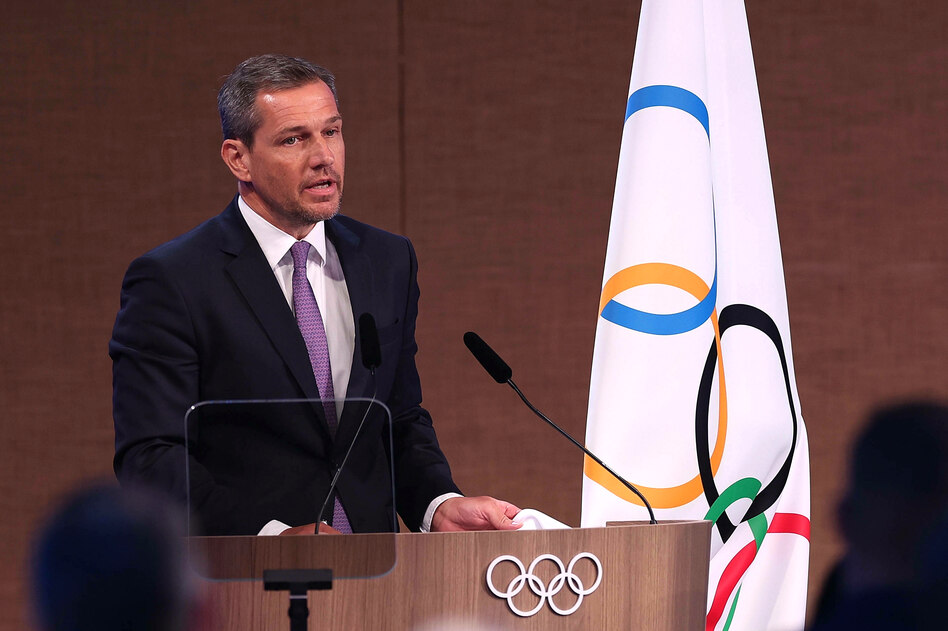
The German Olympic Sports Confederation (DOSB) has around 29 million members. That's a lot, a lot. For example, 5.43 million people are organized under the umbrella of the German Federation of Trade Unions. There are 17.4 million members of the Evangelical Church and 19.22 million members of the Catholic Church. And the ADAC gathers 22.7 million. So sport is the greatest thing ever.
There is currently an election campaign to determine who should be president of this DOSB organization, which is so important for the Federal Republic. There are even said to be people who are persecuting him. Michael Mronz, who wants to become president, says: “This is democracy.” Martin Engelhardt, who would also like it, says: “That’s part of a democracy.”
Interesting. Because you don't tend to think of the word democracy when it comes to sports officials. Elections will take place at the beginning of December by a committee called the DOSB general meeting. But there is no evidence to support the assumption that these were delegated by the 29 million members. “Personal members” are also entitled to vote, which of course includes the German IOC members, including Thomas Bach and Michael Mronz, who is standing for election.
One, Bach, brought the other, Mronz, into the IOC, because that selects its members. This is how such an association works. The DOSB is holding this election in December, which “will offer a good example,” as competitor Engelhardt puts it, “that decisions are made openly and democratically in German sport.”
That is also interesting. When the Nazi regime was defeated in 1945, it was clear to the Allies that sports associations also had to be banned. Quite a few of their leaders were convicted. Viktor Brack, for example, was a member of the cycling association and was executed in 1948 as an accomplice of Nazi euthanasia. The Alpine Club was led by Arthur Seyß-Inquart - who was executed in 1946, among other things, as Nazi governor for the Netherlands.
It was the structures of the supposedly apolitical association sport that brought such types to the top. When the professional associations were re-established at the end of the 1940s, it took the influence of the Allies to ensure that there was also another pillar in German sport, the state sports associations, which, based on the tradition of workers' sports that were destroyed by the Nazis, were supposed to ensure a bit of democracy.
Not least to avoid this, the National Olympic Committee was formed in 1949. The first president was Duke Adolf Friedrich of Mecklenburg, the last governor of the German colony of Togo. He gave up his place in 1951 for Karl Ritter von Halt when he was released from Soviet custody. Halt was the last Nazi Reich sports leader appointed by Adolf Hitler. It was the old, oh-so-apolitical staff.
The excursion into sports history ends here. It was about structures and was intended to show two things: Firstly, that the lessons that the Allies learned after 1945 were aimed at democratizing sport in order to make it truly social and humane. And on the other hand, that and why the all-important idea that sport must be organized democratically - namely to enforce legitimate interests - has been successfully thwarted.
Perhaps this gives some idea why this election campaign for the office of president of a 30 million member association seems so strangely uninteresting. And the use of the word democracy here is so foreign.