
Politics · taz · · 1h
Before voting in Mecklenburg-Western Pomerania: Where the others go on vacation
Deutsch (original) · Auto-translated to English
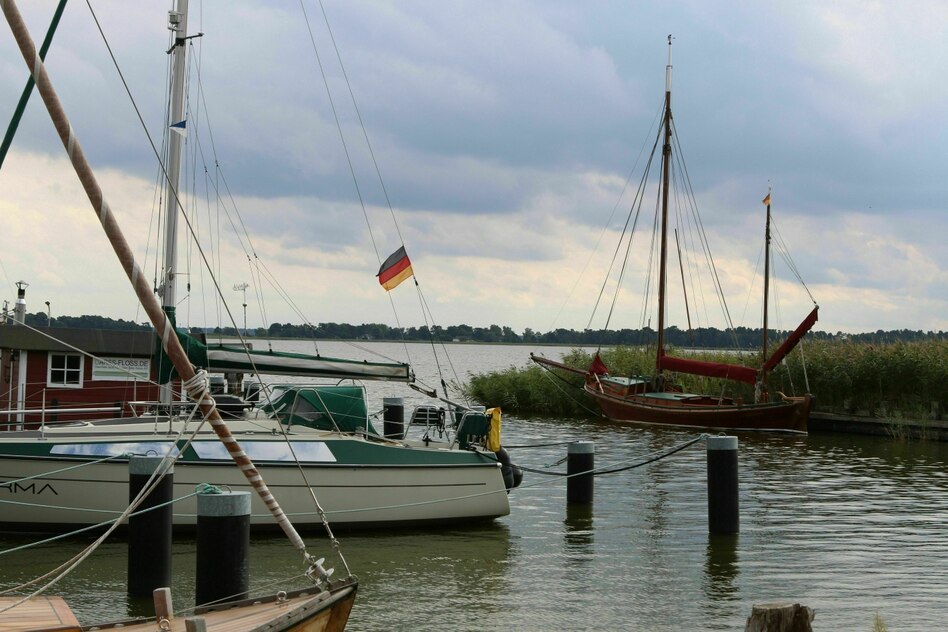
Shortly before the end of the season at the beginning of September, but business in Haferland is still booming. In the early afternoon, the terrace of the eco-restaurant and hotel is filled with overnight guests and cyclists. Located directly on the Baltic Sea, the small fishing village of Wieck on the Fischland-Darß-Zingst peninsula is very popular with tourists.
Drishdy Drishdy stands at the entrance to the restaurant kitchen and listens carefully to an employee who is explaining to her how to use the coffee machine. It is her first day of training as a hotel manager. With her friendly smile, tightly tied back hair and a beige Haferland apron, the 22-year-old makes a confident impression. “Just Drishdy,” the young woman introduces herself. In northern India, where she comes from, it is customary for women to leave their last name blank in their passport until they get married. That's why she's called Drishdy Drishdy.
Drishdy dropped out of her psychology studies to pursue training in Germany. “There are simply no jobs in India, even if you have a degree,” she says, adding that she prefers practical work to studying anyway.
Drishdy is one of around 2,400 young people from so-called third countries who are doing training in Mecklenburg-Western Pomerania. In order to counteract the increasing shortage of skilled workers and workers, companies are specifically relying on trainees from countries outside the EU: Vietnam, India, Indonesia. Migrant trainees have become an integral part of the tourism industry in particular.
In Haferland, too, trainees from third countries are now an integral part of the workforce. A total of 40 employees work in the hotel, including five trainees from third countries: three Indians and two Vietnamese. It was only in July that an Indonesian woman successfully completed her training.
“Otherwise I wouldn’t be able to find 40 employees in Fischland-Darß-Zingst who want to work here,” says Malte Evers. The managing director of Haferland sits at a meticulously set table on the first floor of the thatched-roof hotel. “They don’t exist here and nobody else can find them either.” Skilled workers are not that easy on the peninsula, which mainly consists of beaches, forests and tourist-oriented villages. There is hardly a restaurant or hotel here that does not have vacancies. Many operators are forced to limit their opening hours or give up entirely, says Evers. In the last few years alone, four restaurants in Wieck have closed. “They were fed up,” says Evers.
Evers, 45 years old, took over the hotel from his parents, who moved from Heidelberg to the Darß in the early 1990s and built the hotel. He is wearing a shirt from the sea rescue initiative Seapunks, which shows a cruiser smashing a swastika. In an interview with the taz, he is self-critical. “The skilled workers problem in the catering industry is home-made,” says Evers. “In the industry, we have treated trainees like shit for years.” Working when everyone else is off, measly wages that mean employees can't afford an apartment on the peninsula, where there are now thousands of holiday apartments but no affordable housing.
This text first appeared in wochentaz, our weekly newspaper from the left!
Every week, wochentaz is about the world as it is – and as it could be. A left-wing weekly newspaper with a voice, attitude and the special taz view of the world. New every Saturday at the kiosk and of course by subscription.
The hotelier reports that he was just able to recruit two Polish chefs for the season, but unfortunately only through a temporary employment agency. “I would ideally like to hire three or four more people.” In contrast to the lack of trained specialist staff, hotels are almost flooded with applications from third-country nationals who want to do training. “I can’t even manage to read through all the applications,” says Evers.
Almost 10 percent of trainees in Mecklenburg-Western Pomerania are now from third countries, and the trend is rising. The state government supports companies with up to 8,000 euros per trainee. There is also funding for preparatory language courses.
Evers has only had good experiences with the trainees so far. “These are highly motivated people,” says the hotelier. Many people would have put everything on one card by leaving for Germany. Placement agencies would charge a lot of money in the home countries, an investment that should pay off for the family in the home countries.
Drishdy also came to Germany through an agency. But the oat country wasn't their first stop. She paid several thousand euros and was promised training. But instead she ended up with an au pair family in Bavaria. “My experience with the family was not very good,” says Drishdy, still with a smile, “they forced me to work eleven hours instead of six as stipulated in the contract.” Drishdy received 300 euros a month in pocket money for his work. The family, she says, threatened that she would have to return to India if she stopped working as an au pair. “I was naive,” says Drishdy.
It was only after six months that she managed to switch to the federal voluntary service in a nursing facility. There was only pocket money there, but she was able to stay, improve her German and have time to apply for training. “I called everywhere and asked,” she says, and it finally worked out at Haferland.
Drishdy's story shows how helpless third-country nationals are at the mercy of exploitation. Your visa is tied to your employment. If they don't complete the training, they have to return to their old home.
“We view the recruitment critically because there are hardly any protection mechanisms,” says Sabine Ziesemer from the Mecklenburg-Western Pomerania Refugee Council. She reports on the particularly blatant case of a Vietnamese woman who was exploited by several restaurants. “According to her descriptions, she had to work between 16 and 18 hours.” Ziesemer calls for effective protective mechanisms to be installed. “If you recruit people abroad, it should be done under fair conditions.”
Ziesemer also finds it incomprehensible why more is not being done to qualify refugees for the job and training market. In fact, the number of refugee trainees is small compared to third-country nationals. “Most people who flee want to work.” But foreign qualifications are often not recognized, and there are also hurdles in the labor market. Asylum seekers often have to apply for an employment permit from the immigration authorities before they can work.
But Ziesemer warns against judging migrants only based on their usefulness in the labor market and not seeing their needs as people. “It’s about much more than work, it’s about social participation.”
Despite the economic importance of migrant workers, the AfD is by far the strongest force on the Fischland-Darß-Zingst peninsula. It won 33 percent in the 2025 federal elections. On the peninsula, the party is now advertising the state elections on September 20th in Mecklenburg-Western Pomerania with “deportation” posters.
Hotelier Malte Evers doubts that the region will continue to be attractive to young people from abroad in the future if the AfD's racism becomes more and more open. "It's so stupid. The entire care system would collapse. The catering industry has no chance." Many guests are now avoiding the holiday region due to right-wing hegemony. “Racism is a huge damage to the region’s image,” says Evers.
Read the full story at the source
Source: taz