
Germany taz
Birds in the city: When glass facades mean death
The World Conservation Summit in Yerevan also deals with the city as a living space. Simple measures can make it safer for birds. more...
Deutsch (original) ·Auto-translated to English
The city as a living space is also on the agenda of the UN Nature Conservation Summit in Yerevan. The implementation work of the UN Convention on Biodiversity lists as “Goal 12” the expansion of green spaces and the improvement of urban planning with a view to human well-being and biodiversity. These can be measures as part of a “sponge city concept” in which areas are unsealed and water reservoirs are created, or projects for green roofs and facades.
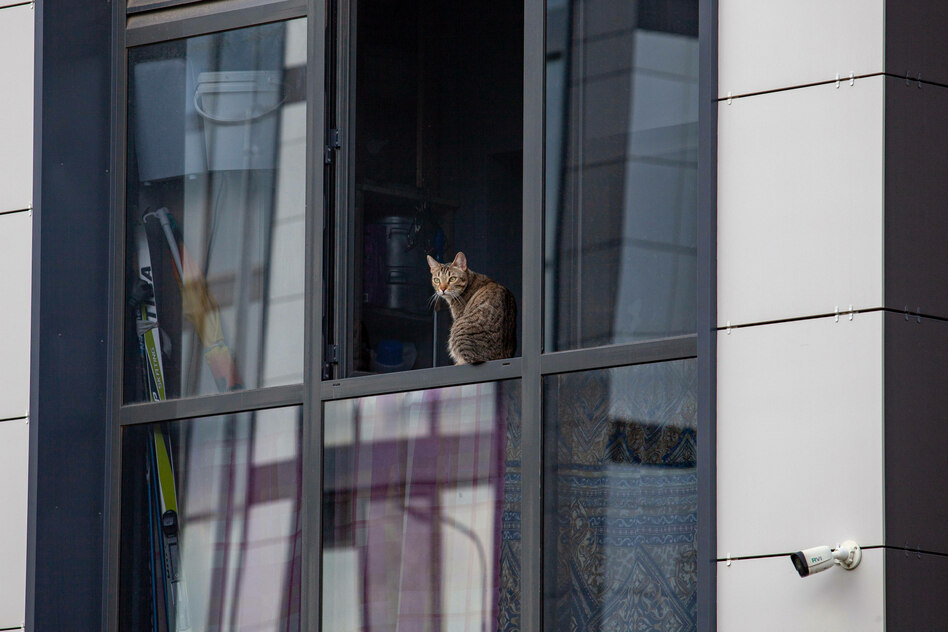
“A very simple contribution to protecting biodiversity is to make glass facades bird-safe,” says Marten Winter, wildlife ecologist at the German Center for Integrative Biodiversity Research (Idiv) in Leipzig. Birds do not perceive glass panes as an obstacle. Large windows, corner glazing, bus stops or winter gardens are particularly dangerous. The birds see the reflected sky, trees or bushes in them. If they do not die immediately after a collision, they are weakened and become easier prey for cats or dogs, or they suffer internal bleeding. “Even if birds survive the collision, many die as a result a little later,” says Winter.
The state working group of bird protection centers has estimated that between 100 million and 115 million birds have accidents on glass windows and facades in Germany every year. Determining the exact number is difficult because no one systematically collects and counts the injured or dead birds. “Recent studies from Berlin indicate that only a small proportion of victims are actually found,” says a report from the working group.
In addition, the bird protectors only included residential and office buildings for their calculations. “Structures such as glazed bus shelters, noise barriers, glazed enclosures and so on are widespread in residential areas,” their report says. However, since there is no statistical information on these and only limited data on bird strikes, they are not recorded. The working group therefore assumes that millions of birds die from glass panes every year in this country.
According to the app iNaturalist, in which interested parties can document nature observations, coal tits, blackbirds and song thrushes die most often from discs, followed by wood pigeons, great tits and blackcaps. The last places are occupied by sparrowhawks, pied flycatchers and siskins. They are all affected by “bird strikes”. “In addition to free-roaming cats, glass panes are the biggest driver of the death of many millions of birds,” says Winter. That doesn't have to be the case, because measures that could prevent bird suffering are known and not that expensive if they are planned directly into new buildings and renovations.
“Windows with even a thin dot or stripe pattern make sense,” says Winter. The pattern must be applied to the entire pane. Existing windows could easily be retrofitted, for example with a weatherproof white marker or sticker. “The familiar stickers of birds of prey on windows don’t work,” says Winter, “they aren’t even recognized by the other birds.”
Together with the Nabu nature conservation association, Idiv is trying to improve the database on bird strikes in Germany. The goal is a Germany-wide hotspot map. “If you consider that both feral cats and dangerous letters are easy to manage, it is crazy that decision-makers are not taking action there,” says wildlife expert Winter.