
Germany · taz · · 3h
Insurance in a family business: A very personal business
Deutsch (original) · Auto-translated to English
R heinbach is a town in the Rhineland with 27,000 inhabitants, 16 kilometers from Bonn. Rheinbach is known in the area for its leisure pool, there is a university, a Bundeswehr barracks, a prison, and several architectural monuments from the Middle Ages and Roman times.
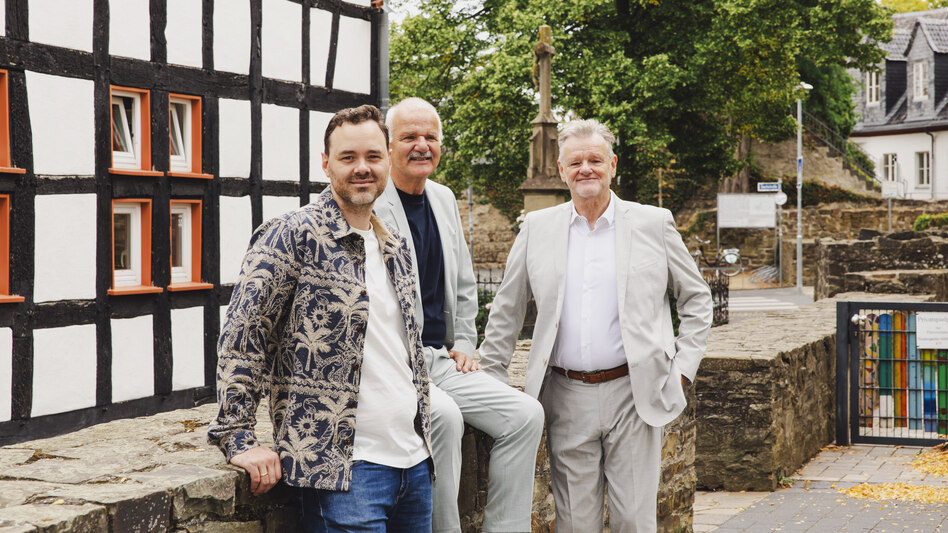
When Timo, Georg and Günter Grohs walk through the city, they are often greeted. And they also know many of the approximately 27,000 residents - and they know many personal details about them. However, they don't let this be seen. Discretion is part of their job - they are agents for the oldest insurance agency in the city.
Matters are usually not settled on the street, but in the office. However, that doesn't mean that the Grohsens can simply give up their jobs after work. "I play tennis, I'm in the theater, I sing in the choir. These are things that I do privately, but they lead to someone becoming more famous," says Günter Grohs, the oldest in the group at 71.
Strengthening contacts is at least as important as networking. “You have great relationships with your customers, they trust you.” Georg (65), his brother, and Timo (37), his son, nod in agreement. Their relationship cannot be overlooked; all three are tall and look at the other person with a friendly look.
However, their prominence also means that you can't make any faux pas. A Grohs isn't allowed to misbehave, says Georg Grohs, he learned that early on: "I was 16, my buddies, they liked to have a beer and sometimes bawled around in the village in the evenings. And I say: Oh God, be quiet, they're insured with us!"
Per capita In a European comparison, Germany is in the middle field. In 2023, the most recent recorded, per capita spending of $2,910 was behind Switzerland (6,830), Ireland (5,672), the Netherlands (5,216), Great Britain (4,759), Luxembourg (4,644) and France (3,867). Over the years, the sums insured increased in most countries, including Germany (1980: 514 dollars per capita).
Policies According to a survey by the market research company Civey, which was commissioned by the Dutch financial platform Adyen in 2025 and published in the insurance magazine Insurance Bote, men are more willing to take out insurance than women: 23.8 percent have taken out more than 7 policies, and for women the figure is 13.6 percent. Almost half of those surveyed had 5 or more policies. Many were unable to state how much they actually paid.
At that time the business was still in the hands of his father, Ferdinand Grohs. “Everyone here knew him,” says Günter Grohs. A picture of Ferdinand, who was probably active in the city's carnival and shooting club for more than just private reasons, sits on a shelf. Next to it is the picture of his wife Barbara, who also sat in the “office” “until she was 91.”
The beginnings of the family business go back to 1949. At that time, Rheinbach, including the associated villages, had around 10,000 inhabitants. After returning late from the war, Ferdinand Grohs ran a wood business with his wife. Not only did that mean heavy hauling, they also had to move around a lot. An insurance director discovered the potential and spoke to the wood dealer: You're good at talking. Don't you want to sell insurance on the side?
This text first appeared in wochentaz, our weekly newspaper from the left!
Every week, wochentaz is about the world as it is – and as it could be. A left-wing weekly newspaper with a voice, attitude and the special taz view of the world. New every Saturday at the kiosk and of course by subscription.
Ferdinand Grohs wanted to, and it soon became clear that in post-war Germany there was a lot more money to be made with insurance than with wood, says Günter Grohs: "He drove to the farmers, outside where the cattle were. He said: 'Look up, young, you just have to sign. I'll do the rest.'" Günter Grohs laughs. “They signed it blankly.”
That wasn't to their disadvantage, says Günter Grohs. "My father was a fundamentally honest person. If anyone had taken even a penny too much from them, they would have chopped off their hand."
Nevertheless, Ferdinand Grohs undoubtedly has business acumen: although he has signed up exclusively for one insurance company, he still has his wife, whom he can place with two other insurance companies in order to expand the product range. As the business grew, the family grew; four children were born in the 50s and 60s. A house is being built with an office on the ground floor and two additions are being made.
Groh's insurance agency not only shares the year it was founded with the Federal Republic, its success is exemplary for the old Federal Republic of Germany. With the economic miracle in the 1950s, the insurance business also boomed. Every newly purchased car and every newly founded business must be insured. Just like everywhere else in the Federal Republic of Germany, there is a lot of building going on in Rheinbach. The Grohsens are also arranging building savings contracts and offering attractive interest rates.
And it's not just the income of the people of Rheinbach that is growing, but also the town itself. The agricultural community, which only became a "glass town" after the war thanks to the immigration of glass refiners from the Sudetenland, is increasingly becoming a town for civil servants. Thanks to the connection to the motorway network in 1973, commuting to the federal capital Bonn only takes around 30 minutes.
Prosperity will continue to increase in the next decades. And those who own more also have more to lose, so they have more to protect. Personal insurance is also becoming increasingly attractive, such as life insurance, so that the family can manage financially even after the sole breadwinner dies.
"We always insured the woman too. She takes care of the house and the children and everything," says Günter Grohs. “And what if the woman lies down and can’t take it anymore?” A worrying idea that apparently convinced the customers - and brought the Grohsens two deals.
During sales discussions, current insurance cases from the city or from one's own family were sometimes described, says Georg Grohs. For example, the fire that two children caused in Grohs' kitchen served as an anecdote for household goods and the building. He laughs: He himself was one of the arsonists. And he still remembers his father's sales saying: "The window rattles, Mariechen giggles, hopefully it's insured with Grohs."
But it's not just the sales that make the Grohs insurance agency shine, the loss ratios are also good. The insurance companies were satisfied, which gave the Grohsens numerous bonuses, including many trips - this type of award was common until the 1990s.
However, Ferdinand Grohs doesn't allow himself much free time; he works tirelessly, following a strictly regulated daily routine. “It was like the Bundeswehr,” remembers Günter Grohs. Mother Barbara does the paperwork, and the rest of the family has to do it too. “Today it’s called child labor,” says Georg Grohs. He still remembers how, as a 14-year-old, he rode his moped into the villages to collect cash.
“When I started there was no moped, I was driven there,” adds the brother, who is 6 years older than me. "Fritzdorf, that's where the father came from, 80 percent was insured with us. The parents said: When you're finished, go to Aunt Mathilde and call, then we'll pick you up again." Günter Grohs not only had articles in his luggage, but also notes, for example about newborn children, which had to be added to the contract.
Whether the brothers would have preferred to spend their Saturdays differently was not even up for debate. “Our father was a patriarch,” says Georg Grohs. “You couldn’t argue with him.” His brother Günter shrugs his shoulders, he liked the customer visits. "'It's nice that you came,' said the customers. 'Come sit down, do you want a piece of cake?'" he says. "People just had time. There wasn't any rush, it was really nice to chat with them."
Today, everyday working life has become more crowded. In particular, the paperwork has increased immensely, reports Georg Grohs: "I used to take out direct insurance, i.e. a company pension insurance, which was a double sheet, an additional sheet. Today I have to print out 146 pages."
Although the customers have remained within a radius of 25 kilometers, visits there only take place in the event of damage or for complex consultations. Otherwise, customers come to the “Bürro”, a new building from the 1990s on the city's central square. Despite the increased workload, chatting is still an integral part of business: "If we sit here for 1.5 hours, then we have chatted for 10 minutes about insurance. And the rest about the family, the children, politics, about the job..."
Günter Grohs nods. "We have a customer here who always comes on Christmas Eve. Just before twelve o'clock, when he wants to close, he sticks his head in the door and asks: 'What's new in town?'" The Grohsens laugh. “If he feels that you are there for him, then he will stay,” says Timo Grohs. And if you do it particularly well, you'll get more customers, "because word gets around like that."
His grandfather used to do it that way. Ferdinand even made people's tax returns and thus stood up to the competition. “That makes the difference,” he says. “Many families who were looked after by him are still with us today.”
When Ferdinand Grohs suddenly died in 1982 at the age of 56 and the business was passed on to the next generation overnight, Günter Grohs, then 27, was gripped by fear: “Our father was the Lord God, we were given some pretty big shoes to fill.” But they did it: “We didn’t lose one percent of customers, no, we always made a profit.” They haven't made any acquisitions to this day, Brother Georg proudly adds:
However, none of this means that you can sit back and relax. In addition to the Ahr Valley, areas in North Rhine-Westphalia were also severely affected by the 2021 flood, including the Voreifel, where Rheinbach is located. She and her employees worked around the clock in the weeks after the flood to assess the damage and help repair it. An enormous feat of strength, also because of the severity of the damage. “It drags you down to the ground,” says Georg Grohs.
But it also brought positive things: “For me personally, it was this feeling that now you can really show what you’re made of and how we’re working our butts off here.” Three of the experts who were sent to Rheinbach by the insurance companies lived with their mobile homes on Günter Grohs' property.
The Grohs advanced a five-figure sum to purchase construction dryers from Poland and, if necessary, drove the devices to customers. Some cases dragged on for months: “The companies don't keep up, you don't get any craftsmen, you don't get any reports, the customers keep complaining,” says Georg Grohs. Some cases were only recently concluded, five years later.
This time was so stressful for Günter Grohs that he decided to retire two years ago. Since then he has only given advice sporadically, on the basis of a mini-job. He says he can finally sleep peacefully again. He often wakes up at night, especially during times of stress. For example because he forgot to take out a policy with the company to cover him. “If something happens now, it will be your fault!” was what went through his head.
Of course, there are also conflicts with customers, and they cannot always be resolved, the Grohs admit. In the case of a flood victim, they were even sued because of allegedly bad advice. “This is very disappointing,” says Georg Grohs. "We would have helped. Just as we helped others who were uninsured with their applications for state flood aid." His son nods. Although the legal dispute was won, it left its mark: “We are now getting a sign that no elementary insurance is desired.”
The current statistics show a significant increase for the German insurance market. What do the Grohs say as insurance brokers? Have the people of Rheinbach become more anxious in the face of the many crises? Timo Grohs shakes his head. They recorded the majority of growth in animal insurance; the number of pets has risen sharply since Corona. Overall, the growth is due to the premiums, the average premium per contract has increased exorbitantly, especially in building insurance: For this reason, there are now more customers who are canceling contracts in order to switch to the competition on the Internet.
The number of insurance intermediaries is currently falling significantly compared to the national average, but the Grohsens are not worried about their business. The only problem, they say, is the lack of staff; there is enough work for them. “The people of Rheinbach are doing well,” says Günter Grohs: “We are needed.”
Read the full story at the source
Source: taz