
World · taz · · 3h
Change in Tehran's cityscape: The hijab remains in the closet
Deutsch (original) · Auto-translated to English
A few weeks ago, a commercial made the rounds in Iran that would have been hardly conceivable just a few years ago. A woman, completely veiled, sits in a restaurant. There are two cans on the table in front of her: Coca-Cola and Fanta. She brushes them both aside and then washes her hands.
“This is the religious restaurant ‘Fanous,’” she says into the camera. “We only serve things here that align with our values.”
The appearance caused ridicule on social networks. One user recommends that you should start your own country right away - ideally as far away from Iran as possible. Another asks whether you have to enter the restaurant with your left foot first. An allusion to the Islamic rule that one should enter toilets with the left foot first.
This text first appeared in wochentaz, our weekly newspaper from the left!
Every week, wochentaz is about the world as it is – and as it could be. A left-wing weekly newspaper with a voice, attitude and the special taz view of the world. New every Saturday at the kiosk and of course by subscription.
“Fanous” is not an isolated case. In Iran, more and more restaurants are discovering a new target group: religious, conservative customers who feel increasingly uncomfortable in public spaces. Faced with uncovered women's heads and Western products, they look for places where the desired modesty can be ordered at the same time.
For all other Iranians, this is a symbol of a remarkable shift: “Just a year ago, freedom-loving people had to look for places to retreat because public space was firmly in the grip of religious hardliners,” an Iranian told taz in an encrypted chat. “Now it’s the other way around.”
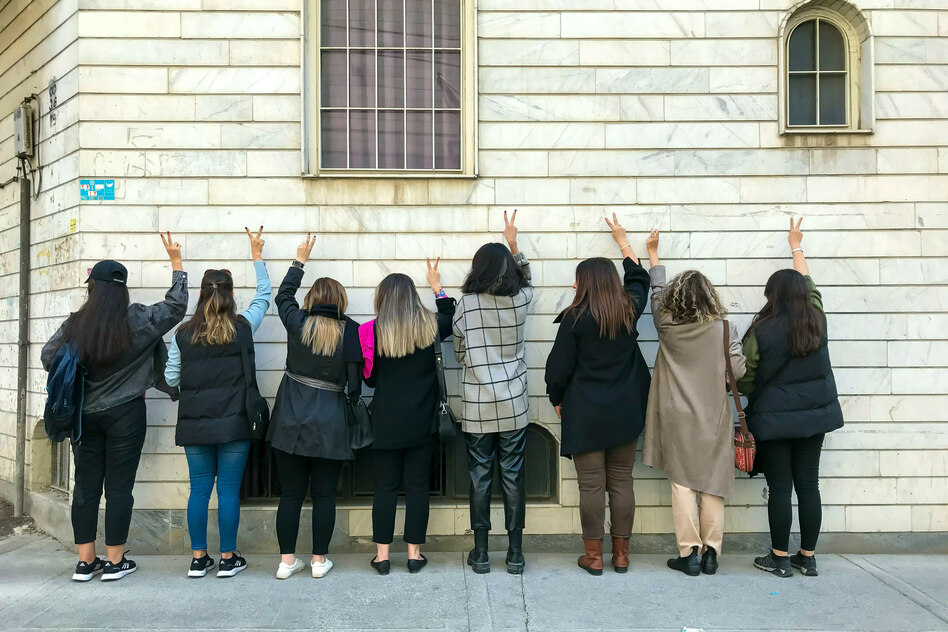
In fact, Iranian streets are almost unrecognizable this summer, with women often leaving the house in jeans and off-the-shoulder tops. The hijab, once a symbol of state control over the female body, is increasingly left in the wardrobe.
This development began with the death of Mahsa Dschina Amini in September 2022. It triggered the nationwide “Woman, Life, Freedom” protests. The Iranian regime reacted with extreme severity at the time. Hundreds of demonstrators were killed and thousands arrested. When the protests subsided in early 2023, the moral police initially returned. But this time the patrols encountered resistance. Women resisted the officers, men intervened. But the decisive change didn't just take place on the streets. It took place in families.
“Many of my friends didn’t wear the veil out of their own conviction,” says Zana Rahimi, a 30-year-old Iranian from the central Iranian city of Yazd. "They wore it out of consideration for religious parents, grandparents or other family members. After Mahsa Amini's death, they began to openly address these issues at home," says Rahimi. She wants to keep her real name secret for security reasons.
The hijab was also suddenly discussed in her office, where she works as an auditor. At first, her boss insisted that the employees dress legally. But Rahimi and a few of her colleagues resisted and continued to remove their headscarves at work. Finally the boss gave in.
In spring 2023, the regime found a more efficient method to enforce the headscarf requirement. With the help of Chinese technology, the rulers set up a comprehensive Islamic surveillance state: women who appeared without a hijab were identified by cameras with facial recognition and received a warning via text message. After the third violation, there was a risk of fines, imprisonment and the confiscation of the car.
For Zana Rahimi, this surveillance also became part of her everyday life; she received two warnings herself. Friends had to appear in court and pay fines. Her favorite café was also temporarily closed. The authorities closed all businesses where customers violated the hijab requirement. At the time, the ultra-conservative MP Ali Yazdikhah named the aim of these measures: “the social exclusion” of disobedient women.
But surveillance also generated resistance. "We warned each other on social media where there were surveillance cameras. I started avoiding such streets. I only went to cafes and restaurants where no one would tell me anything," says Rahimi.
A turning point came with the Israeli air strikes in 2025. The priorities of the mullahs' regime shifted and the hijab moved into the background. The change was less ideological than pragmatic: During the war, the Islamic Republic needed the support of as many Iranians as possible. After the American air strikes in February, women without headscarves could suddenly even be seen in state propaganda videos. In one video, a young, unveiled woman toasts the new Supreme Leader Moschtaba Khamenei with a glass of home-made schnapps.
In March this year, the Financial Times reported that Mossad, Israel's secret service, had penetrated the surveillance cameras used to monitor the population and was able to track the movement patterns of high-ranking officials and military officials. The Israeli military is said to have finally succeeded in killing Iran's head of state Ali Khamenei.
Zana Rahimi suspects that suspicions arose in government circles after the 12-day war that the surveillance cameras could have been infiltrated. The fact is that the Iranian government suddenly stopped using them - this also led to a newfound freedom of clothing.
But the new freedoms are fragile. Dozens of cafes, restaurants and other businesses have had to close since the end of July because of violations of the mask requirement.
Iranian lawmaker Mohammad-Taqi Naqdali explained to CNN the regime's logic behind the renewed closures: "Israel and America cannot destroy us, but this decline in our religious culture will." Observers therefore believe a new wave of Islamist repression is inevitable.
But Zana Rahimi hopes that the ultra-conservatives will retreat to restaurants like “Fanous” forever. But they probably won't do this voluntarily and without further ado.
Read the full story at the source →
Source: taz