
Germany taz
Transport Minister on accessible public transport: “The occasional tariff also saves money for the transport companies”
Deutsch (original) ·Auto-translated to English
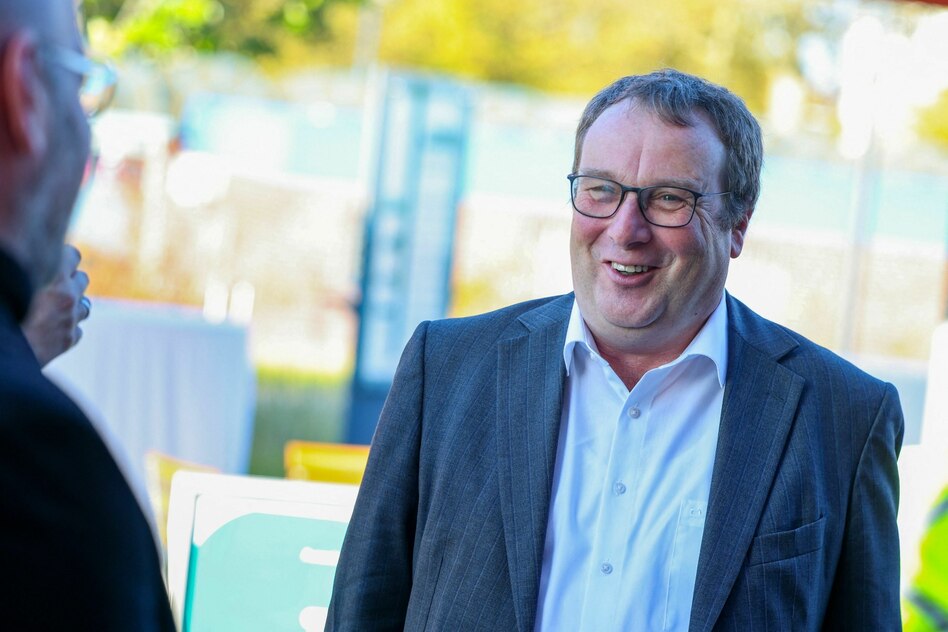
taz: Mr. Krischer, in North Rhine-Westphalia there is a special bus and train ticket for people who rarely use public transport. How does this work?
Oliver Krischer: You have to register once with your cell phone. You can then use it to check in and out at any train station or bus stop in North Rhine-Westphalia. The system recognizes which route you traveled and automatically calculates the price. At most, the cheapest single ticket that you would otherwise have purchased for the route will be charged.
Oliver Krischer (Greens) has been Minister for the Environment, Nature Conservation and Transport in North Rhine-Westphalia since 2022. Before that, he sat in the Bundestag for many years, where he was primarily concerned with transport policy.
taz: Why did you see the need for a new ticket in North Rhine-Westphalia?
Krischer: We had an incredibly complex variety of tariffs, thousands of different tickets. This is daunting for everyone, especially for those who only take the bus or train occasionally. We wanted a system that was as simple as possible and consistent across the country. That makes it fair.
taz: How is this “eezy.nrw” received?
Krischer: Great. In September we had 1.4 million trips. A new record! The Rhine-Ruhr Transport Association now actually only has two products: the Deutschlandticket for frequent travelers and eezy.nrw for those who use public transport perhaps once a week or every two weeks.
taz: You need a smartphone to use it. How do you involve older people, children or poor people who don't have one?
Krischer: It's true: If you don't have a smartphone, you can't use the offer. The ticket is not a coercive measure, but an offer. Most people now have a cell phone. So it can no longer be considered a murderous argument that certain population groups would be excluded here.
taz: Your colleagues from the other federal states are not convinced; they have just removed the issue of occasional tickets from the agenda of the transport ministers' conference. Why?
taz: The costs for users of eezy.nrw are capped and always remain below those of the Deutschlandticket. Are you making the Deutschlandticket superfluous?
Krischer: No. We introduced the cap in NRW as an incentive to ensure that the offer is accepted. Only around five percent actually come across this lid. So everyone else is actually an occasional driver. Somehow the rumor arose that we wanted to introduce the price cap for the whole of Germany. But that's not true, it wasn't in the application. We don't want to counteract the Germany ticket.
taz: What technical challenges does the occasional tariff face?
Krischer: I'm talking about the mobile network and at that exact moment it disappeared. I'm sitting in the car and we've just driven through a Bavarian tunnel.
taz: You talked about the challenges.
Krischer: All stops must be recorded and stored with geodata. The transport associations should actually already know where their stops are. The most difficult thing was to really reliably integrate the new tariff into the customers' apps. But this system already exists and we would make it available to the rest of the republic.